New Zealand – Geography, History, Tourist Places, Culture and Global Identity
Discover New Zealand’s history, geography, culture, economy, sports, population, neighbouring countries and key facts in this detailed overview.
New Zealand
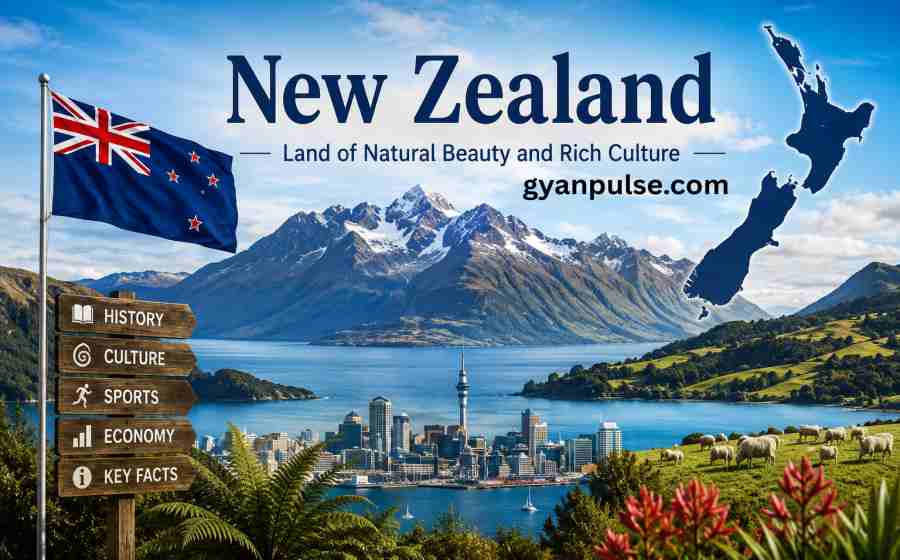
New Zealand, an island nation known for its breathtaking landscapes, rich Maori culture, and progressive socio-economic systems, stands as one of the most unique countries in the Southern Hemisphere. From volcanic mountains to serene beaches, and from ancient traditions to world-class sports, NewZealand offers a mix of natural beauty and cultural depth. This comprehensive GK post covers every major aspect-area, population, history, culture, sports, geography, and its global significance.
Table of Contents
Geographical Overview
Location and Physical Features
NewZealand lies in the southwestern Pacific Ocean, consisting mainly of two large islands, the North Island and the South Island, along with over 700 smaller islands.
It is known for dramatic landscapes that include glaciers, fjords, active volcanoes, rolling green hills, and golden coastlines. The country sits on the boundary of the Pacific and Indo-Australian tectonic plates, making it a hotspot for volcanic and geothermal activity.
Area of New Zealand
NewZealand covers a total area of approximately 268,021 square kilometers, making it slightly bigger than the United Kingdom but smaller than Japan and Italy.
Its vast natural reserves and low population density allow wildlife and ecosystems to flourish, supporting hundreds of unique plant and animal species.
Population and Demographics
Total Population
New Zealand has a population of around 5 million people, making it one of the least populated developed nations in the world. Urban centers are well-planned, clean, and eco-friendly.
Ethnic Groups
New Zealand is a multicultural society. Major ethnic groups include:
- European or Pākehā
- Māori (Indigenous people)
- Pacific Islanders
- Asian communities
The Māori population contributes significantly to the nation’s identity through language, customs, and traditional arts.
Languages
New Zealand has three official languages:
- English (widely spoken)
- Māori
- New Zealand Sign Language (NZSL)
Historical Background
Early Māori Settlement
The Māori people arrived in New Zealand more than 700 years ago, coming from Polynesian islands in ocean-going canoes called waka. They developed a rich culture based on tribal organisation, nature worship, and warrior traditions.
European Arrival
The first European known to reach NewZealand was Abel Tasman in 1642. Later, British explorer James Cook mapped the islands in the 1770s, opening the door for European settlement.
Treaty of Waitangi
A defining moment in NewZealand’s history occurred in 1840 when the Treaty of Waitangi was signed between Māori chiefs and the British Crown.
Although interpretations of the treaty remain debated, it established British governance and laid the foundation for modern NewZealand.
Modern Development
From the 20th century onward, NewZealand transformed into a prosperous, democratic nation known for:
- Social welfare reforms
- Education and healthcare advancements
- Progressive environmental policies
- Technological innovation
Today, it maintains a strong global reputation for peace, equality, and sustainability.
Cultural Highlights
Māori Culture
Māori traditions are central to NewZealand’s identity. Key cultural elements include:
- Haka: A traditional war dance performed at ceremonies and sports events
- Carving and weaving
- Māori tattoos (Tā moko)
- Marae: Communal meeting places
Māori values such as mana (prestige), whānau (family), and kaitiakitanga (guardianship of nature) are widely respected.
Lifestyle and Society
Kiwis (a common nickname for New Zealanders) are known for:
- Friendly and relaxed nature
- Love for outdoor activities
- Deep respect for the environment
- Active participation in sports
New Zealand consistently ranks high in global quality-of-life indices.
Sports and Global Achievements
Rugby – The National Obsession
New Zealand’s rugby team, the All Blacks, is one of the most dominant teams in sports history. The team’s iconic haka performance before matches is recognised worldwide.
Cricket
New Zealand has built a strong reputation in international cricket, reaching World Cup finals and producing legendary players like:
- Kane Williamson
- Brendon McCullum
- Richard Hadlee
Other Popular Sports
- Football
- Netball
- Rowing
- Cycling
- Athletics
New Zealand frequently wins medals at the Olympics, especially in rowing and sailing.
Economy and Major Industries
New Zealand’s economy is modern, diverse, and export-driven. Major sectors include:
- Agriculture (dairy, sheep farming, wool)
- Tourism
- Forestry
- Film industry (boosted by movies like The Lord of the Rings)
- Technology and renewable energy
The nation is known for sustainable farming and eco-friendly business practices.
Neighbouring Countries
Although isolated, New Zealand does have neighbouring territories:
- Australia – located west across the Tasman Sea
- Fiji, Tonga, Samoa – to the north
- Antarctica – far to the south
Its geographic isolation has preserved unique biodiversity not found anywhere else in the world.
Key Facts at a Glance
- Capital: Wellington
- Largest City: Auckland
- Government: Parliamentary Democracy
- Currency: New Zealand Dollar (NZD)
- Climate: Mostly temperate with regional variations
Wildlife and Unique Biodiversity
One of New Zealand’s most remarkable features is its extraordinary biodiversity, shaped by millions of years of geographic isolation. The country is home to many endemic species found nowhere else on Earth, including the iconic kiwi bird, the ancient tuatara, and several unique plants and marine animals. Strict conservation efforts, protected national parks, and biosecurity measures help preserve this rich natural heritage, making New Zealand a global leader in environmental conservation and sustainable ecosystem management.
Summary
New Zealand stands as a fascinating blend of natural beauty, indigenous heritage, modern development, and sporting excellence. From its ancient Māori traditions to its world-famous landscapes, New Zealand continues to attract global admiration. Whether for academic learning, competitive exams, or general knowledge, this detailed overview provides all important facts about the island nation.
Also Check: General Knowledge