
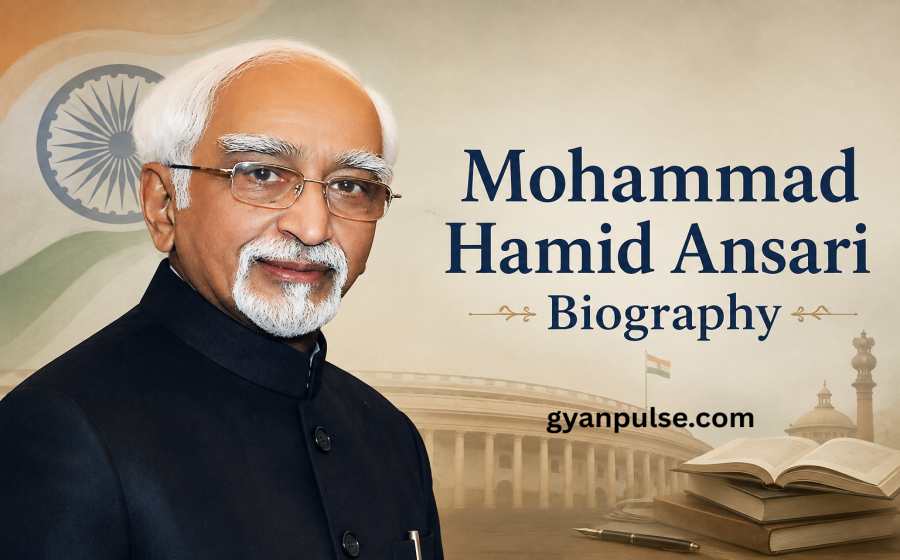
Mohammad Hamid Ansari Biography – Life, Diplomatic Career and Legacy of India’s 12th Vice President
Explore Mohammad Hamid Ansari Biography, his early life, diplomatic career, Vice Presidency, achievements, ideas and lasting contribution to public life.
Mohammad Hamid Ansari Biography
Mohammad Hamid Ansari is a distinguished Indian diplomat, scholar, and statesman who served as the Vice President of India from 2007 to 2017. Known for his calm demeanor, deep understanding of international relations, and firm commitment to constitutional values, Ansari’s career spans diplomacy, academia, and high public office. His life reflects dedication to public service, intellectual integrity, and democratic principles.
Table of Contents
Early Life and Education
Mohammad Hamid Ansari was born on 1 April 1937 in Kolkata, West Bengal, into a family with strong academic and intellectual traditions. He is the grandson of Dr. Zakir Husain, India’s third President, which exposed him early to ideas of public service, education, and national responsibility. However, Ansari carved his own path through discipline and merit rather than family legacy.
He completed his schooling in India and later pursued higher education in political science and international relations. His academic background helped shape his analytical thinking and prepared him for a career in diplomacy. From a young age, Ansari showed interest in global affairs, history, and governance, which later became the foundation of his professional life.
Entry into the Indian Foreign Service
Mohammad Hamid Ansari joined the Indian Foreign Service (IFS) in 1961, marking the beginning of a long and respected diplomatic career. Over the years, he represented India in several key international assignments, earning a reputation for clarity of thought and balanced diplomacy.
His early postings helped him gain firsthand experience in foreign policy, international negotiations, and cultural diplomacy. He handled complex global issues with professionalism, making him a trusted voice within India’s diplomatic circles.
Diplomatic Career and International Roles
Ansari served as India’s Ambassador to several countries, including Australia, Afghanistan, Iran, and Saudi Arabia. These postings were strategically important, especially his role in West Asia and South Asia, regions crucial to India’s foreign policy.
He also served as India’s Permanent Representative to the United Nations, where he dealt with global issues such as peace, security, and international cooperation. His work at the UN highlighted India’s commitment to multilateralism and peaceful dialogue.
In addition to his ambassadorial roles, Ansari was appointed Chairman of the National Minorities Commission from 2000 to 2003. During this tenure, he worked to protect minority rights and promote social harmony within the constitutional framework of India.
Vice Presidency of India
Mohammad Hamid Ansari was elected as the 12th Vice President of India in 2007 and re-elected in 2012, serving two full terms until 2017. His decade-long tenure is among the longest in the history of the office.
As Vice President, he also served as the Chairman of the Rajya Sabha, where he was widely respected for maintaining dignity, discipline, and impartiality in parliamentary proceedings. He allowed healthy debate while ensuring that constitutional rules were upheld, even during politically sensitive moments.
Ansari’s approach to the role was marked by restraint, fairness, and respect for democratic institutions. He believed that Parliament was the cornerstone of democracy and must function through dialogue rather than disruption.
Intellectual Contributions and Public Thought
Beyond his official duties, Mohammad Hamid Ansari is known for his writings and speeches on democracy, secularism, minority rights, and constitutional values. He has authored several books and essays that reflect his deep engagement with India’s social and political challenges.
His views often emphasized inclusiveness, rule of law, and respect for diversity. Even after retirement, he continued to participate in academic discussions and public debates, contributing thoughtfully to national discourse.
Personal Life and Character
Mohammad Hamid Ansari is known for his simple lifestyle and intellectual depth. Despite holding high constitutional office, he maintained humility and avoided personal publicity. His calm and composed nature earned him respect across political and ideological lines.
He believes in lifelong learning and has consistently highlighted the importance of education, dialogue, and ethical leadership in public life.
5 Inspirations from Mohammad Hamid Ansari’s Life
- Service with Integrity – He showed that honesty and discipline are the foundations of lasting public service.
- Power of Knowledge – His career proves that deep understanding and learning strengthen leadership.
- Respect for Democracy – He consistently upheld parliamentary values and constitutional principles.
- Quiet Leadership – Influence does not require loud words; calm actions can leave a strong impact.
- Commitment to Inclusiveness – His work reflected belief in unity, diversity, and equal respect for all citizens.
Legacy and Significance
Mohammad Hamid Ansari’s legacy lies in his unwavering commitment to constitutional morality and democratic values. As a diplomat, he strengthened India’s global relationships; as Vice President, he upheld the dignity of Parliament; and as a thinker, he encouraged critical reflection on democracy and pluralism.
His life demonstrates that public office is not about power, but about responsibility, balance, and service to the nation.
Legacy of Mohammad Hamid Ansari
Mohammad Hamid Ansari’s life represents a remarkable blend of diplomacy, scholarship, and constitutional responsibility. From serving India on important international assignments to completing two terms as Vice President, he consistently emphasized democratic values, dialogue, and institutional dignity. His calm leadership, intellectual approach, and commitment to inclusiveness made his public career significant. His journey continues to inspire those who value knowledge, integrity, balanced leadership, and dedicated service to the nation.
Summary
Mohammad Hamid Ansari Biography highlights the journey of a distinguished diplomat, scholar, and statesman who served as India’s Vice President from 2007 to 2017. His career reflects decades of diplomatic service, commitment to constitutional values, parliamentary dignity, intellectual thought, and social inclusiveness. His contributions to diplomacy and public life continue to hold significance in understanding India’s democratic and institutional journey.
Also Check: Biography