Non-Renewable Energy – Hidden Environmental Costs and Future Challenges
Non-Renewable Energy explores fossil fuels, environmental impacts, pollution, climate change and the need for cleaner, sustainable energy solutions.
Non-Renewable Energy
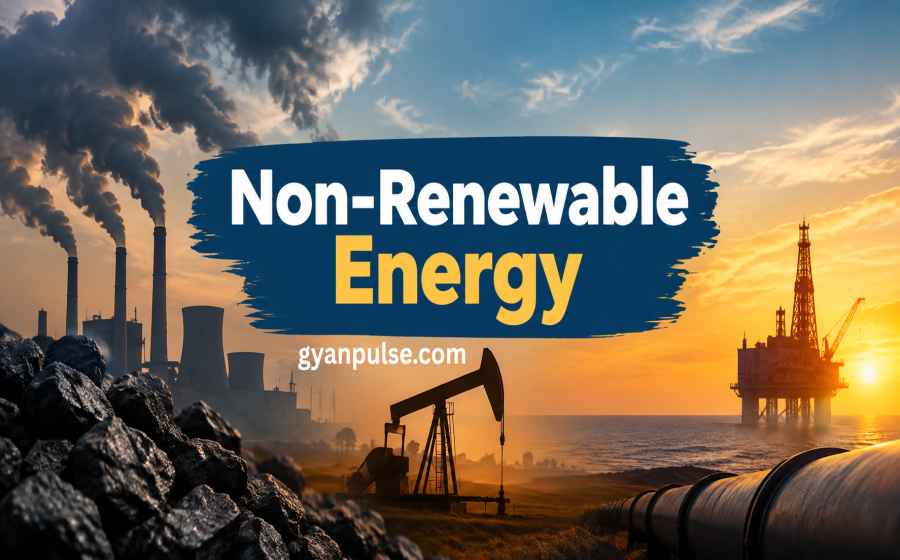
Non-renewable energy has been the backbone of modern industrial development for centuries. From powering factories to fueling vehicles, these energy sources have played a crucial role in shaping today’s world. However, their environmental impact has become a growing concern, making it essential to understand both their benefits and consequences.
Table of Contents
What is Non-Renewable Energy?
Non-renewable energy refers to energy sources that are finite and cannot be replenished within a human lifetime. These resources take millions of years to form and once depleted, they are gone forever. The primary types of non-renewable energy include fossil fuels and nuclear energy.
Types of Non-Renewable Energy
- Coal
Coal is one of the oldest and most widely used fossil fuels. It is primarily used for electricity generation in thermal power plants. - Petroleum (Oil)
Petroleum is refined into fuels like petrol, diesel, and kerosene. It is widely used in transportation and industries. - Natural Gas
A cleaner fossil fuel compared to coal and oil, natural gas is used for cooking, heating, and electricity production. - Nuclear Energy
Produced through nuclear reactions, this energy source uses uranium as fuel. While it generates large amounts of power, it also poses serious risks.
Environmental Issues Caused by Non-Renewable Energy
Although non-renewable energy sources are efficient and reliable, they come with significant environmental drawbacks.
1. Air Pollution
Burning fossil fuels releases harmful gases such as carbon dioxide (CO₂), sulfur dioxide (SO₂), and nitrogen oxides (NOx). These pollutants contribute to respiratory diseases and degrade air quality. Major cities around the world are facing severe air pollution due to excessive use of fossil fuels.
2. Climate Change and Global Warming
One of the biggest concerns associated with non-renewable energy is climate change. The emission of greenhouse gases traps heat in the atmosphere, leading to global warming. Rising temperatures result in melting glaciers, rising sea levels, and extreme weather conditions.
3. Water Pollution
Oil spills and industrial waste from energy production contaminate oceans, rivers, and groundwater. These incidents harm aquatic life and disrupt ecosystems. For example, large oil spills have caused irreversible damage to marine environments.
4. Land Degradation
Mining activities for coal and drilling for oil lead to deforestation and land destruction. These processes disturb natural habitats and reduce biodiversity. Open-pit mining, in particular, leaves large scars on the Earth’s surface.
5. Radioactive Waste
Nuclear energy produces radioactive waste that remains hazardous for thousands of years. Improper disposal or accidents can cause severe environmental and health risks.
Economic and Social Impacts
Apart from environmental damage, non-renewable energy also has economic and social implications.
- Resource depletion: As these energy sources are limited, their continuous use will eventually lead to scarcity.
- Rising costs: Extraction becomes more expensive as resources become harder to find.
- Health issues: Pollution leads to diseases such as asthma, lung cancer, and heart problems.
Why Transition is Necessary
The growing environmental concerns have made it clear that relying solely on non-renewable energy is not sustainable. A transition toward cleaner and renewable energy sources is necessary for long-term environmental protection.
Renewable energy sources like solar, wind, and hydroelectric power offer cleaner alternatives with minimal environmental impact. Governments and organizations worldwide are investing in green energy to reduce dependence on fossil fuels.
Solutions to Reduce Environmental Impact
While completely eliminating non-renable energy is difficult in the short term, several measures can help reduce its negative effects:
1. Energy Efficiency
Using energy-efficient appliances and technologies can reduce overall consumption.
2. Cleaner Technologies
Adopting cleaner production methods, such as carbon capture and storage (CCS), can minimize emissions.
3. Policy and Regulations
Strict environmental laws can control pollution and encourage sustainable practices.
4. Public Awareness
Educating people about energy conservation and environmental protection plays a key role in reducing demand.
Environmental Consequences and the Need for Change
Non-renewable energy has supported economic growth and modern lifestyles, but its long-term environmental costs are significant. The burning and extraction of fossil fuels contribute to air pollution, greenhouse gas emissions, water contamination, and habitat destruction. These challenges highlight the importance of improving energy efficiency and gradually adopting cleaner renewable sources to protect natural resources and create a more sustainable future.
Summary
Non-renewable energy has been essential for human progress, but its environmental consequences cannot be ignored. Air pollution, climate change, water contamination, and land degradation are serious issues linked to these energy sources. As the world moves forward, it is crucial to adopt sustainable practices and shift towards renewable energy solutions. By doing so, we can ensure a healthier environment and a better future for coming generations.
Also Check: Environment