
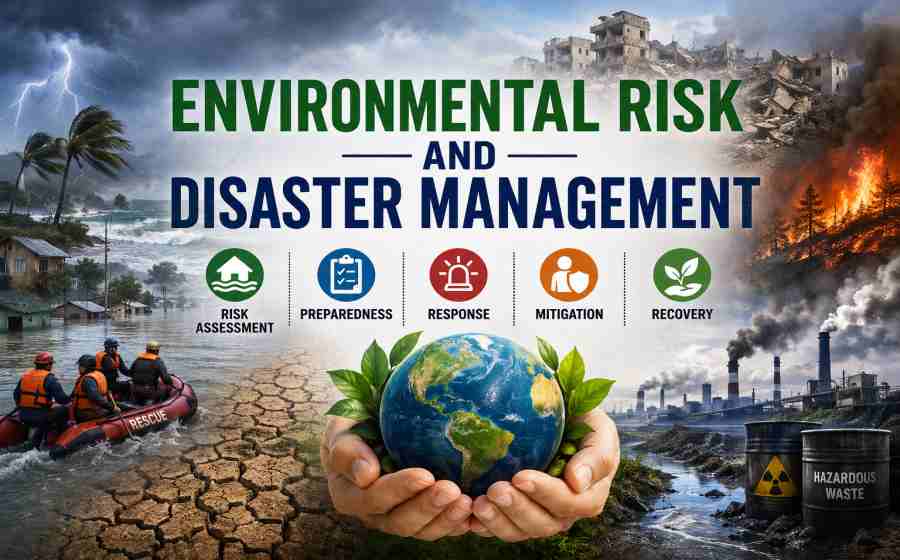
Environmental Risk and Disaster Management – Causes, Types and Prevention Strategies
Learn about Environmental Risk and Disaster Management, its importance, types of environmental hazards, disaster prevention methods and safety strategies.
Environmental Risk and Disaster Management
Environmental risks and disasters have become major global concerns in the modern world. Rapid industrialization, climate change, deforestation, pollution, and population growth are increasing the chances of natural and human-made disasters. Floods, earthquakes, cyclones, droughts, chemical leaks, and forest fires not only damage the environment but also threaten human lives, property, and economies. Environmental Risk and Disaster Management focuses on identifying risks, reducing damage, and preparing communities to handle disasters effectively.
Disaster management is not only about responding after a disaster occurs. It also includes prevention, preparedness, mitigation, and recovery. Proper planning and environmental awareness can greatly reduce the harmful impacts of disasters and help societies become more resilient.
Table of Contents
What is Environmental Risk?
Environmental risk refers to the possibility of harm to people, ecosystems, or property due to environmental hazards. These risks may arise naturally or through human activities. Environmental risks affect air, water, land, wildlife, and human health.
Examples of environmental risks include:
- Air and water pollution
- Climate change
- Floods and cyclones
- Earthquakes and landslides
- Industrial accidents
- Oil spills
- Deforestation
- Nuclear radiation
Environmental risks can occur suddenly or develop slowly over time. Some risks are local, while others affect the entire planet.
What is Disaster Management?
Disaster management is the process of planning, organizing, and implementing measures to reduce the impact of disasters. It includes strategies to prevent disasters, prepare people, provide emergency response, and rebuild affected areas.
The main goal of disaster management is to protect human lives, the environment, and economic resources.
Types of Disasters
Disasters are generally divided into two categories:
1. Natural Disasters
Natural disasters occur due to natural processes of the Earth.
Examples include:
- Earthquakes
- Floods
- Cyclones
- Hurricanes
- Tsunamis
- Volcanic eruptions
- Droughts
- Heatwaves
- Forest fires
Climate change has increased the frequency and intensity of many natural disasters worldwide.
2. Human-Made Disasters
Human-made disasters occur because of human negligence, industrial activities, or technological failures.
Examples include:
- Chemical leaks
- Nuclear accidents
- Oil spills
- Industrial explosions
- Urban fires
- Dam failures
- Pollution disasters
Human-made disasters often have long-term environmental and health effects.
Causes of Environmental Disasters
Several factors contribute to environmental disasters:
Climate Change
Global warming increases extreme weather events like storms, floods, and droughts.
Deforestation
Cutting forests reduces natural protection against soil erosion, floods, and landslides.
Urbanization
Unplanned urban growth creates pressure on resources and increases disaster vulnerability.
Pollution
Industrial and chemical pollution damages ecosystems and human health.
Overuse of Natural Resources
Excessive mining, groundwater extraction, and resource exploitation weaken environmental balance.
Poor Waste Management
Improper disposal of waste contaminates land and water sources.
Phases of Disaster Management
Disaster management involves four important phases:
1. Mitigation
Mitigation means reducing the severity and impact of disasters before they occur.
Examples:
- Building flood barriers
- Earthquake-resistant buildings
- Afforestation programs
- Pollution control laws
Mitigation reduces future risks and protects communities.
2. Preparedness
Preparedness includes planning and training before a disaster happens.
Examples:
- Emergency drills
- Disaster awareness programs
- Early warning systems
- Emergency kits and shelters
Prepared communities respond more effectively during emergencies.
3. Response
The response phase begins immediately after a disaster occurs.
Activities include:
- Rescue operations
- Medical assistance
- Food and water supply
- Temporary shelters
- Communication support
Quick response saves lives and reduces suffering.
4. Recovery
Recovery focuses on rebuilding affected communities and restoring normal life.
Examples:
- Rebuilding infrastructure
- Restoring electricity and water
- Environmental restoration
- Economic support programs
Long-term recovery helps communities become stronger and more sustainable.
Importance of Environmental Risk and Disaster Management
Environmental risk and disaster management are essential for several reasons:
Protection of Human Life
Effective disaster planning reduces deaths and injuries.
Environmental Conservation
It helps preserve forests, wildlife, rivers, and ecosystems.
Economic Stability
Disasters cause huge financial losses. Risk management reduces economic damage.
Sustainable Development
Safe environmental practices support long-term development goals.
Community Resilience
Prepared communities recover faster after disasters.
Role of Technology in Disaster Management
Modern technology plays a major role in disaster prevention and response.
Early Warning Systems
Satellites and weather forecasting systems warn people about storms, floods, and cyclones.
Geographic Information Systems (GIS)
GIS helps identify disaster-prone areas and plan safer infrastructure.
Drones and Robotics
Drones assist in rescue operations and damage assessment.
Mobile Communication
Emergency alerts through mobile phones help spread information quickly.
Artificial Intelligence
AI helps predict disaster patterns and improve emergency planning.
Environmental Risk Management Strategies
Some effective strategies include:
- Promoting renewable energy
- Reducing greenhouse gas emissions
- Conserving forests and wetlands
- Improving urban planning
- Encouraging recycling and waste management
- Strengthening environmental laws
- Educating the public about disaster preparedness
Governments, organizations, and citizens must work together to reduce environmental risks.
Disaster Management in India
India faces many environmental challenges because of its large population and diverse geography. Floods, cyclones, earthquakes, and heatwaves frequently affect different parts of the country.
The government has established the National Disaster Management Authority (NDMA) to improve disaster preparedness and response. India also uses advanced weather forecasting systems and conducts awareness programs to reduce disaster risks.
Programs like afforestation, river conservation, and climate action plans are helping improve environmental safety.
Summary
Environmental Risk and Disaster Management is essential for protecting people, nature, and future generations. As climate change and environmental degradation continue to grow, the need for effective disaster planning becomes more important than ever. Prevention, preparedness, technology and public awareness are the key pillars of successful disaster management.
By adopting sustainable environmental practices and strengthening disaster response systems, societies can reduce risks and build a safer and healthier future for everyone.
Also Check: Environment