NEET National Eligibility cum Entrance Test – Eligibility, Subjects and Career Opportunities
NEET National Eligibility cum Entrance Test is India’s main medical entrance exam for MBBS and BDS courses. Learn eligibility, subjects and career scope.
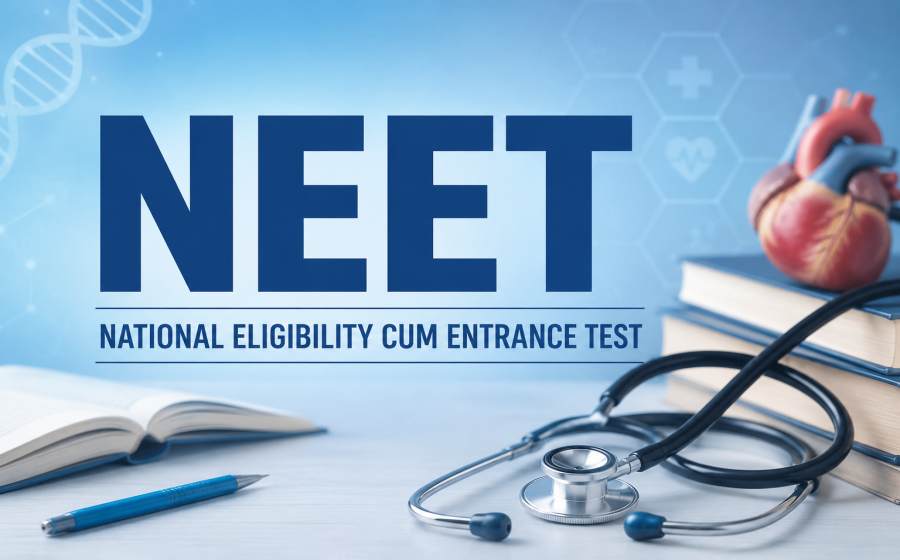
NEET National Eligibility cum Entrance Test
The dream of becoming a doctor is one of the most respected and popular career goals among students in India. Every year, millions of students work hard to secure admission into medical colleges and build a successful future in healthcare. The first major step toward this goal is clearing the NEET (National Eligibility cum Entrance Test). It serves as the main entrance examination for students seeking admission to medical courses such as MBBS, BDS, and several other healthcare-related programs.
NEET has become one of the most competitive examinations in the country because the number of students appearing for the exam continues to increase every year. Although the competition is challenging, proper preparation and determination can help students achieve success.
Table of Contents
What is NEET?
NEET, which stands for National Eligibility cum Entrance Test, is the primary entrance examination conducted for admission into undergraduate medical and dental courses in India. It was introduced to create a single standardized entrance test for medical education across the country.
Before NEET, different states and institutions had separate medical entrance examinations, making the admission process complicated for students. NEET simplified the process by introducing one national-level examination.
Students who qualify in NEET can apply for admissions to:
- MBBS (Bachelor of Medicine and Bachelor of Surgery)
- BDS (Bachelor of Dental Surgery)
- BAMS (Bachelor of Ayurvedic Medicine and Surgery)
- BHMS (Bachelor of Homeopathic Medicine and Surgery)
- BUMS and other medical programs
- Nursing and allied healthcare courses in some institutions
The examination acts as the gateway for students who want to enter the medical profession.
Eligibility Criteria for NEET
Students must fulfill certain eligibility requirements before appearing for the examination.
Educational Qualification
Candidates should have completed or be appearing in Class 12 from a recognized board with science subjects.
The core subjects generally include:
- Physics
- Chemistry
- Biology/Biotechnology
- English
Minimum Qualification Requirement
Students are required to pass Class 12 with the required percentage criteria according to the rules applicable for their category.
Age Requirement
Candidates must satisfy the minimum age requirement specified by examination authorities.
Students should always verify the latest official guidelines before applying because eligibility rules can occasionally change.
Subjects Included in NEET
NEET mainly focuses on subjects studied in Classes 11 and 12. Students need a strong understanding of concepts and problem-solving abilities.
Physics
Physics is often considered one of the challenging sections because it combines theoretical concepts with numerical calculations. Topics may include:
- Mechanics
- Thermodynamics
- Optics
- Electricity
- Modern Physics
Students require regular practice to improve speed and accuracy in solving problems.
Chemistry
Chemistry generally contains three major sections:
- Physical Chemistry
- Organic Chemistry
- Inorganic Chemistry
Understanding reactions, formulas, and concepts is important for scoring well.
Biology
Biology usually carries significant importance in NEET preparation because it covers:
- Botany
- Zoology
Students often focus heavily on Biology because it contributes a large portion of the exam and can improve overall scores.
Why is NEET Highly Competitive?
NEET is considered one of the toughest entrance examinations because a very large number of students appear every year while available seats in top medical institutions remain limited.
Several reasons contribute to the high competition:
Large Number of Applicants
Lakhs of students participate in the examination annually, creating intense competition for available seats.
Limited Government Medical Seats
Government medical colleges are highly preferred because they offer quality education at comparatively affordable fees. However, the number of seats is limited.
High Score Requirements
Top medical colleges often require excellent scores due to the large number of applicants.
Extensive Syllabus
Students need to prepare a broad syllabus covering two academic years, which demands consistency and discipline.
Because of these factors, preparation for NEET requires focused effort and careful planning.
Preparation Tips for NEET
Success in NEET does not depend only on studying for long hours. Smart preparation methods can make a major difference.
Create a Study Schedule
Prepare a realistic timetable that covers all subjects equally. Allocate sufficient time for revision and practice tests.
Understand Concepts Clearly
Instead of memorizing information without understanding, focus on learning concepts thoroughly.
Practice Mock Tests
Regular mock tests help students:
- Improve time management
- Identify weak areas
- Increase confidence
- Become familiar with exam patterns
Revise Regularly
Revision is essential because students often forget previously learned topics over time.
Solve Previous Year Papers
Past examination papers provide insights into question patterns and difficulty levels.
Maintain Consistency
Studying regularly for shorter periods can be more effective than irregular long study sessions.
Career Opportunities After NEET
Clearing NEET opens multiple career opportunities in healthcare and medical sciences.
Some popular career options include:
Doctor (MBBS)
Students can pursue medical education and eventually specialize in areas such as:
- Cardiology
- Neurology
- Pediatrics
- Surgery
- Dermatology
Dentist (BDS)
Students interested in dental healthcare can build careers as dentists.
Ayurveda and Alternative Medicine
Students may also pursue traditional and alternative medical systems.
Research and Medical Science
Medical education can lead to careers in:
- Research laboratories
- Healthcare organizations
- Medical technology industries
Public Health and Healthcare Administration
Students can work in healthcare management and public health sectors.
Importance of NEET in Building a Medical Career
NEET plays an important role in shaping the future of students who wish to serve society through medicine. Doctors, dentists, and healthcare professionals contribute significantly to public health and community welfare.
Although the examination is highly competitive, determination, discipline, and continuous effort can help students overcome challenges. Success in NEET is not simply about passing an examination; it is the beginning of a journey toward a respected and meaningful profession.
Students who prepare with dedication and maintain a positive approach can move one step closer to achieving their dream of entering the medical field.
Summary
NEET (National Eligibility cum Entrance Test) is the primary entrance examination for students who wish to pursue medical courses such as MBBS, BDS, and other healthcare programs in India. The exam covers Physics, Chemistry, and Biology and requires students to have completed Class 12 with a science background. Due to a large number of applicants and limited seats, NEET is highly competitive. However, with proper planning, regular practice, and consistent preparation, students can improve their chances of success and take an important step toward building a rewarding career in the medical field.
Also Check: Education