
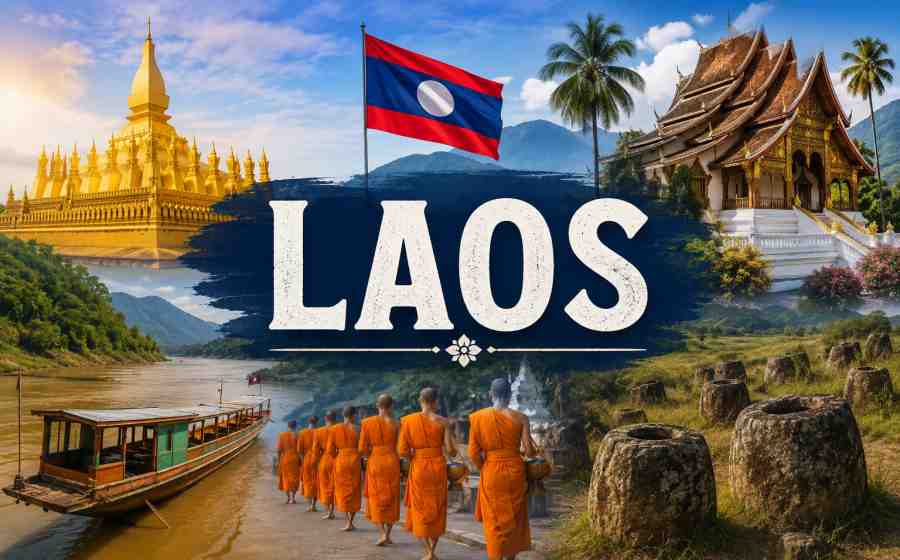
Laos – History, Culture, Sports, Tourism and Key Facts
Discover Laos through its history, culture, sports, geography, economy, traditions, famous places and interesting facts in this informative overview.
Laos
Laos is a beautiful landlocked country located in Southeast Asia. Known for its peaceful atmosphere, rich Buddhist heritage, stunning mountains, and the mighty Mekong River, Laos is one of the most culturally unique nations in Asia. Although it receives fewer tourists than some of its neighboring countries, Laos offers breathtaking natural beauty, ancient temples, traditional villages, and warm hospitality.
The country has preserved much of its traditional lifestyle while gradually developing its economy and infrastructure. From historic kingdoms to colorful festivals, Laos has a fascinating story that makes it an important country to learn about in world general knowledge.
Table of Contents
History of Laos
The history of Laos dates back thousands of years, with evidence of early human settlements across the region. One of the country’s most famous archaeological sites is the Plain of Jars, where thousands of giant stone jars remain a mystery to historians.
The Kingdom of Lan Xang, meaning “Land of a Million Elephants,” was founded in 1353 by King Fa Ngum. This kingdom became one of the strongest powers in Southeast Asia and played a major role in spreading Buddhism throughout the region.
During the late 19th century, Laos became part of French Indochina under French colonial rule. After World War II, the country sought independence and officially gained full independence from France in 1953.
The following decades were marked by political conflict and the effects of regional wars. In 1975, the Lao People’s Democratic Republic was established, and since then the country has followed a socialist system while gradually opening its economy to international trade and tourism.
Geography of Laos
Laos covers an area of approximately 236,800 square kilometers, making it one of the medium-sized countries in Southeast Asia.
It shares borders with:
- China to the north
- Vietnam to the east
- Cambodia to the south
- Thailand to the west
- Myanmar to the northwest
Unlike many Southeast Asian countries, Laos has no coastline. The Mekong River is the country’s most important waterway and supports agriculture, transportation, fishing, and trade.
Most of Laos consists of mountains, forests, and river valleys, making it one of the greenest countries in the region.
Capital and Major Cities
The capital city of Laos is Vientiane, which serves as the country’s political, economic, and cultural center.
Other important cities include:
- Luang Prabang
- Pakse
- Savannakhet
- Thakhek
Luang Prabang, a UNESCO World Heritage Site, is especially famous for its ancient temples, colonial architecture, and beautiful landscapes.
Culture of Laos
Laotian culture is deeply influenced by Theravada Buddhism, which shapes everyday life, festivals, traditions, and architecture.
Respect for elders, family values, and community harmony are central parts of Lao society.
Traditional customs include:
- Greeting with a respectful “Nop” (hands pressed together)
- Removing shoes before entering homes or temples
- Offering food to Buddhist monks during morning alms ceremonies
- Wearing traditional silk clothing during festivals
The country celebrates many colorful festivals throughout the year that showcase music, dance, religious ceremonies, and local traditions.
Language and Religion
The official language is Lao, which belongs to the Tai-Kadai language family.
Many ethnic communities also speak their own local languages.
The majority of the population follows Theravada Buddhism, making it the dominant religion. Buddhist temples, known as “Wats,” are found throughout the country and play an important role in daily life.
Economy of Laos
Laos has a developing economy based mainly on agriculture, hydropower, mining, tourism, and manufacturing.
Major agricultural products include:
- Rice
- Coffee
- Corn
- Vegetables
- Rubber
- Sugarcane
Hydroelectric power has become one of the country’s biggest industries because of its numerous rivers. Laos exports electricity to neighboring countries, earning significant revenue.
Tourism also contributes to economic growth as visitors explore temples, waterfalls, caves, and natural parks.
Famous Food of Laos
Laotian cuisine is known for fresh herbs, sticky rice, grilled meats, and spicy flavors.
Popular dishes include:
- Sticky Rice (Khao Niew)
- Laap (minced meat salad)
- Tam Mak Hoong (papaya salad)
- Khao Piak Sen (rice noodle soup)
- Mok Pa (steamed fish)
Sticky rice is considered the national staple food and is eaten with nearly every meal.
Sports in Laos
Football (soccer) is the most popular sport in Laos and is widely followed across the country.
Other popular sports include:
- Volleyball
- Sepak Takraw
- Badminton
- Athletics
- Traditional boat racing
The country regularly participates in the Southeast Asian Games (SEA Games), Asian Games, and various international sporting competitions. Traditional sports and boat races are often organized during religious festivals and cultural celebrations.
Tourism in Laos
Laos offers numerous attractions for nature lovers, adventure seekers, and history enthusiasts.
Some famous tourist destinations include:
- Luang Prabang
- Kuang Si Waterfalls
- Plain of Jars
- Wat Xieng Thong
- Vang Vieng
- Buddha Park
- Mekong River
- Bolaven Plateau
The country is famous for its limestone mountains, caves, waterfalls, and peaceful Buddhist temples. Eco-tourism has become increasingly popular due to Laos’ rich biodiversity and protected forests.
Wildlife and Environment
Nearly half of Laos remains covered by forests, making it one of Southeast Asia’s richest countries in biodiversity.
Wildlife includes:
- Asian elephants
- Gibbons
- Tigers
- Leopards
- Sun bears
- Hornbills
- Rare freshwater dolphins
Protected national parks help conserve many endangered species and natural habitats.
Education and Development
Education has steadily improved over the past few decades, with increased investment in schools and literacy programs.
Universities and vocational institutions are expanding opportunities for higher education, while infrastructure projects continue to improve roads, electricity, and internet access across the country.
Interesting Facts About Laos
- Laos is the only landlocked country in Southeast Asia.
- The Mekong River is the country’s most important river.
- The Kingdom of Lan Xang was known as the “Land of a Million Elephants.”
- Sticky rice is a staple food eaten daily by most people.
- Luang Prabang is a UNESCO World Heritage Site.
- Buddhism strongly influences everyday life and traditions.
- Laos has one of the lowest population densities in Asia.
- Hydropower is one of the country’s major exports.
- The country is home to the mysterious Plain of Jars.
- Laos is famous for its peaceful lifestyle and natural beauty.
Summary
Laos is a country rich in history, culture, and natural beauty. From the ancient Kingdom of Lan Xang to its modern developing economy, Laos has maintained its unique identity while embracing gradual progress. Its Buddhist traditions, scenic landscapes, delicious cuisine, and friendly people make it one of Southeast Asia’s most fascinating destinations. Whether studied for geography, history, or general knowledge, Laos offers valuable insights into the diverse heritage of the Asian continent.
Also Check: General Knowledge