Nobel Prize 2025 Awarded for Key Discovery of Immune System
Nobel Prize 2025 Awarded for Key Discovery of Immune System highlights regulatory T cell research transforming treatments for immunity and health.
Nobel Prize 2025 Awarded for Key Discovery of Immune System
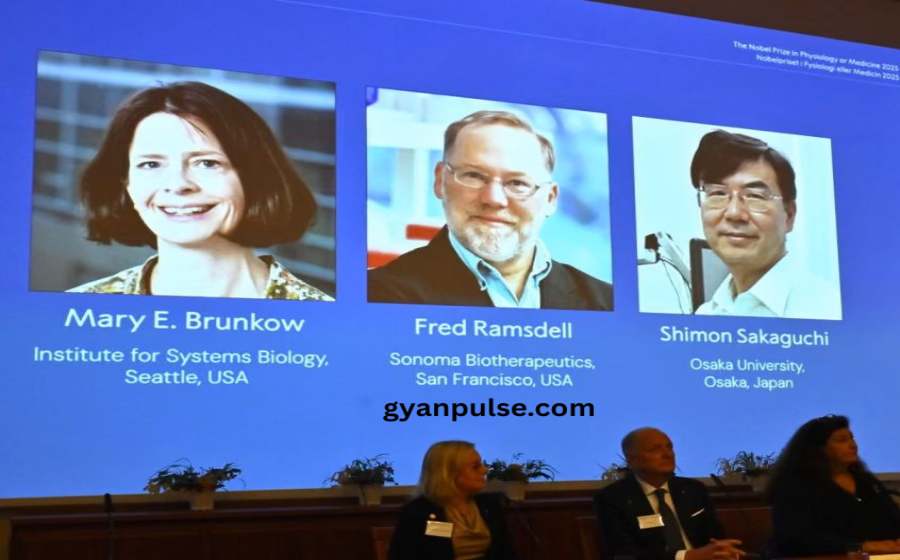
Mary E. Brunkow, Fred Ramsdell, and Shimon Sakaguchi won the 2025 Nobel Prize in Physiology or Medicine for their groundbreaking research on how the immune system works. Their discovery explained how the body distinguishes between harmful invaders and its own healthy cells.
This research centers on regulatory T cells, which play a crucial role in preventing the immune system from attacking the body itself. The Nobel Committee at the Karolinska Institutet in Stockholm announced the award on October 6, 2025.
Table of Contents
Understanding Peripheral Immune Tolerance and Why It Matters
Peripheral immune tolerance is the body’s way of preventing its immune system from attacking its own tissues. It works in the peripheral parts of the immune system, outside the brain and spinal cord.
This mechanism is essential for protecting the body from autoimmune diseases, where the immune system wrongly targets healthy cells.
The Discovery of Regulatory T Cells
In 1995, Shimon Sakaguchi discovered regulatory T cells (Treg cells). Unlike regular T cells that fight infections, Treg cells act as the immune system’s ‘brakes,’ preventing it from attacking the body’s own tissues.
This discovery, built on research Sakaguchi began in 1979, was a major breakthrough that changed our understanding of how the immune system protects the body.
How T Cells Protect the Body
T cells are a type of white blood cell that protect the body from infections. They come in different types, each performing a specific role based on their surface markers. Among them, regulatory T cells act as moderators, making sure the immune system doesn’t harm the body’s own healthy tissues.
Key Contributions of Mary Brunkow and Fred Ramsdell in Immunology
Mary Brunkow and Fred Ramsdell investigated a rare autoimmune disorder in male scurfy mice, which experienced tissue damage because their T cells were improperly regulated.
Their work identified specific mutations in regulatory T cells (Treg cells), offering important insights into how autoimmune diseases develop. This groundbreaking research was carried out while they were at Celltech Chiroscience in Washington.
Worldwide Significance of the Regulatory T Cell Discovery
The discovery of regulatory T cells (Treg cells) has far-reaching implications for treating autoimmune diseases, allergies, and preventing transplant rejection.
It also paves the way for developing new therapies that can safely control immune responses. Awarding the Nobel Prize highlights how fundamental research can lead to major advances in human health.
Scientific Journeys of the Nobel Laureates
Shimon Sakaguchi received his medical degree from Kyoto University and is now a researcher at Osaka University. Mary Brunkow earned her PhD from Princeton University and works as a senior program manager at the Institute for Systems Biology. Fred Ramsdell holds a PhD from UCLA and serves as a scientific advisor at Sonoma Biotherapeutics.
Future Prospects in Immunotherapy
The discovery of regulatory T cells (Treg cells) is not only a milestone in understanding the immune system but also a gateway to innovative medical treatments. Scientists are exploring ways to harness Treg cells to develop therapies that can specifically target overactive immune responses without compromising overall immunity.
This has potential applications in managing autoimmune disorders such as type 1 diabetes, multiple sclerosis, and rheumatoid arthritis. By fine-tuning the activity of Treg cells, researchers hope to reduce inflammation and tissue damage while preserving the body’s ability to fight infections.
Improving Transplants and Allergy Treatments
Beyond autoimmune diseases, Treg cell research holds promise in transplantation medicine. Controlling immune responses could reduce the risk of organ rejection, allowing for safer long-term graft survival.
Additionally, emerging studies suggest that manipulating Treg cells could help in treating allergies, chronic inflammatory conditions, and even certain cancer therapies by balancing immune activation and suppression.
The work of Brunkow, Ramsdell, and Sakaguchi has laid the foundation for a future where targeted immune modulation can improve patient outcomes and enhance overall human health. The Nobel Prize recognition underscores the importance of basic scientific research as a catalyst for life-changing medical innovations.
Impact of Regulatory T Cell Discovery on Modern Medicine
The discovery of regulatory T cells has transformed the field of immunology by revealing how the immune system maintains balance and avoids attacking healthy tissues. This breakthrough has opened new opportunities for developing advanced treatments for autoimmune disorders, allergies, and organ transplantation. Researchers are now exploring ways to use these specialized immune cells to create targeted therapies that control harmful immune responses while preserving the body’s natural defense system. Such progress could lead to safer and more effective medical solutions for millions of people worldwide.
Summary
The 2025 Nobel Prize in Physiology or Medicine was awarded for the discovery of regulatory T cells, a major breakthrough in understanding the immune system. This research explained how the body prevents immune attacks on healthy tissues and opened new possibilities for treating autoimmune diseases, allergies, and organ transplant rejection. The discovery highlights the role of scientific research in advancing healthcare and developing future immunotherapy treatments.
Also Check: Current Affairs