
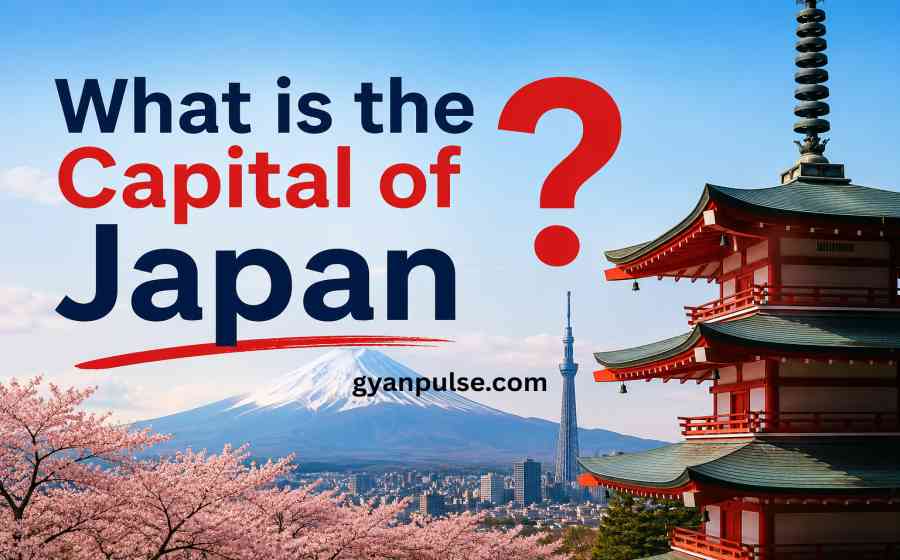
What is the Capital of Japan – History, Culture, Sports and Neighbouring Countries
What is the Capital of Japan? Discover Tokyo, Japan’s vibrant capital, along with its history, culture, population, economy, geography and key facts.
What is the Capital of Japan
Japan, officially known as Nippon or Nihon, is an island nation located in East Asia, famous for its rich culture, advanced technology, and centuries-old traditions. Popularly known as the Land of the Rising Sun, Japan is one of the most developed and fascinating countries in the world. It offers a perfect blend of ancient heritage and modern innovation, attracting millions of visitors every year.
Table of Contents
Capital of Japan
The capital of Japan is Tokyo, one of the largest and most dynamic cities in the world. Tokyo is not only Japan’s political and economic center but also a global hub for technology, finance, and fashion. The city hosts the Imperial Palace, the Tokyo Tower, and numerous cultural landmarks that showcase Japan’s identity.
Geographical Area and Location
Japan is an archipelago consisting of 6,852 islands, of which the four main ones are Honshu, Hokkaido, Kyushu, and Shikoku. The total land area of Japan is approximately 377,975 square kilometers. It is surrounded by the Pacific Ocean, the Sea of Japan, and the East China Sea. The country is known for its mountainous terrain and numerous active volcanoes, including Mount Fuji, the highest peak in Japan.
Population
As of 2025, Japan has an estimated population of around 12.4 crores (125 million people), making it one of the most densely populated nations in the world. Despite its high population density, Japan is known for its clean environment, safety, and advanced urban planning. However, the country faces challenges related to an aging population and a declining birth rate.
Historical Background
Japan’s history dates back thousands of years, with early influences from China and Korea shaping its language, religion, and art. The Yamato period (around 250–710 AD) established the foundation of the Japanese state, followed by the Nara and Heian periods, which saw cultural and artistic development.
The era of Samurai and Shoguns defined Japan’s medieval period, with powerful clans ruling the country. In the 19th century, during the Meiji Restoration (1868), Japan rapidly modernized and became an industrial power. After its defeat in World War II, Japan adopted a peaceful constitution and rebuilt itself into a major economic power known for innovation and quality.
Culture and Traditions
Japanese culture is a beautiful blend of ancient customs and modern lifestyle. The country is known for its unique art forms like origami, ikebana (flower arrangement), calligraphy, tea ceremony, and kimono clothing. Traditional festivals such as Hanami (cherry blossom viewing) and Obon reflect Japan’s deep respect for nature and ancestors.
Food is also central to Japanese culture. Dishes like sushi, ramen, tempura, and sashimi are now loved worldwide. Japanese people value discipline, harmony, and respect, principles deeply rooted in Shintoism and Buddhism.
Sports in Japan
Japan is a sports-loving nation. The country’s traditional sport is Sumo wrestling, which has been practiced for centuries. Modern sports like baseball, football (soccer), tennis, and judo are also extremely popular. Japan hosted the Tokyo Olympics twice – in 1964 and 2021 (2020 Summer Olympics) – showcasing its organizational excellence and global spirit.
Neighbouring Countries
Though an island nation, Japan is geographically close to several countries. Its neighbouring nations include:
- China – to the west, across the East China Sea
- North Korea and South Korea – across the Sea of Japan
- Russia – to the north, across the Sea of Okhotsk
These countries play important roles in Japan’s diplomatic and economic relations.
Economy and Technology
Japan has the third-largest economy in the world, known for its excellence in automobile, electronics, robotics, and engineering industries. Global companies like Toyota, Sony, Honda, and Panasonic originate from Japan. The country is also a leader in innovation, renewable energy, and high-speed transportation.
Tourism and Landmarks
Tourism in Japan is booming, thanks to its diverse attractions. Key landmarks include:
- Mount Fuji – Japan’s most iconic peak
- Kyoto – famous for its temples and traditional architecture
- Tokyo Disneyland and Shibuya Crossing – modern attractions
- Hiroshima Peace Memorial Park – a symbol of peace
Tokyo: The Heart of Japan’s Progress and Culture
Tokyo stands as the driving force behind Japan’s growth, innovation, and global influence. As the nation’s capital, it serves as a center for government, business, education, and technology while preserving centuries-old traditions through historic temples, shrines, and cultural landmarks.
The city reflects Japan’s unique ability to balance modernization with heritage, making it one of the most influential and vibrant urban centers in the world. From advanced transportation systems and world-class infrastructure to cultural festivals and iconic attractions, Tokyo plays a vital role in shaping Japan’s identity on the global stage.
Summary
Japan is a nation where ancient traditions meet modern brilliance. From its disciplined society and technological marvels to its beautiful landscapes and deep-rooted values, Japan continues to inspire the world. Whether you’re exploring its cultural richness or studying its progress, Japan remains a fascinating example of harmony between past and present.
Also Check: General Knowledge