What is the Capital of Bhutan – History, Culture, Sports and Neighbouring Countries
What is the Capital of Bhutan? Discover Thimphu, Bhutan’s capital city, along with its history, population, geography, culture, sports and key facts.
What is the Capital of Bhutan
Bhutan, officially known as the Kingdom of Bhutan, is a small yet fascinating landlocked country located in the eastern Himalayas. Renowned for its natural beauty, deep-rooted culture, and the philosophy of Gross National Happiness (GNH), Bhutan stands as a model of cultural preservation and environmental harmony. Let’s explore this Himalayan kingdom through various aspects such as its capital, area, population, history, culture, sports, and neighbouring countries.
Table of Contents
Capital of Bhutan: Thimphu
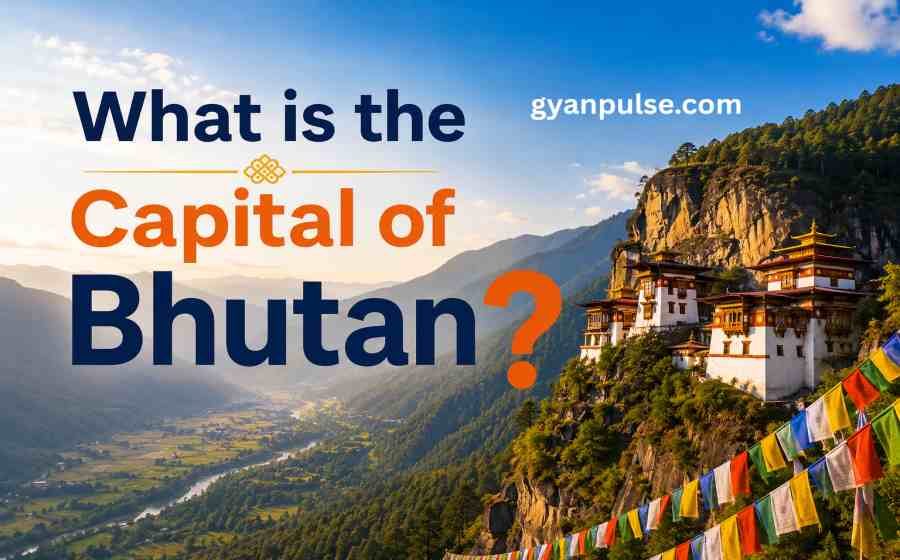
The capital of Bhutan is Thimphu, the largest city and the political, cultural, and economic center of the country. Thimphu lies in the western part of Bhutan, along the Wang Chhu River, surrounded by lush green hills and snow-capped peaks.
Unlike many modern capitals, Thimphu retains its traditional charm – it has no traffic lights, and its buildings follow traditional Bhutanese architecture. It houses the Tashichho Dzong, the seat of government and the office of the King.
Area and Geography of Bhutan
Bhutan covers an area of approximately 38,394 square kilometers. The country is mostly mountainous, with elevations ranging from 160 meters in the southern plains to over 7,500 meters in the northern Himalayan peaks.
Major rivers such as Amo Chhu, Wang Chhu, and Manas Chhu flow through the nation, supporting agriculture and hydroelectric projects. Bhutan is often called the “Land of the Thunder Dragon” (Druk Yul) due to frequent storms that roll in from the Himalayas.
Around 70% of the land is covered by forests, making Bhutan one of the few carbon-negative countries in the world. Environmental conservation is deeply integrated into the nation’s policies and lifestyle.
Population of Bhutan
As of 2025, Bhutan’s estimated population is around 810,000 people. The majority belong to the Drukpa (Bhote) ethnic group, followed by Nepali-speaking Lhotshampa and Sharchops from eastern Bhutan.
The population density is relatively low due to the rugged terrain and limited urbanization. Thimphu is the most populated city, followed by Phuentsholing and Punakha.
The literacy rate is steadily increasing, and English is commonly used as the medium of instruction in schools, alongside Dzongkha, the national language.
A Brief History of Bhutan
Bhutan’s history is closely tied to Buddhism and the leadership of religious figures. The country was unified in the 17th century by Zhabdrung Ngawang Namgyal, who established the dual system of governance — combining both spiritual and temporal authority.
For centuries, Bhutan remained isolated from the outside world, preserving its traditions and sovereignty. In 1907, Ugyen Wangchuck became the first king, marking the beginning of the Wangchuck dynasty that continues to this day.
Bhutan maintained its independence throughout history and entered the United Nations in 1971. Modernization began under King Jigme Dorji Wangchuck, and democratic reforms were introduced by King Jigme Singye Wangchuck in the early 2000s, leading to a constitutional monarchy in 2008.
Culture of Bhutan
Bhutanese culture is deeply influenced by Buddhism, which shapes every aspect of daily life. Monasteries, dzongs (fortresses), and chortens (stupas) dot the landscape, and monks play a central role in community life.
Traditional clothing – “Gho” for men and “Kira” for women – is worn proudly by citizens. Festivals, known as “Tsechus”, are celebrated across the country with vibrant masked dances, music, and rituals.
Bhutan’s philosophy of Gross National Happiness emphasizes spiritual and emotional well-being over material wealth, promoting harmony between people and nature.
Sports in Bhutan
The national sport of Bhutan is Archery, known locally as “Dha”. It’s more than just a competition – it’s a social and cultural event filled with singing, dancing, and friendly banter.
Apart from archery, football, basketball, and cricket are also gaining popularity, especially among the youth. Bhutan is a member of the International Olympic Committee (IOC) and the Asian Football Confederation (AFC).
Bhutan made headlines in 2002 when it played a football match against Montserrat, another small nation, dubbed “The Other Final”, symbolizing the unity and joy of sports beyond rankings.
Neighbouring Countries of Bhutan
Bhutan shares its borders with only two countries:
- India – Bhutan shares a 605 km long border with India to the south, east, and west. Indian states like Sikkim, West Bengal, Assam, and Arunachal Pradesh border Bhutan.
India is Bhutan’s closest ally and largest trading partner. - China – To the north, Bhutan shares a 470 km border with China, primarily with the Tibet Autonomous Region. The border remains partially disputed, but both nations have held talks to resolve issues peacefully.
Economy and Modern Development
Bhutan’s economy is largely based on hydropower, agriculture, and tourism. Hydroelectricity exported to India is the main source of revenue. Tourism is strictly regulated to preserve cultural and environmental integrity under the “High Value, Low Impact” policy.
The government continues to focus on sustainable development that aligns with its Gross National Happiness vision – balancing modernization with tradition.
Significance of Thimphu in Bhutan’s Development
Thimphu is not only the capital of Bhutan but also the heart of the nation’s administration, culture, and economic activities. The city reflects Bhutan’s unique approach to development by blending modern facilities with traditional values and architecture.
As the center of government and the residence of the monarchy, Thimphu plays a crucial role in shaping national policies while preserving Bhutan’s rich cultural heritage. Its peaceful environment, scenic surroundings, and commitment to sustainable growth make it a symbol of Bhutan’s vision of balancing progress with tradition and environmental conservation.
Summary
Bhutan stands as a rare example of a nation that has managed to preserve its cultural identity while embracing modernization on its own terms. From its capital Thimphu to its breathtaking Himalayan landscape, Bhutan offers lessons on peace, sustainability, and happiness.
Whether you’re a student preparing for a GK exam or a curious learner, Bhutan’s story is one of balance – between tradition and progress, spirituality and governance, and people and nature.
Also Check: General Knowledge