
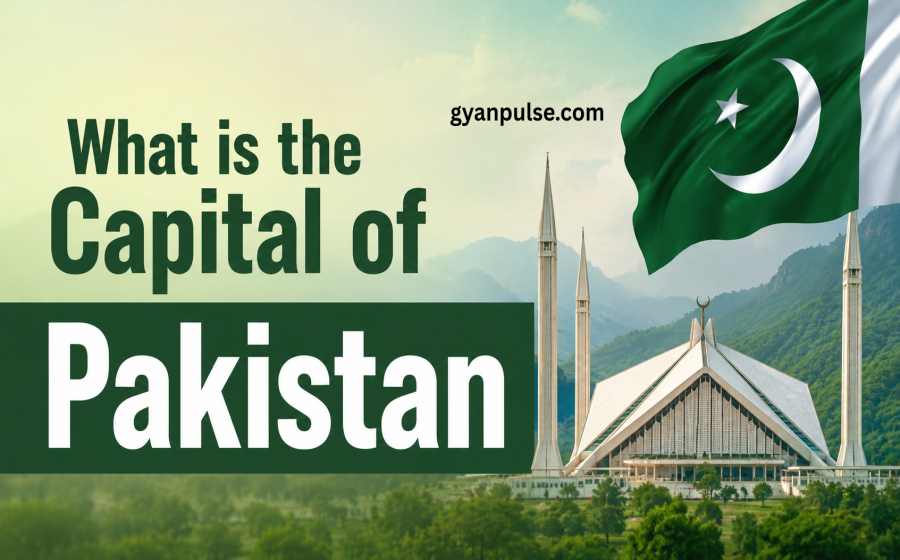
What is the Capital of Pakistan – Area, Population, History, Culture, Sports and Neighbouring Countries
Discover what is the capital of Pakistan and explore everything about Islamabad – its area, population, history, culture, sports and neighbouring countries.
What is the Capital of Pakistan
Pakistan, officially known as the Islamic Republic of Pakistan, is one of the most important countries in South Asia. It is known for its rich cultural heritage, historical significance, and diverse geography ranging from towering mountains to vast plains. The country’s capital, Islamabad, stands as a symbol of modernity, beauty, and national unity. Let’s explore in detail the capital of Pakistan, its geography, population, history, culture, and more.
Table of Contents
Capital of Pakistan – Islamabad
The capital of Pakistan is Islamabad, located in the northern part of the country. It was officially declared the capital in 1963, replacing Karachi. The name “Islamabad” means City of Islam. It was purposefully planned and built to represent Pakistan’s unity, progress, and cultural values.
Islamabad is known for its clean environment, well-organized infrastructure, and high standard of living. It sits at the foot of the Margalla Hills, providing stunning natural beauty and pleasant weather throughout the year.
Area and Geography
The total area of Islamabad is around 906 sq. km, showcasing its vast layout and organized urban structure. It is part of the Islamabad Capital Territory (ICT). Islamabad’s layout was crafted by Greek urban planner Constantinos Doxiadis, blending modern design with natural beauty. Doxiadis, following a grid plan with sectors and zones for residential, commercial, and diplomatic purposes.
The Margalla Hills National Park surrounds the city, adding to its greenery and scenic charm. The city also has several parks, lakes, and green belts – including Rawal Lake, Shakarparian Park, and Daman-e-Koh viewpoint.
Population
According to recent estimates, the population of Islamabad is around 1.2 million people. Despite being smaller in population compared to cities like Karachi and Lahore, Islamabad is one of the fastest-growing urban areas in Pakistan. The city’s population includes people from various ethnic backgrounds – Punjabis, Pashtuns, Sindhis, Baloch, and others – reflecting Pakistan’s diversity.
History of Islamabad
Before Islamabad was built, Karachi served as Pakistan’s capital after independence in 1947. However, due to Karachi’s coastal location and overcrowding, the government decided to establish a new capital that would be centrally located and easily accessible from all parts of the country.
In 1959, Pakistan’s then-President Field Marshal Ayub Khan announced the plan to create a new capital. The location near the Pothohar Plateau was chosen for its natural beauty and strategic importance. Construction began in the early 1960s, and by 1967, most government offices were shifted from Karachi to Islamabad.
Today, Islamabad is home to the Parliament House, Supreme Court, Presidential Palace (Aiwan-e-Sadr), and Prime Minister’s Office.
Culture and Lifestyle
Islamabad is often considered Pakistan’s most modern and well-planned city. Its culture is a blend of traditional Pakistani customs and modern influences. The residents of Islamabad enjoy a peaceful lifestyle with access to education, art, and technology.
Major cultural landmarks include:
- Faisal Mosque – The largest mosque in Pakistan and one of the largest in the world.
- Lok Virsa Museum – Showcasing Pakistan’s cultural heritage and traditional art.
- Pakistan Monument – A national symbol representing the unity of the Pakistani people.
Islamabad also hosts several cultural events, exhibitions, and festivals throughout the year, promoting music, art, and literature.
Sports in Islamabad
Sports play an important role in the life of Pakistanis. The most popular sport is cricket, followed by hockey, football, and squash. Islamabad has world-class sports facilities, including the Pakistan Sports Complex and various stadiums for cricket and football.
The Islamabad United cricket team represents the city in the Pakistan Super League (PSL) and has been one of the most successful franchises.
Apart from professional sports, Islamabad’s residents are known for their love of outdoor activities like hiking, paragliding, cycling, and trekking in the nearby Margalla Hills.
Neighbouring Countries of Pakistan
Pakistan shares its borders with four major countries:
- India to the east
- China to the north
- Afghanistan to the northwest
- Iran to the southwest
Additionally, Pakistan has a coastline along the Arabian Sea in the south. Its strategic location makes it a vital link between South Asia, Central Asia, and the Middle East.
Economy and Development
Islamabad serves as Pakistan’s administrative and political center rather than an industrial hub. However, it plays a crucial role in policy-making and governance. The city hosts numerous government institutions, embassies, and international organizations.
The economy of Islamabad largely depends on the service sector, including education, information technology, and tourism. It is home to some of Pakistan’s best universities, such as Quaid-i-Azam University, National University of Sciences and Technology (NUST), and COMSATS University.
Why Islamabad is Known as Pakistan’s Modern Capital
Islamabad is more than just the political center of Pakistan; it is a city that reflects the nation’s vision for growth, organization, and development. Carefully planned with wide roads, green spaces, and modern infrastructure, the capital offers a unique balance between urban life and natural beauty. Surrounded by the scenic Margalla Hills, Islamabad attracts tourists, students, diplomats, and professionals from across the country and beyond. Its important government institutions, cultural landmarks, educational centers, and peaceful environment make it one of South Asia’s most admired capitals. The city continues to play a vital role in shaping Pakistan’s future while preserving its rich cultural identity and national heritage.
Summary
Islamabad represents the soul of Pakistan – a city of peace, beauty, and progress. From its planned architecture and clean environment to its cultural landmarks and natural landscapes, Islamabad truly stands as a symbol of national pride. As the capital of Pakistan, it continues to grow as a center for politics, education, and tourism, blending tradition with modernity in perfect harmony.
Also Check: General Knowledge