Acid Rain – Causes, Effects and Practical Prevention Strategies
Learn about Acid Rain: Causes, Effects and Prevention in this detailed guide. Understand its environmental impact and how we can reduce it effectively.
Acid Rain
Acid rain is one of the most significant environmental issues caused by human activities. It refers to any form of precipitation, rain, snow, sleet, or fog, that contains high levels of acidic components such as sulfuric and nitric acids. Over the decades, acid rain has had a damaging impact on ecosystems, infrastructure, and human health. Understanding its causes, effects, and prevention methods is essential for building a sustainable future.
Table of Contents
What is Acid Rain?
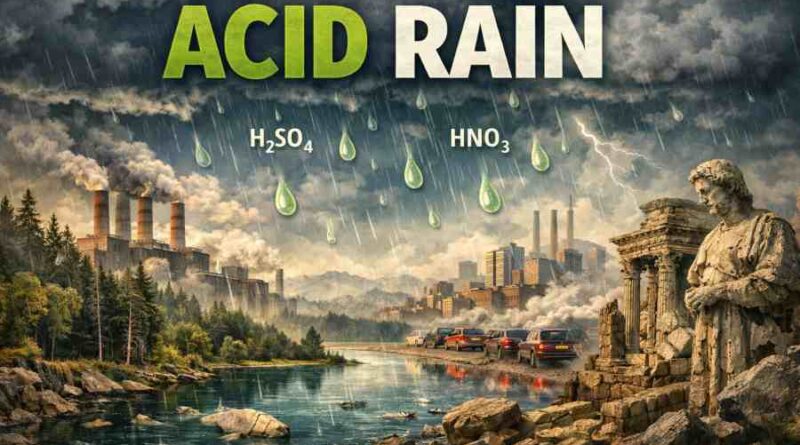
This rain forms when sulfur dioxide (SO₂) and nitrogen oxides (NOₓ) are released into the atmosphere and react with water vapor, oxygen, and other chemicals. These reactions produce sulfuric acid (H₂SO₄) and nitric acid (HNO₃), which then fall to the ground as precipitation.
While natural sources such as volcanic eruptions and lightning can contribute to acid rain, the majority of emissions come from human activities, particularly industrial processes and the burning of fossil fuels.
Causes of Acid Rain
1. Burning of Fossil Fuels
The primary cause of acid rain is the combustion of fossil fuels like coal, oil, and natural gas. Power plants, factories, and vehicles release large quantities of sulfur dioxide and nitrogen oxides into the atmosphere. Coal-burning power plants are especially significant contributors due to their high sulfur content.
2. Industrial Emissions
Industries such as chemical manufacturing, oil refineries, and metal smelting release harmful gases into the air. These emissions significantly increase the concentration of acid-forming substances in the atmosphere.
3. Vehicle Emissions
Automobiles, trucks, and other vehicles emit nitrogen oxides through fuel combustion. With the rapid increase in transportation, especially in developing countries, this source has become a major contributor to this rain.
4. Natural Sources
Although less significant than human-made sources, natural phenomena like volcanic eruptions, forest fires, and lightning also release sulfur dioxide and nitrogen oxides into the atmosphere.
Effects of Acid Rain
1. Damage to Forests and Vegetation
This rain weakens trees by leaching essential nutrients such as calcium and magnesium from the soil. It also releases harmful aluminum into the soil, which can damage root systems. Over time, forests become more vulnerable to diseases, pests, and harsh weather conditions.
2. Harm to Aquatic Life
When acid rain flows into rivers, lakes, and streams, it lowers the pH of the water, making it more acidic. Many aquatic species, including fish, amphibians, and plankton, cannot survive in highly acidic conditions. This leads to a decline in biodiversity and disrupts entire ecosystems.
3. Soil Degradation
This rain alters the chemical composition of soil, reducing its fertility. It removes essential nutrients required for plant growth and introduces toxic elements that hinder agricultural productivity.
4. Damage to Buildings and Monuments
This rain can corrode metals and deteriorate stone structures, especially those made of limestone and marble. Historic monuments and buildings are particularly vulnerable. Over time, this leads to loss of cultural heritage and increased maintenance costs.
5. Human Health Impacts
Although acid rain itself does not directly harm humans, the pollutants that cause it—such as sulfur dioxide and nitrogen oxides—can lead to respiratory problems. These pollutants can aggravate conditions like asthma and bronchitis, especially in children and the elderly.
Prevention of Acid Rain
1. Reducing Fossil Fuel Use
One of the most effective ways to prevent acid rain is to reduce the use of fossil fuels. Transitioning to renewable energy sources such as solar, wind, and hydroelectric power can significantly decrease harmful emissions.
2. Using Clean Energy Technologies
Installing scrubbers in power plant chimneys can help remove sulfur dioxide from emissions. Similarly, catalytic converters in vehicles reduce nitrogen oxide emissions, making transportation less harmful to the environment.
3. Energy Conservation
Saving energy at home and in industries can reduce the demand for electricity, thereby lowering emissions. Simple actions like switching off unused appliances, using energy-efficient devices, and promoting sustainable practices can make a big difference.
4. Government Regulations
Strict environmental laws and policies are essential to control industrial emissions. Governments can set limits on pollution levels and encourage industries to adopt cleaner technologies through incentives and penalties.
5. Public Awareness and Education
Educating people about the causes and effects of acid rain is crucial. When individuals understand the impact of their actions, they are more likely to adopt environmentally friendly habits such as using public transportation, reducing energy consumption, and supporting green initiatives.
Summary
Acid rain is a serious environmental issue that affects ecosystems, human health, and infrastructure. It is primarily caused by human activities such as burning fossil fuels and industrial emissions. Its effects can be devastating, ranging from damaged forests and aquatic life to deteriorating buildings and health problems.
However, acid rain is not an irreversible problem. With the right combination of technological solutions, government policies, and public awareness, it is possible to reduce and even prevent its occurrence. By adopting cleaner energy sources, conserving resources, and promoting sustainable development, we can protect our environment and ensure a healthier planet for future generations.
Addressing acid rain requires collective effort. Every small step, from reducing energy use to supporting environmental policies, contributes to a larger goal of preserving the Earth’s natural balance.
Also Check: Environment