
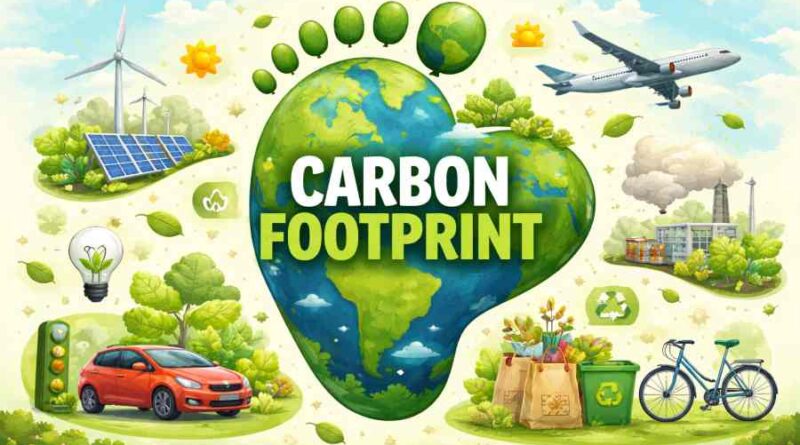
Carbon Footprint – Meaning, Real Life Examples & Easy Ways to Reduce It
Learn the meaning of carbon footprint, real life examples and simple ways to reduce it. A complete and easy way to understanding your environmental impact.
Carbon Footprint
In today’s world, environmental awareness is more important than ever. One of the most commonly discussed concepts in environmental studies is the carbon footprint. It helps us understand how our daily activities impact the planet, especially in terms of climate change.
Table of Contents
What is a Carbon Foot print?
A carbon footprint refers to the total amount of greenhouse gases, mainly carbon dioxide (CO₂), released into the atmosphere due to human activities. These emissions are measured in units of carbon dioxide equivalent (CO₂e).
In simple words, your carbon footprint is the mark you leave on the environment through your lifestyle choices, such as how you travel, what you eat, and how much energy you use. Carbon footprints can be calculated for individuals, households, organizations, or even entire countries.
Why is Carbon Foot print Important?
Understanding carbon footprints is crucial because greenhouse gases trap heat in the Earth’s atmosphere. This leads to global warming and climate change, which can cause:
- Rising temperatures
- Melting glaciers
- Extreme weather events
- Sea-level rise
- Loss of biodiversity
By reducing our carbon footprint, we can help slow down these harmful environmental changes.
Main Sources of Carbon Foot print
Carbon emissions come from various everyday activities. Some of the major sources include:
1. Transportation
Vehicles that run on petrol or diesel release large amounts of carbon dioxide. Cars, bikes, buses, and airplanes all contribute to carbon emissions.
2. Electricity Usage
Electricity generated from fossil fuels like coal and natural gas produces greenhouse gases. Using lights, fans, air conditioners, and electronic devices increases your carbon footprint.
3. Food Consumption
The production, transportation, and storage of food require energy. Meat and dairy products, in particular, have a higher carbon footprint compared to plant-based foods.
4. Industrial Activities
Factories and industries release carbon emissions during manufacturing processes. This contributes significantly to global carbon footprints.
5. Waste Generation
When waste decomposes in landfills, it produces methane, a powerful greenhouse gas. Improper waste management increases emissions.
Examples of Carbon Foot print in Daily Life
Understanding real-life examples makes the concept easier to grasp:
Example 1: Driving a Car
If you drive a petrol car daily, it releases carbon dioxide into the atmosphere. The more you drive, the higher your carbon footprint.
Example 2: Using Air Conditioners
Air conditioners consume a lot of electricity. If the electricity comes from coal-based power plants, it increases your carbon emissions.
Example 3: Eating Meat Frequently
Producing meat requires more resources like water, land, and feed. It also produces methane, which adds to your carbon footprint.
Example 4: Air Travel
Flying in airplanes contributes significantly to carbon emissions due to fuel consumption at high altitudes.
Example 5: Excessive Use of Plastic
Plastic production involves fossil fuels. Single-use plastics increase environmental damage and carbon emissions.
Types of Carbon Foot prints
Carbon footprints can be divided into two main types:
1. Direct Carbon Foot print
This includes emissions from activities you directly control, such as driving a vehicle or using gas for cooking.
2. Indirect Carbon Foot print
This includes emissions from the production and transportation of goods and services you use, like clothes, food, and electronics.
How to Reduce Carbon Foot print
Reducing your carbon footprint does not require drastic changes. Small steps can make a big difference:
1. Use Public Transport or Carpool
This reduces the number of vehicles on the road and lowers emissions.
2. Save Electricity
Turn off lights and appliances when not in use. Use energy-efficient devices like LED bulbs.
3. Choose Renewable Energy
Solar and wind energy are cleaner alternatives to fossil fuels.
4. Eat More Plant-Based Foods
Reducing meat consumption can significantly lower your carbon footprint.
5. Reduce, Reuse, Recycle
Minimize waste by reusing items and recycling materials.
6. Avoid Single-Use Plastics
Use cloth bags, metal bottles, and reusable containers.
7. Plant Trees
Trees absorb carbon dioxide and help balance the environment.
Summary
A carbon foot print is a powerful concept that helps us understand our impact on the environment. Every action we take, whether small or large, contributes to the amount of carbon released into the atmosphere.
By becoming aware of our daily habits and making eco-friendly choices, we can reduce our carbon footprint and protect the planet for future generations. Simple steps like saving energy, reducing waste, and choosing sustainable options can create a significant positive impact.
Also Check: Environment