Climate Change and Agriculture – Challenges, Impacts and Sustainable Solutions
Climate Change and Agriculture impact crop yields, food security and farming practices worldwide. Discover challenges and sustainable solutions for farmers.
Climate Change and Agriculture
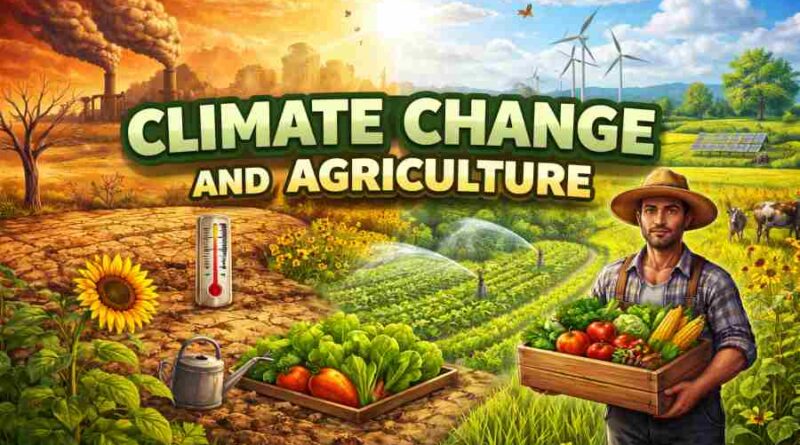
Climate change is one of the most pressing global challenges of the 21st century, and its impact on agriculture is both profound and far-reaching. Agriculture depends heavily on climate conditions such as temperature, rainfall, and seasonal patterns. Even slight changes in these factors can significantly affect crop production, livestock health, and overall food security. As climate change continues to intensify, farmers across the world are facing new and unpredictable challenges.
Table of Contents
What is Climate Change?
Climate change refers to long-term alterations in temperature, precipitation patterns and other atmospheric conditions on Earth. It is primarily caused by the increase in greenhouse gases such as carbon dioxide, methane, and nitrous oxide due to human activities like burning fossil fuels, deforestation, and industrial processes.
Agriculture itself contributes to climate change through emissions from livestock, rice cultivation, and excessive use of fertilizers. This creates a cycle where agriculture both affects and is affected by climate change.
Impact of Climate Change on Agriculture
1. Changes in Temperature
Rising global temperatures can have both positive and negative effects on agriculture. In some regions, warmer temperatures may extend the growing season. However, in many parts of the world, excessive heat reduces crop yields and affects plant growth.
Heat stress can damage crops such as wheat, rice, and maize. It also affects livestock by reducing productivity, fertility, and milk production.
2. Irregular Rainfall Patterns
Climate change has disrupted traditional rainfall patterns. Some regions experience intense rainfall and flooding, while others face prolonged droughts. These changes make it difficult for farmers to plan planting and harvesting cycles.
Unpredictable rainfall can lead to crop failure, soil erosion, and reduced water availability for irrigation.
3. Increased Frequency of Extreme Weather Events
Extreme weather events such as cyclones, floods, and heatwaves are becoming more frequent and severe. These events can destroy crops, damage infrastructure, and lead to heavy economic losses for farmers.
For example, floods can wash away fertile topsoil, while droughts can make land unsuitable for farming.
4. Pest and Disease Outbreaks
Warmer temperatures and changing humidity levels create favorable conditions for pests and diseases. This increases the risk of crop damage and reduces agricultural productivity.
Farmers may need to use more pesticides, which can harm the environment and increase production costs.
5. Impact on Soil Health
Climate change affects soil quality through erosion, loss of organic matter, and increased salinity. Healthy soil is essential for crop growth, and its degradation can lead to reduced agricultural productivity over time.
Effects on Food Security
Agriculture is the backbone of global food supply. Climate change threatens food security by reducing crop yields and increasing the risk of food shortages. Developing countries, where agriculture is a major source of livelihood, are particularly vulnerable.
Rising food prices, reduced availability of nutritious food, and increased hunger are some of the consequences of climate change on agriculture.
Adaptation Strategies in Agriculture
To cope with the impacts of climate change, farmers and governments are adopting various adaptation strategies.
1. Climate-Resilient Crops
Developing and using drought-resistant, heat-tolerant, and flood-resistant crop varieties can help farmers adapt to changing climate conditions.
2. Improved Irrigation Techniques
Efficient irrigation methods such as drip irrigation and rainwater harvesting can help conserve water and ensure better crop growth.
3. Sustainable Farming Practices
Practices like crop rotation, organic farming, and agroforestry improve soil health and reduce environmental impact. These methods also enhance the resilience of farming systems.
4. Use of Technology
Modern technologies such as weather forecasting, satellite monitoring, and mobile apps help farmers make informed decisions about planting, irrigation, and harvesting.
Mitigation Measures
While adaptation is essential, reducing the causes of climate change is equally important.
- Reducing greenhouse gas emissions from agriculture
- Promoting renewable energy in farming
- Minimizing the use of chemical fertilizers
- Encouraging sustainable land-use practices
Agroforestry and conservation agriculture can also play a key role in capturing carbon and reducing environmental impact.
Role of Government and Policy
Governments play a crucial role in addressing climate change and supporting farmers. Policies should focus on:
- Providing financial support and insurance to farmers
- Promoting research in climate-resilient agriculture
- Raising awareness about sustainable practices
- Strengthening rural infrastructure
International cooperation is also necessary to tackle the global nature of climate change.
Summary
Climate change and agriculture are deeply interconnected. While agriculture contributes to climate change, it is also one of the most affected sectors. Rising temperatures, unpredictable rainfall, and extreme weather events pose serious challenges to food production and farmer livelihoods.
However, with the right strategies, including sustainable farming practices, technological advancements, and strong policy support, it is possible to reduce the impact of climate change on agriculture. Ensuring food security for future generations will require collective efforts from farmers, governments, and individuals worldwide.
By adopting eco-friendly practices and promoting awareness, we can build a more resilient agricultural system and protect the environment for years to come.
Also Check: Environment