Components of Environment – Biotic and Abiotic Factors of Nature
Learn about the components of environment including biotic and abiotic factors, their meaning, examples and importance in sustaining life on Earth.
Components of Environment
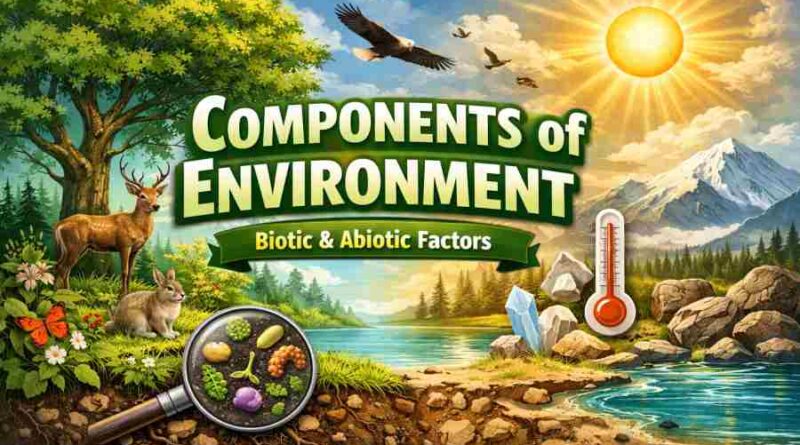
The environment is everything that surrounds us and influences life on Earth. From the air we breathe to the plants and animals we see, every element plays a vital role in maintaining ecological balance. To understand how nature functions smoothly, it is important to study the components of the environment. Broadly, the environment is divided into two main components: biotic (living) and abiotic (non-living). These components interact with each other continuously, making life possible and sustainable on our planet.
Table of Contents
What are the Components of Environment?
The components of the environment refer to all the living and non-living elements present in nature. Together, they form ecosystems where organisms survive, grow, and reproduce. These components are classified into:
- Biotic Components – All living organisms
- Abiotic Components – All non-living physical and chemical factors
Both are equally important, as life cannot exist without their interaction.
Biotic Components of Environment
Biotic components include all living beings present in the environment. These organisms depend on abiotic factors like air, water, and soil for survival. Based on their role in the ecosystem, biotic components are further divided into three groups.
1. Producers (Autotrophs)
Producers are organisms that prepare their own food using sunlight, carbon dioxide, and water through the process of photosynthesis. They form the base of the food chain.
Examples:
- Green plants
- Trees
- Algae
- Phytoplankton
Producers provide energy to all other organisms either directly or indirectly.
2. Consumers (Heterotrophs)
Consumers depend on producers or other organisms for food. They cannot make their own food.
Types of Consumers:
- Herbivores: Animals that eat plants (cow, deer)
- Carnivores: Animals that eat other animals (lion, tiger)
- Omnivores: Animals that feed on both plant-based foods and other animals, such as humans and bears.
Consumers help in maintaining population balance within ecosystems.
3. Decomposers
Decomposers convert dead plants and animals into simple substances, returning nutrients to the environment for reuse. This process returns nutrients to the soil and keeps the environment clean.
Examples:
- Bacteria
- Fungi
Without decomposers, waste would accumulate, and nutrient recycling would stop.
Abiotic Components of Environment
Abiotic components are the non-living elements that influence living organisms. Though they do not have life, they are essential for survival and growth.
1. Air
Air is made up of different gases such as oxygen, nitrogen, and carbon dioxide. Oxygen helps living beings breathe, while carbon dioxide is used by plants to make food through photosynthesis.
2. Water
Water is one of the most important abiotic components. It is necessary for drinking, agriculture, industrial use, and maintaining body functions of organisms.
3. Soil
Soil supports plant growth by providing nutrients, water, and anchorage. It is also home to many organisms like earthworms and microbes.
4. Sunlight
Sunlight is the primary source of energy on Earth. It drives photosynthesis and controls climate, seasons, and temperature.
5. Temperature
Temperature affects the survival, growth, and distribution of organisms. Extreme temperatures can limit life in certain regions.
6. Minerals and Nutrients
Minerals like calcium, phosphorus, iron, and nitrogen are essential for plant and animal growth. They are absorbed from soil and water.
Interaction Between Biotic and Abiotic Components
Biotic and abiotic components are closely interconnected. Plants use sunlight, water, air, and soil to grow. Animals rely on plants for food and also depend on the oxygen released by plants to survive. Decomposers return nutrients back to the soil, which again supports plant life. This continuous interaction maintains ecological balance and ensures the smooth functioning of ecosystems.
Importance of Biotic and Abiotic Components
- Support life on Earth
- Maintain ecological balance
- Enable food chains and food webs
- Regulate natural cycles like water, carbon, and nitrogen cycles
- Help in sustainable development
Any imbalance in these components can lead to environmental problems such as climate change, loss of biodiversity, and pollution.
Summary
The environment is a complex system made up of biotic and abiotic components that work together to sustain life. Biotic components bring life into ecosystems, while abiotic components provide the essential conditions for survival. Understanding these components helps us realize the importance of protecting nature and using resources wisely. A balanced environment is key to a healthy and sustainable future for all living beings.
Also Check: Environment