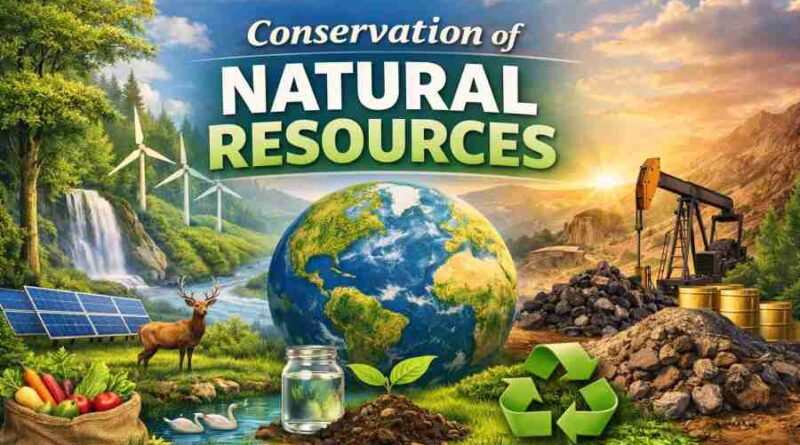
Conservation of Natural Resources – Importance, Methods and Sustainable Future
Learn about Conservation of Natural Resources, its importance, practical methods and how sustainable use can protect our planet for future generations.
Conservation of Natural Resources
Natural resources are the backbone of human life. Everything we use in our daily lives, from the air we breathe to the water we drink, comes from nature. These resources support industries, agriculture, transportation, and even technology. However, due to rapid population growth, industrialization, and overconsumption, many natural resources are being depleted at an alarming rate. This makes conservation of natural resources not just important, but absolutely necessary.
In simple terms, conservation of natural resources means using them wisely and responsibly so that they are available for future generations. It is about maintaining a balance between human needs and environmental protection.
Table of Contents
What are Natural Resources?
Natural resources are things that we get directly from nature and use in our daily lives. These resources are generally divided into two main types:
1. Renewable Resources
These resources can be replenished naturally over time. Examples include:
- Sunlight
- Wind
- Water
- Forests
If managed properly, renewable resources can last indefinitely.
2. Non-Renewable Resources
These resources are limited in quantity and take millions of years to develop. Once they are exhausted, they cannot be quickly or easily replaced. Examples include:
- Coal
- Petroleum
- Natural gas
- Minerals
Because non-renewable resources are finite, their conservation is especially important.
Why is Conservation of Natural Resources Important?
1. To Maintain Ecological Balance
Natural resources help maintain the balance of ecosystems. Forests regulate climate, oceans support marine life, and soil supports agriculture. Overexploitation disturbs this balance and leads to environmental problems.
2. To Prevent Resource Depletion
Too much mining, cutting down trees, and overfishing can use up natural resources very quickly. Conservation helps protect these resources so they remain available for future generations.
3. To Reduce Environmental Pollution
Overuse of fossil fuels increases air pollution and contributes to climate change. Conserving energy and switching to cleaner alternatives reduces environmental damage.
4. To Support Sustainable Development
Sustainable development means fulfilling our current needs without harming the ability of future generations to meet theirs. Conservation plays an important role in achieving this balance.
Major Natural Resources That Need Conservation
1. Water
Although Earth is covered mostly by water, only a small percentage is suitable for drinking. Water conservation involves reducing wastage, harvesting rainwater, and preventing pollution.
2. Forests
Forests provide oxygen, absorb carbon dioxide, and support wildlife. Preventing deforestation and promoting afforestation are essential conservation methods.
3. Soil
Soil erosion and pollution reduce agricultural productivity. Practices like crop rotation, organic farming, and planting trees help conserve soil.
4. Minerals and Fossil Fuels
These non-renewable resources must be used carefully. Recycling metals and reducing fuel consumption are important conservation steps.
Methods of Conserving Natural Resources
1. Reduce, Reuse, Recycle
The 3Rs are simple yet powerful tools:
- Reduce waste and unnecessary consumption.
- Reuse items instead of discarding them.
- Recycle materials like paper, plastic, and metal.
2. Energy Conservation
Switching off electrical appliances when not in use, using energy-efficient devices, and adopting renewable energy sources like solar and wind power can significantly reduce resource consumption.
3. Water Conservation Techniques
- Fix leaking taps
- Use water-saving fixtures
- Practice rainwater harvesting
- Avoid water pollution
4. Sustainable Agriculture
Using organic fertilizers, conserving water through drip irrigation, and avoiding excessive chemical use help protect soil and water resources.
5. Forest Protection
Preventing illegal logging, promoting tree plantation drives, and creating protected forest areas are effective conservation measures.
Role of Individuals in Conservation
Conservation is not just the duty of governments or organizations. Every individual also has an important role to play. Even small everyday actions can create a big positive impact:
- Turn off lights and fans when leaving a room
- Avoid single-use plastics
- Use public transport or carpool
- Plant trees in your community
- Support eco-friendly products
When millions of people take small steps, the combined impact is powerful.
Government and Global Efforts
Governments around the world implement policies and laws to protect natural resources. Protected wildlife reserves, pollution control laws, and renewable energy programs are examples of such efforts. International cooperation is also important because environmental issues often cross national boundaries.
Global awareness campaigns encourage sustainable living and responsible consumption. Education and environmental awareness programs help people understand the importance of conservation.
Challenges in Conservation
Despite awareness, several challenges remain:
- Rapid population growth
- Urbanization
- Industrial expansion
- Illegal exploitation of resources
- Lack of environmental awareness
Addressing these challenges requires strong policies, community participation, and technological innovation.
The Way Forward
The future of our planet depends on how responsibly we use natural resources today. Conservation does not mean stopping development. Instead, it means developing in a smarter and more sustainable way. By adopting renewable energy, reducing waste, and promoting environmental education, we can protect the Earth for future generations.
Every resource we save today is an investment in tomorrow. If we act wisely and collectively, we can ensure that natural resources continue to support life on Earth for centuries to come.
Also Check: Environment