Deforestation – Meaning, Major Causes and Its Serious Effects on Our Planet
Learn about deforestation, its meaning, main causes and harmful effects on the environment, wildlife and climate in simple and easy language.
Deforestation
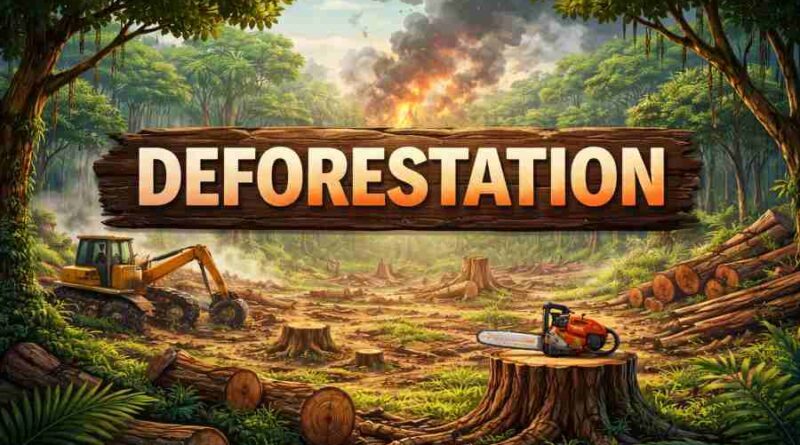
Forests are among the most important natural resources on our planet, as they support life, provide oxygen, and keep the environment balanced. They provide oxygen, regulate climate, support wildlife, and help maintain ecological balance. However, human activities are rapidly destroying forests around the world. This large-scale removal of trees is known as deforestation. It has become one of the most serious environmental issues of the modern era.
Understanding deforestation is important because forests play a crucial role in maintaining life on Earth. Without them, the balance of nature is disturbed, leading to serious environmental problems.
Table of Contents
What is Deforestation?
Deforestation refers to the permanent removal of trees and forest cover to use the land for other purposes such as agriculture, construction, mining, or urban development. When large areas of forest are cleared and not replanted, it leads to long-term environmental damage.
Forests cover about 31% of the Earth’s land area, according to the Food and Agriculture Organization (FAO). However, millions of hectares of forest are lost every year due to human activities.
It can happen naturally because of wildfires or natural disasters, but most of it is caused by human actions.
Major Causes of Deforestation
Deforestation occurs for several reasons, mainly driven by economic growth and increasing population demands. Let’s look at the major causes:
1. Agricultural Expansion
One of the biggest causes of deforestation is the expansion of agriculture. As the global population increases, the demand for food also rises. Forest lands are cleared to create farms and grazing fields for livestock.
Large-scale commercial farming, including palm oil plantations and cattle ranching, has led to massive forest destruction in regions like the Amazon Rainforest.
2. Logging
Logging involves cutting down trees for timber, paper, furniture, and fuel. While some logging is done legally and sustainably, illegal logging contributes significantly to forest loss. High demand for wood products encourages excessive tree cutting without proper replanting.
3. Urbanization and Infrastructure Development
As cities expand, forests are cleared to build roads, houses, industries, and dams. Rapid urban growth leads to permanent forest loss. Infrastructure projects such as highways and railways also require clearing large forest areas.
4. Mining Activities
Mining for minerals, coal, and oil requires clearing forests. These activities not only remove trees but also damage soil and pollute nearby water bodies.
5. Forest Fires
Some forest fires occur naturally due to lightning. However, many are intentionally set to clear land quickly for agriculture. Uncontrolled fires can spread rapidly and destroy vast forest areas.
Effects of Deforestation
Deforestation has wide-ranging environmental, social, and economic impacts. Its effects are not limited to one region but affect the entire planet.
1. Climate Change
Forests act as carbon sinks. They absorb carbon dioxide (CO₂), a major greenhouse gas, from the atmosphere. When trees are cut down, the stored carbon is released back into the atmosphere, increasing global warming.
Deforestation is one of the leading contributors to climate change. The increase in greenhouse gases strengthens the greenhouse effect, leading to rising global temperatures.
2. Loss of Biodiversity
Forests provide shelter and food to millions of different plants and animals, making them one of the richest habitats on Earth. When forests are destroyed, many species lose their natural habitat. Some animals are forced to migrate, while others become endangered or extinct.
The World Wildlife Fund (WWF) reports that habitat destruction is one of the main reasons for wildlife decline worldwide.
3. Soil Erosion
Tree roots hold the soil together. When trees are removed, the soil becomes loose and easily washed away by rain or blown away by wind. This process is called soil erosion.
Soil erosion reduces soil fertility, making it difficult to grow crops. It also leads to sedimentation in rivers, affecting aquatic life.
4. Disruption of the Water Cycle
Trees are an important part of the water cycle. They absorb water from the soil through their roots and release it into the air as moisture, a process known as transpiration. Deforestation disrupts this process, leading to reduced rainfall in some regions and increased flooding in others.
5. Impact on Indigenous Communities
Many indigenous communities depend on forests for food, shelter, medicine, and livelihood. Deforestation threatens their way of life and cultural identity.
How can Deforestation be Reduced?
Although deforestation is a serious issue, it can be controlled through collective efforts:
- Afforestation and Reforestation: Planting new trees and bringing damaged forests back to life helps restore nature and protect the environment for future generations.
- Sustainable Agriculture: Using farming methods that do not require clearing large forest areas.
- Strict Laws and Policies: Governments can enforce laws to prevent illegal logging.
- Using Recycled Products: Reducing demand for new paper and wood products.
- Spreading Awareness: Teaching people why forests are important helps create awareness and encourages everyone to protect and care for them.
Global agreements and cooperation between countries are essential to protect forests for future generations.
Summary
Deforestation is the large-scale removal of forests for human use. While it may provide short-term economic benefits, its long-term effects are harmful to the environment, wildlife, and climate. It contributes to climate change, loss of biodiversity, soil erosion, and disruption of the water cycle.
Forests are essential for maintaining life on Earth. Protecting them is not just an environmental responsibility but a necessity for human survival. By adopting sustainable practices and raising awareness, we can reduce deforestation and help create a healthier planet for future generations.
Also Check: Environment