Effects of Climate Change on Earth – Complete Information to Its Impact and Future
Explore the major Effects of Climate Change on Earth, including global warming, rising seas and extreme weather, explained in simple terms.
Effects of Climate Change on Earth
Climate change is one of the most serious environmental challenges facing our planet today. It refers to long-term changes in temperature, weather patterns, and natural systems, mainly caused by human activities such as burning fossil fuels, deforestation, and industrial pollution. While climate change may seem like a distant issue, its effects are already visible across the globe and are impacting life on Earth in many ways.
Understanding the effects of climate change is important because it helps us realize the urgency of protecting our environment and making sustainable choices for the future.
Table of Contents
1. Rising Global Temperatures
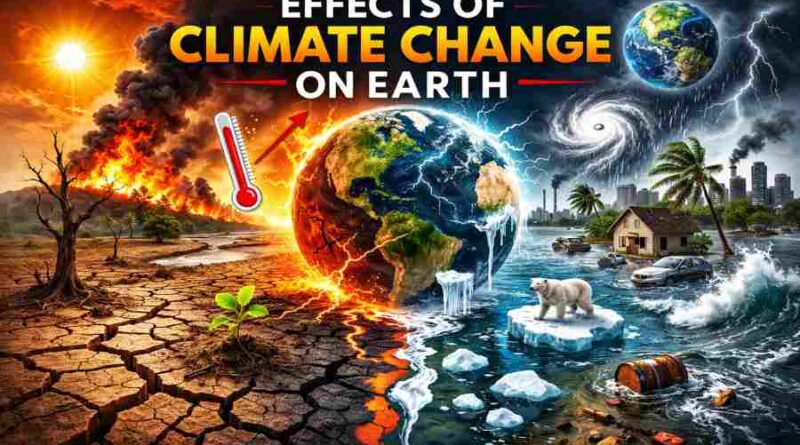
One of the most noticeable effects of climate change is the increase in Earth’s average temperature, commonly known as global warming. Over the past century, temperatures have risen significantly due to the accumulation of greenhouse gases in the atmosphere.
This rise in temperature leads to heatwaves, making summers hotter and more dangerous. In many regions, extreme heat can cause health problems such as dehydration, heatstroke, and even death. It also affects agriculture, reducing crop productivity and threatening food security.
2. Melting Glaciers and Ice Caps
Climate change is causing glaciers and polar ice caps to melt at an alarming rate. Regions like the Arctic and Antarctic are experiencing rapid ice loss.
As ice melts, it contributes to rising sea levels and disrupts ecosystems. Animals such as polar bears and penguins are losing their natural habitats, making survival more difficult. The melting of glaciers also reduces freshwater availability for millions of people who depend on them.
3. Rising Sea Levels
Another major effect of climate change is the rise in sea levels. This happens due to the melting of ice and the expansion of seawater as it warms.
Rising sea levels threaten coastal areas and low-lying regions. Cities and villages near the coast face flooding, erosion, and even permanent submersion. This leads to displacement of people, creating climate refugees and putting pressure on resources in other areas.
4. Extreme Weather Events
Climate change is making weather patterns more unpredictable and extreme. Events such as hurricanes, floods, droughts, and wildfires are becoming more frequent and intense.
- Floods destroy homes and crops
- Droughts lead to water shortages
- Cyclones and storms cause massive destruction
- Wildfires burn forests and wildlife habitats
These disasters not only cause economic losses but also lead to loss of human lives and biodiversity.
5. Loss of Biodiversity
Climate change is a major threat to biodiversity. Many species are unable to adapt quickly to changing temperatures and environmental conditions.
As habitats are destroyed or altered, plants and animals struggle to survive. Some species migrate to new areas, while others face extinction. Coral reefs, for example, are highly sensitive to temperature changes and are dying due to coral bleaching.
The loss of biodiversity affects the balance of ecosystems and reduces nature’s ability to provide essential services like clean air, water, and food.
6. Ocean Acidification
Oceans absorb a large amount of carbon dioxide from the atmosphere. While this helps reduce greenhouse gases, it leads to ocean acidification.
Increased acidity harms marine life, especially organisms with shells or skeletons like corals and shellfish. This disrupts marine ecosystems and affects the fishing industry, which millions of people depend on for their livelihood.
7. Impact on Agriculture and Food Supply
Climate change has a direct impact on agriculture. Changes in temperature and rainfall patterns affect crop growth and productivity.
- Unpredictable weather damages crops
- Water scarcity affects irrigation
- Increased pests and diseases harm plants
As a result, food production becomes unstable, leading to higher prices and food shortages in many parts of the world.
8. Health Risks for Humans
Climate change also affects human health in several ways. Rising temperatures and pollution levels increase the risk of diseases.
- Heat-related illnesses become more common
- Air pollution causes respiratory problems
- Waterborne diseases spread due to flooding
- Malnutrition increases due to food shortages
These health issues are especially severe in developing countries where healthcare resources are limited.
9. Water Scarcity
Climate change affects the availability of freshwater resources. Changes in rainfall patterns, melting glaciers, and droughts reduce water supply.
Many regions already facing water shortages are becoming more vulnerable. This leads to conflicts over water resources and affects daily life, agriculture, and industries.
10. Economic and Social Impacts
The effects of climate change are not just environmental, they are also economic and social. Natural disasters damage infrastructure, industries, and livelihoods. Governments have to spend huge amounts on recovery and adaptation. Poor communities are the most affected, as they have fewer resources to cope with these changes.
Climate change can also lead to migration, conflicts, and inequality, making it a global issue that requires collective action.
Summary
The effects of climate change on Earth are wide-ranging and deeply interconnected. From rising temperatures and melting ice to extreme weather events and biodiversity loss, the impact is already being felt across the planet.
If no action is taken, these effects will become more severe in the future. However, there is still hope. By reducing carbon emissions, using renewable energy, protecting forests, and adopting sustainable practices, we can slow down climate change and protect our planet.
Climate change is not just a scientific issue, it is a global responsibility. Every small step taken today can help create a safer and healthier Earth for future generations.
Also Check: Environment