Endangered Species – Meaning, Causes and Real Life Examples
Learn about Endangered Species: Meaning and Examples, their causes, importance and real life cases affecting biodiversity and ecosystem balance worldwide.
Endangered Species
The Earth is home to millions of living organisms, each playing a vital role in maintaining ecological balance. However, due to rapid environmental changes and human activities, many species today are facing the threat of extinction. These species are known as endangered species, and their protection has become one of the most pressing environmental concerns of our time.
Table of Contents
What is an Endangered Species?
An endangered species is a plant or animal that is at serious risk of becoming extinct in the near future. Extinction means that no individuals of that species remain alive on Earth. When a species is labeled as endangered, it indicates that its population has declined drastically and immediate conservation efforts are required to save it.
Species are categorized based on their risk levels, such as vulnerable, endangered, and critically endangered. These classifications help scientists and conservationists prioritize efforts to protect biodiversity.
Causes of Endangerment
There are several reasons why species become endangered, and most of them are linked to human activities. Some of the major causes include:
1. Habitat Loss
The destruction of natural habitats due to deforestation, urbanization, agriculture, and industrial development is the leading cause of species endangerment. When animals lose their homes, they struggle to survive and reproduce.
2. Climate Change
Global warming and changing weather patterns affect ecosystems worldwide. Rising temperatures, melting ice caps, and shifting rainfall patterns disrupt the natural habitats of many species.
3. Poaching and Illegal Hunting
Many animals are hunted for their skin, bones, horns, or other body parts. Illegal wildlife trade has pushed several species toward extinction.
4. Pollution
Air, water, and soil pollution harm both plants and animals. Chemicals, plastics, and waste products can destroy habitats and poison living organisms.
5. Overexploitation
Overfishing, excessive hunting, and unsustainable use of natural resources reduce species populations faster than they can recover.
6. Invasive Species
Non-native species introduced into an ecosystem can compete with native species for resources, often leading to population decline.
Examples of Endangered Species
Across the globe, many species are currently endangered. Here are some well-known examples:
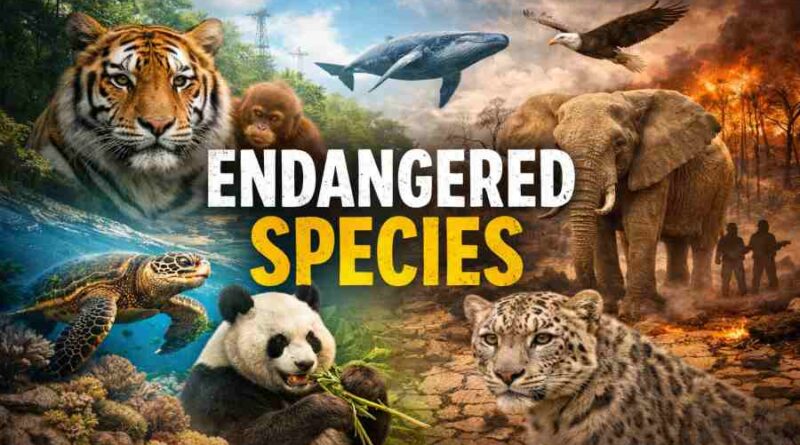
1. Bengal Tiger
The Bengal tiger is one of the most iconic animals found in India. Due to habitat loss and poaching, its population has significantly decreased. Conservation programs like Project Tiger have helped improve their numbers, but they still remain endangered.
2. Giant Panda
Native to China, the giant panda depends on bamboo forests for survival. Habitat destruction has been a major threat, although conservation efforts have shown positive results in recent years.
3. Blue Whale
The blue whale, the largest animal on Earth, was heavily hunted in the past. Though hunting has been banned, threats like ship collisions and ocean pollution still affect its population.
4. Asian Elephant
Asian elephants are endangered due to habitat fragmentation, human-wildlife conflict, and poaching for ivory. They play a crucial role in maintaining forest ecosystems.
5. Snow Leopard
Found in the mountainous regions of Central and South Asia, the snow leopard is threatened by poaching and habitat loss. Its elusive nature makes conservation efforts challenging.
6. Hawksbill Turtle
This sea turtle species is critically endangered due to illegal trade of its shell and marine pollution. Coral reef destruction also affects its survival.
Importance of Protecting Endangered Species
Protecting endangered species is not just about saving animals and plants; it is about preserving the balance of ecosystems. Every species has a role to play, and the loss of one can affect many others.
- Maintaining Ecological Balance: Predators, prey, and plants all depend on each other.
- Biodiversity Conservation: A rich variety of species ensures ecosystem stability.
- Human Benefits: Many medicines, food sources, and materials come from plants and animals.
- Cultural and Aesthetic Value: Wildlife is an important part of our heritage and natural beauty.
Conservation Efforts
Governments, organizations, and individuals are working together to protect endangered species. Some key conservation measures include:
- Wildlife Protection Laws: Strict regulations to prevent hunting and trade.
- Protected Areas: National parks, wildlife sanctuaries, and reserves.
- Breeding Programs: Captive breeding and reintroduction into the wild.
- Public Awareness: Educating people about the importance of conservation.
- Sustainable Practices: Reducing deforestation, pollution, and overuse of resources.
What Can We Do?
Every individual can contribute to protecting endangered species. Simple actions can make a big difference:
- Avoid using products made from animal parts
- Support wildlife conservation organizations
- Reduce plastic use and pollution
- Spread awareness about endangered species
- Plant trees and protect natural habitats
Summary
Endangered species are a warning sign of the imbalance in our environment. Human actions have pushed many species to the brink of extinction, but with awareness, responsibility, and collective efforts, we can reverse the damage. Protecting endangered species is not just an environmental duty—it is essential for the survival of life on Earth.
By understanding their importance and taking action, we can ensure that future generations inherit a planet rich in biodiversity and natural beauty.
Also Check: Environment