Environmental Balance – Importance, Causes of Imbalance and Ways to Protect Our Planet
Learn what environmental balance is, why it is important for life on Earth, the causes of imbalance and practical ways to maintain a healthy environment.
Environmental Balance
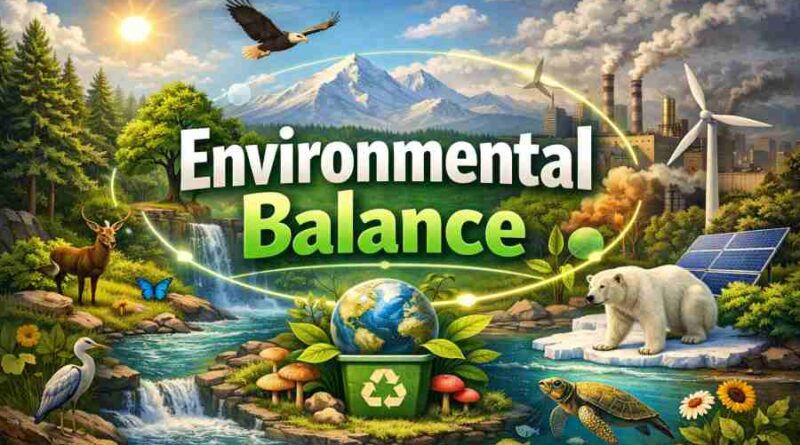
Environmental balance refers to the natural stability that exists within ecosystems where living organisms and non-living elements interact in harmony. It is the condition in which plants, animals, humans, microorganisms, air, water, and soil coexist in a way that supports sustainable life on Earth. When this balance is maintained, nature functions smoothly. When it is disturbed, serious environmental problems can arise.
The environment is made up of two main components: biotic (living organisms such as plants, animals, and humans) and abiotic (non-living elements such as sunlight, air, water, soil, and minerals). Environmental balance occurs when these components interact in a stable and sustainable manner. Every organism plays a specific role in maintaining this stability, and even a small disruption can affect the entire system.
Table of Contents
Importance of Environmental Balance
Environmental balance is essential for the survival of all living beings. It ensures that natural processes such as the water cycle, carbon cycle, nitrogen cycle, and food chains function properly. These natural cycles regulate climate, purify water, recycle nutrients, and provide food and oxygen.
One of the most important benefits of environmental balance is biodiversity conservation. A balanced environment supports a wide variety of species. Each species contributes to ecosystem health. For example, plants produce oxygen and serve as food for animals. Herbivores control plant populations, while carnivores maintain the population of herbivores. Decomposers like bacteria and fungi break down dead organisms and return nutrients to the soil.
Environmental balance also protects human health. Clean air, safe drinking water, fertile soil, and stable weather patterns are all results of a balanced environment. When balance is disturbed, pollution, climate change, and natural disasters become more frequent and severe.
How Environmental Balance Works
Environmental balance is maintained through interconnected natural systems. Food chains and food webs are good examples. In a food chain, energy flows from the sun to plants (producers), then to herbivores (primary consumers), and finally to carnivores (secondary or tertiary consumers). Decomposers complete the cycle by breaking down dead matter.
Natural cycles also play a vital role. The water cycle distributes fresh water across the planet. The carbon cycle regulates carbon dioxide levels in the atmosphere. Plants absorb carbon dioxide during photosynthesis and release oxygen, helping to maintain atmospheric balance.
Predator-prey relationships also help maintain population control. If predators disappear, prey populations may grow rapidly, leading to overgrazing and habitat destruction. This shows how delicate environmental balance can be.
Causes of Environmental Imbalance
Unfortunately, environmental balance is increasingly disturbed by human activities. Some of the major causes include:
1. Deforestation
Cutting down forests reduces oxygen production and destroys habitats. It also increases carbon dioxide levels, contributing to global warming.
2. Pollution
Air, water, and soil pollution harm living organisms. Industrial waste, plastic pollution, and harmful gases disrupt natural systems and poison ecosystems.
3. Climate Change
Rising global temperatures affect weather patterns, sea levels, and biodiversity. Many species struggle to adapt to rapid climate changes.
4. Overpopulation
As the human population grows, the demand for food, water, and land increases. This leads to overexploitation of natural resources.
5. Overexploitation of Resources
Excessive mining, fishing, and hunting reduce natural populations and disturb ecological stability.
6. Urbanization and Industrialization
Expanding cities and industries replace natural habitats with concrete structures, reducing green spaces and biodiversity.
Effects of Environmental Imbalance
When environmental balance is disturbed, the consequences can be serious and long-lasting.
- Loss of Biodiversity: Many species become endangered or extinct due to habitat destruction.
- Climate Instability: Extreme weather events such as floods, droughts, and storms become more frequent.
- Food Shortages: Disruption in food chains affects agricultural productivity.
- Health Problems: Pollution leads to respiratory diseases and waterborne illnesses.
- Soil Degradation: Overuse of land reduces soil fertility, affecting crop production.
Environmental imbalance does not affect only one region; it impacts the entire planet. For example, deforestation in one country can contribute to global climate change.
Ways to Maintain Environmental Balance
Protecting environmental balance requires collective effort from individuals, communities, governments, and organizations. Some effective measures include:
1. Afforestation and Reforestation
Planting more trees helps restore oxygen levels and absorb carbon dioxide.
2. Reducing Pollution
Using clean energy sources, minimizing plastic use, and proper waste management can significantly reduce pollution.
3. Conservation of Natural Resources
Water, forests, minerals, and fossil fuels should be used wisely and sustainably.
4. Promoting Renewable Energy
Solar, wind, and hydro energy are environmentally friendly alternatives to fossil fuels.
5. Wildlife Protection
Protecting endangered species and preserving natural habitats supports biodiversity.
6. Sustainable Agriculture
Eco-friendly farming methods maintain soil health and reduce chemical usage.
7. Public Awareness and Education
Educating people about environmental protection encourages responsible behavior.
Role of Individuals in Maintaining Environmental Balance
Every individual has a role to play. Simple actions such as saving water, turning off unused lights, using public transport, recycling waste, and planting trees can make a big difference. Supporting eco-friendly products and spreading awareness also contribute to environmental protection.
Environmental balance is not just the responsibility of governments. It is a shared duty. When individuals make small positive changes, the combined impact can be significant.
Summary
Environmental balance is the foundation of life on Earth. It ensures that natural systems function efficiently and that living organisms coexist peacefully. However, human activities have disturbed this delicate balance, leading to serious environmental challenges.
Maintaining environmental balance requires conscious efforts to reduce pollution, conserve resources, protect biodiversity, and promote sustainable development. By understanding its importance and taking responsible actions, we can protect our planet for present and future generations. A balanced environment is not a luxury, it is a necessity for survival.
Also Check: Environment