Environmental Education – Building a Greener Future through Awareness and Action
Discover how Environmental Education shapes sustainable thinking, promotes eco-friendly habits and empowers communities to protect our planet’s future.
Environmental Education
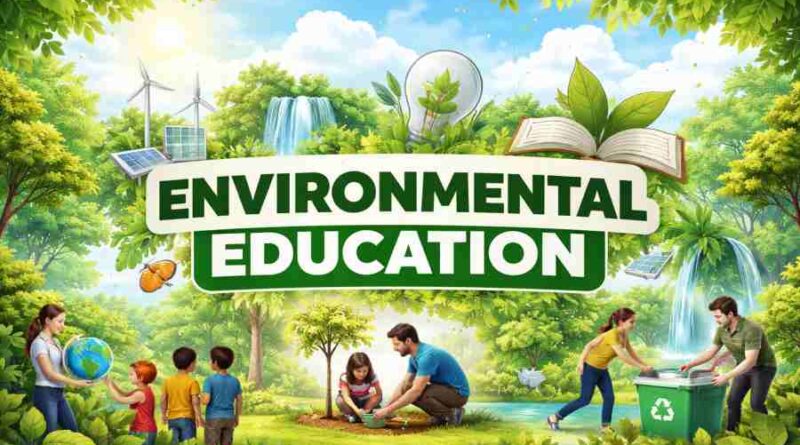
Environmental Education is a powerful tool that helps individuals understand the relationship between humans and the natural world. In today’s rapidly changing world, where environmental issues such as climate change, pollution, and biodiversity loss are becoming more serious, the need for awareness and education has never been greater. Environmental Education not only spreads knowledge but also encourages responsible behavior and sustainable living practices.
Table of Contents
What is Environmental Education?
Environmental Education refers to the process of learning about the environment and developing the skills, attitudes, and motivation needed to make informed decisions about environmental issues. It aims to create awareness about ecological problems and inspire people to take positive actions toward protecting the environment.
Organizations like UNESCO have played a significant role in promoting Environmental Education globally by integrating it into school curricula and community programs.
Importance of Environmental Education
1. Promotes Awareness and Understanding
One of the primary goals of Environmental Education is to increase awareness about environmental challenges. Many people are unaware of how their daily activities impact nature. Through education, individuals gain knowledge about issues such as deforestation, global warming, and water scarcity.
2. Encourages Sustainable Living
Education of Environment teaches people how to live sustainably by conserving resources, reducing waste, and minimizing pollution. Simple habits like saving electricity, recycling materials, and using eco-friendly products can make a significant difference.
3. Develops Critical Thinking Skills
It helps individuals analyze environmental problems and find practical solutions. Instead of blindly following practices, people learn to question and evaluate the environmental impact of their actions.
4. Builds Responsible Citizens
An environmentally educated person becomes more responsible toward society and nature. They understand their role in protecting the environment and are more likely to participate in activities like tree plantation, cleanliness drives, and conservation efforts.
5. Supports Conservation Efforts
Education of Environment plays a key role in protecting natural resources such as forests, wildlife, and water bodies. By understanding their importance, people are more likely to support conservation programs and policies.
Scope in Education of Environment
The scope of Environmental Education is vast and extends across different levels and sectors of society.
1. Formal Education
Education of Environment is increasingly being included in school and college curricula. Subjects related to ecology, sustainability, and environmental science help students understand real-world issues from an early age.
2. Non-Formal Education
Apart from schools, Education of Environment is also provided through workshops, seminars, and community programs. NGOs and government agencies often organize awareness campaigns to educate the public.
3. Informal Education
Media platforms such as television, social media, documentaries, and newspapers play an important role in spreading environmental awareness. People learn about environmental issues through news reports, online articles, and educational videos.
4. Professional and Vocational Fields
Education of Environment also opens up career opportunities in fields like environmental science, conservation, wildlife management, and sustainable development. Professionals in these areas work toward solving environmental problems and promoting eco-friendly practices.
5. Global Perspective
Environmental issues are not limited to one country, they are global in nature. Education of Environment helps people understand global challenges and encourages international cooperation to address problems like climate change and pollution.
Key Components of Environmental Education
Environmental Education is based on several important components:
- Awareness: Understanding environmental issues and their impact
- Knowledge: Learning about ecosystems, biodiversity, and sustainability
- Attitude: Developing a sense of responsibility toward nature
- Skills: Gaining the ability to solve environmental problems
- Participation: Taking active steps to protect the environment
Role of Environmental Education in Sustainable Development
Education of Environment is closely linked to sustainable development. It helps people balance economic growth with environmental protection. By promoting responsible use of resources, it ensures that future generations can also meet their needs.
For example, educating farmers about sustainable agriculture practices can reduce soil degradation and improve crop productivity. Similarly, spreading awareness about renewable energy sources can reduce dependence on fossil fuels.
Challenges in Education of Environment
Despite its importance, Education of Environment faces several challenges:
- Lack of awareness in rural and remote areas
- Limited resources and trained educators
- Insufficient integration into school systems
- Low public participation in environmental programs
Addressing these challenges requires strong policies, government support, and active involvement from society.
Summary
Education of Environment is essential for creating a sustainable and healthy future. It empowers individuals with the knowledge and skills needed to protect the environment and make informed decisions. As environmental challenges continue to grow, the role of education becomes even more critical.
By promoting awareness, encouraging sustainable practices, and fostering a sense of responsibility, Environmental Education can bring about positive change at both individual and global levels. Investing in Environmental Education today is an investment in a better tomorrow for our planet.
Also Check: Environment