Global Warming – Causes, Effects and Simple Solutions for a Safer Future
Learn what global warming is, its main causes, effects on the planet and practical solutions explained in simple language for beginners.
Global Warming
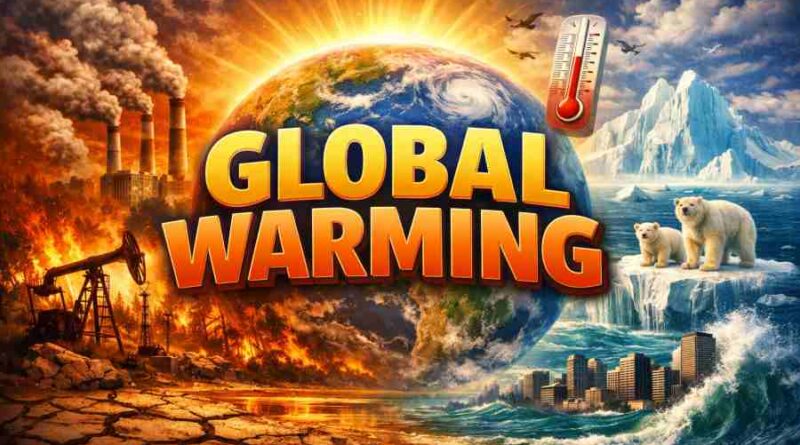
Global warming is one of the most talked-about environmental issues in the world today. But what does it really mean? In simple words, global warming refers to the gradual increase in the Earth’s average temperature over a long period of time. This rise in temperature is mainly caused by human activities that release harmful gases into the atmosphere.
Global warming is closely connected to climate change, a broader term that includes long-term changes in temperature, rainfall patterns, and weather conditions. While climate change covers many environmental shifts, global warming specifically focuses on the increase in global temperatures.
Table of Contents
What Causes Global Warming?
It mainly happens because the amount of greenhouse gases in the Earth’s atmosphere is increasing. These gases trap heat from the sun and make our planet warmer than normal. These gases trap heat from the sun and prevent it from escaping back into space. This process is known as the greenhouse effect.
Some of the major greenhouse gases include:
- Carbon dioxide (CO₂)
- Methane (CH₄)
- Nitrous oxide (N₂O)
These gases are released due to:
1. Burning of Fossil Fuels
When we burn coal, oil, and natural gas for electricity, transportation, and industries, large amounts of carbon dioxide are released. Cars, trucks, factories and power plants release large amounts of harmful gases into the air, making them some of the biggest contributors to global warming.
2. Deforestation
Trees absorb carbon dioxide from the air. When forests are cut down, not only do we lose this natural carbon absorber, but the stored carbon is also released back into the atmosphere.
3. Industrial Activities
Factories produce gases during manufacturing processes. Cement production and chemical industries are significant sources.
4. Agriculture
Farming activities, especially livestock farming, release methane gas. Rice cultivation and use of chemical fertilizers also contribute.
How Does Global Warming Affect the Earth?
The increase in global temperature leads to serious environmental changes. These effects are already visible in many parts of the world.
1. Rising Temperatures
Average temperatures around the world are increasing. Heatwaves are becoming more frequent and intense.
2. Melting of Ice Caps and Glaciers
In regions like Arctic and Antarctica, ice sheets and glaciers are melting at an alarming rate. This leads to rising sea levels.
3. Rising Sea Levels
As ice melts, the water flows into oceans, causing sea levels to rise. Coastal cities and islands are at risk of flooding.
4. Extreme Weather Events
Storms, hurricanes, droughts, and floods are becoming more frequent and severe. Weather patterns are becoming unpredictable.
5. Impact on Wildlife
Many animals and plants struggle to survive as their natural habitats change. Coral reefs are bleaching due to warmer oceans.
6. Health Problems
Higher temperatures can increase heat-related illnesses. Air pollution and the spread of diseases may also rise.
Difference Between Global Warming and Climate Change
Many people use these terms interchangeably, but they are slightly different.
- Global warming refers specifically to the increase in Earth’s average temperature.
- Climate change includes global warming and also other changes such as altered rainfall patterns, stronger storms, and shifting seasons.
In simple terms, global warming is one part of climate change.
Why It is a Serious Problem?
It affects every country, rich or poor. It does not respect borders. If the temperature continues to rise:
- Food production may decrease due to droughts.
- Water shortages could become common.
- Natural disasters may increase.
- Entire ecosystems could collapse.
Future generations may face more serious challenges if action is not taken today.
How can We Reduce Global Warming?
The good news is that global warming can be slowed down if people, governments, and industries work together.
1. Use Renewable Energy
Switching to solar, wind, and hydropower reduces dependence on fossil fuels.
2. Save Electricity
Turning off lights and appliances when not in use can reduce energy demand.
3. Plant More Trees
Trees naturally absorb carbon dioxide from the air and play a key role in keeping the environment cooler and healthier.
4. Reduce, Reuse, Recycle
Managing waste properly lowers pollution and saves resources.
5. Use Public Transport
Carpooling, cycling, and using buses or trains can reduce fuel consumption.
6. Spread Awareness
Educating others about environmental protection encourages collective action.
Role of International Efforts
Countries around the world are working together to tackle global warming. Agreements like the Paris Agreement aim to limit the rise in global temperature by reducing greenhouse gas emissions.
Governments set targets to reduce carbon emissions and promote clean energy. However, real change also depends on individual responsibility.
Summary
It is the gradual increase in the Earth’s temperature caused mainly by human activities such as burning fossil fuels and deforestation. It leads to serious problems like melting ice caps, rising sea levels, extreme weather, and health risks.
Although the situation is serious, it is not hopeless. By adopting sustainable practices, using renewable energy, conserving resources, and spreading awareness, we can reduce the impact of global warming.
Every small action matters. Protecting the environment today ensures a safer, healthier planet for future generations.
Also Check: Environment