HD Deve Gowda Biography – The Farmer’s Son Who Became India’s 11th Prime Minister
Read the inspiring HD Deve Gowda Biography, exploring the life, political journey and achievements of India’s 11th Prime Minister from humble beginnings.
HD Deve Gowda Biography
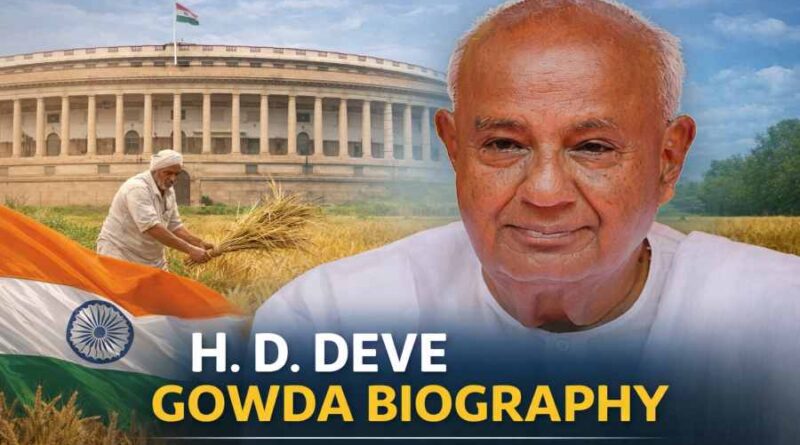
H. D. Deve Gowda is one of the notable figures in Indian politics who rose from a simple farming background to become the 11th Prime Minister of India. Known for his calm personality, dedication to farmers, and strong administrative skills, he played an important role in shaping regional and national politics. His journey from a rural village in Karnataka to the highest political office in India reflects determination, persistence, and deep commitment to public service.
Table of Contents
Early Life and Background
H. D. Deve Gowda was born on May 18, 1933, in the village of Haradanahalli, located in the Hassan district of Karnataka, India. He was born into a modest farming family, which greatly influenced his understanding of rural issues and the struggles faced by farmers.
From a young age, Gowda witnessed the difficulties of agricultural life. This early exposure shaped his future political priorities, as he always focused on policies that supported rural development and farmers’ welfare.
He completed his early education in Hassan and later pursued a Diploma in Civil Engineering. Although he had technical education, his passion for social service and politics led him toward public life rather than a professional engineering career.
Entry into Politics
Deve Gowda began his political journey in the 1960s. He first entered public life as a member of the Anjaneya Cooperative Society in Karnataka. His dedication and leadership qualities soon gained attention, and he joined mainstream politics.
In 1962, he was elected as an independent candidate to the Karnataka Legislative Assembly from the Holenarasipura constituency. His victory marked the beginning of a long and influential political career.
Over the years, he became associated with several political parties and movements, including the Janata Party. His political ideology emphasized social justice, rural development, and democratic governance.
Role in Karnataka Politics
During the 1970s and 1980s, Deve Gowda emerged as an important leader in Karnataka politics. He served multiple terms in the state assembly and held several key positions.
During the The Emergency declared by Indira Gandhi, Gowda strongly opposed the suspension of democratic rights and was even imprisoned for his political activities.
His popularity grew steadily due to his strong advocacy for farmers and irrigation projects. Eventually, he became the Chief Minister of Karnataka in 1994 as a leader of the Janata Dal.
Achievements as Chief Minister
As Chief Minister, Deve Gowda focused on:
- Strengthening irrigation projects
- Supporting rural infrastructure
- Promoting agricultural development
- Encouraging decentralized governance
His government initiated several irrigation schemes aimed at improving farming conditions in Karnataka.
Becoming the Prime Minister of India
In 1996, India witnessed a politically unstable period after the general elections produced a hung parliament. Several regional parties came together to form the United Front coalition government.
With support from the Indian National Congress, H. D. Deve Gowda was chosen as the consensus candidate for Prime Minister. On June 1, 1996, he took oath as the 11th Prime Minister of India, succeeding Atal Bihari Vajpayee. His tenure lasted until April 1997, after which he was succeeded by I. K. Gujral.
Although his time as Prime Minister was relatively short, he focused on:
- Strengthening federal relations with states
- Encouraging rural development programs
- Promoting economic stability
- Maintaining coalition harmony
Political Career After Prime Ministership
After leaving the Prime Minister’s office, Deve Gowda remained active in Indian politics. He continued to lead and guide the Janata Dal (Secular), which became an important regional party in Karnataka.
He served as a Member of Parliament multiple times and continued advocating for farmers’ rights, irrigation development, and regional autonomy.
Even in his later years, Gowda remained a respected political leader known for his simplicity, dedication, and deep understanding of grassroots politics.
Personal Life
H. D. Deve Gowda is known for his humble lifestyle and strong connection with rural communities. Despite holding high political positions, he maintained a simple way of living.
His son, H. D. Kumaraswamy, also became a prominent political leader and served as the Chief Minister of Karnataka. The Gowda family has remained influential in Karnataka politics for decades.
5 Inspiring Lessons from H. D. Deve Gowda’s Life
- Humble Beginnings Do Not Limit Success
Gowda rose from a small farming village to become India’s Prime Minister. - Stay Connected to Your Roots
His policies always reflected his deep understanding of rural life. - Persistence in Politics Matters
His long career shows the value of patience and dedication. - Stand for Democratic Values
He opposed authoritarian actions during the Emergency. - Leadership Requires Simplicity and Integrity
Gowda remained known for his modest lifestyle even after reaching the highest office.
Legacy and Contributions
H. D. Deve Gowda’s political journey highlights the importance of grassroots leadership in Indian democracy. His life story proves that a person from a small rural background can rise to the highest office in the country through dedication and public service.
He is especially remembered for:
- Advocating farmers’ rights
- Supporting irrigation and agriculture
- Strengthening regional political voices
- Promoting coalition governance in India
His leadership style emphasized consensus-building and respect for democratic institutions.
Also Check: Biography