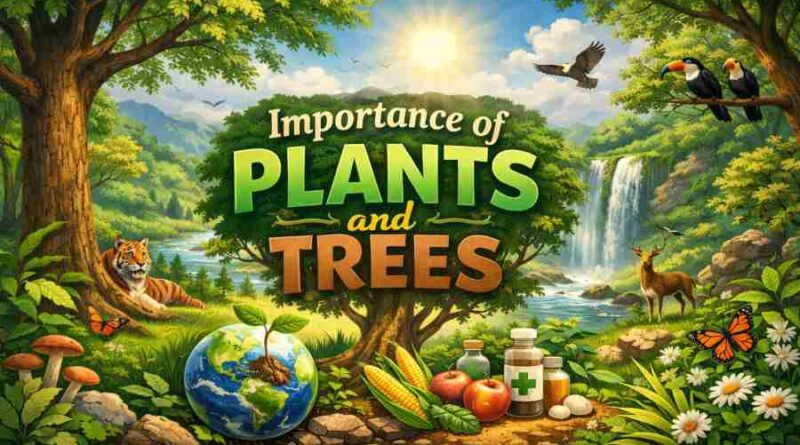
Importance of Plants and Trees – Lifelines of Earth and Guardians of Our Future
Discover the importance of plants and trees in maintaining ecological balance, producing oxygen, preventing climate change and supporting life on Earth.
Importance of Plants and Trees
Plants and trees are the backbone of life on Earth. Without them, survival would be impossible. They provide us with oxygen, food, medicine, shelter, and countless other benefits. From small grasses to giant forest trees, every plant plays a role in maintaining the balance of nature. Understanding the importance of plants and trees helps us realize why protecting them is essential for our future.
Table of Contents
Source of Oxygen and Air Purification
One of the most important functions of plants and trees is the production of oxygen. Through the process of photosynthesis, plants absorb carbon dioxide from the atmosphere and release oxygen. This oxygen is essential for humans and animals to breathe.
Trees also act as natural air filters. They absorb harmful gases such as carbon dioxide, sulfur dioxide, and nitrogen oxides. By trapping dust and pollutants on their leaves, they improve air quality and reduce health problems related to pollution.
Regulation of Climate
Plants and trees play a key role in controlling the Earth’s climate. By absorbing carbon dioxide, they help reduce the amount of greenhouse gases in the atmosphere. This helps slow down global warming and climate change.
Large forests, such as the Amazon Rainforest, are often called the “lungs of the Earth” because they absorb vast amounts of carbon dioxide and produce oxygen. Forests also influence rainfall patterns and help maintain temperature balance in different regions.
Prevention of Soil Erosion
Tree roots hold the soil firmly in place. Without plants, soil can easily be washed away by rain or blown away by wind. This process is known as soil erosion. Soil erosion reduces soil fertility and makes land unsuitable for farming.
Plants protect the top layer of soil and improve its quality by adding organic matter when leaves and branches decompose. This natural process keeps the soil rich and productive.
Support for Wildlife
Plants and trees provide food and shelter to countless species of animals, birds, and insects.Forests provide shelter to millions of plants and animals. When trees are cut down, these living beings lose their homes and struggle to survive.
For example, animals like the Bengal tiger depend on forest ecosystems for survival. Without forests, wildlife populations decline, leading to loss of biodiversity.
Source of Food and Nutrition
Plants are the main source of food for both humans and animals, forming the base of every food chain. Fruits, vegetables, grains, nuts, and seeds all come from plants. Even meat and dairy products depend on plants because animals feed on them.
Crops such as rice, wheat, and corn form the foundation of human diets across the world. Trees also provide fruits like mangoes, apples, and bananas that are rich in vitamins and minerals.
Medicinal Value
Many medicines are derived from plants. Traditional systems like Ayurveda have used herbs and plant extracts for thousands of years to treat diseases.
Even modern medicine relies on plants. Several life-saving drugs are made from plant compounds. Protecting plant diversity ensures that future medical discoveries remain possible.
Economic Importance
Plants and trees contribute significantly to the economy. The timber industry, paper production, agriculture, and herbal medicine sectors all depend on plant resources. Many people earn their livelihood from farming, forestry, and gardening.
In rural areas, forests provide fuelwood, fruits, and raw materials. Sustainable management of forests can support economic growth while protecting the environment.
Water Cycle and Rainfall
Trees play a crucial role in the water cycle. They absorb water from the soil and release it into the atmosphere through a process called transpiration. This helps in cloud formation and rainfall.
Forested areas usually receive more rainfall compared to barren lands. Trees also help recharge groundwater and reduce the risk of floods by absorbing excess rainwater.
Mental and Physical Health Benefits
Spending time around plants and trees has positive effects on mental health. Green spaces reduce stress, anxiety, and depression. Parks and gardens provide peaceful environments for relaxation and exercise.
Studies show that people living near green areas tend to have better physical and emotional well-being. Trees in cities also reduce noise pollution and create a healthier living environment.
Beautification and Cultural Value
Plants and trees enhance the beauty of our surroundings. Gardens, parks, and forests add color and freshness to landscapes. Many cultures consider trees sacred and include them in religious and cultural practices.
For example, the Bodhi Tree is highly respected in Buddhism as it is believed that Gautama Buddha attained enlightenment under it. Such examples show that trees hold not only environmental but also spiritual importance.
Role in Combating Climate Change
Climate change is one of the biggest challenges facing humanity today. Planting more trees and protecting forests can significantly reduce carbon levels in the atmosphere. Afforestation and reforestation efforts help restore degraded land and improve environmental health.
Governments and organizations around the world are promoting tree-planting campaigns to create a greener and more sustainable planet.
Conclusion
Plants and trees are essential for life on Earth. They provide oxygen, food, medicine, shelter, and economic support. They regulate climate, protect soil, conserve water, and support wildlife. Beyond their practical benefits, they improve mental health and add beauty to our world.
However, rapid urbanization, deforestation, and pollution are threatening plant life. It is our responsibility to protect and conserve trees for future generations. Simple actions such as planting trees, reducing paper waste, and supporting environmental conservation efforts can make a big difference.
Also Check: Environment