India Highlights PM KUSUM Solar Program for African Nations
India Highlights PM KUSUM Solar Program for African Nations, showcasing solar energy solutions to boost agriculture, rural energy access, and sustainability.
India Highlights PM KUSUM Solar Program for African Nations
India is taking its PM-KUSUM solar energy initiative to the global stage. The government plans to present this programme to African and island nations through the International Solar Alliance (ISA). The main goal is to enhance rural energy access and boost agricultural productivity by promoting the use of solar power in farming communities.
Table of Contents
Understanding the PM-KUSUM Programme
The PM-KUSUM (Pradhan Mantri Kisan Urja Suraksha evam Utthan Mahabhiyan) scheme was launched in 2019 with a total budget of ₹34,000 crore. Its main goal is to promote the use of solar energy in agriculture and reduce farmers’ reliance on costly diesel and electricity.
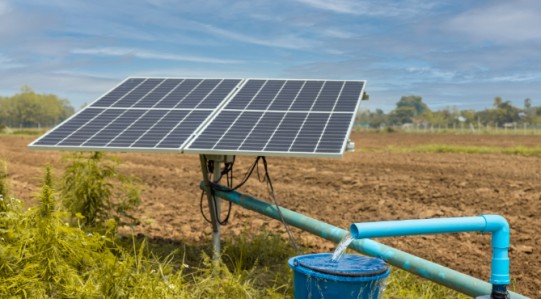
Under this initiative, the government plans to set up 100 GW of solar power plants on farmers’ land, install about 14 lakh standalone solar pumps, and solarize 35 lakh existing grid-connected agricultural pumps.
This programme aims to empower farmers, cut fuel costs, and make India’s agriculture sector more sustainable and energy-efficient.
Successes and Setbacks
The original goal of India’s solar mission was to achieve 308 GW of solar capacity by 2022, which has now been revised to 348 GW by March 2026. As of September 2025, progress varies across different components of the programme.
Nearly 70% of standalone solar pumps have been successfully installed, providing clean energy to many farmers. However, only 6% of decentralised grid-connected solar power plants and about 16%–25% of grid-connected agricultural pumps are operational. Delays in grid-connected projects continue to be a major hurdle, slowing the scheme’s overall momentum.
Next Steps and Upcoming Initiatives
According to MNRE Secretary Santosh Kumar Sarangi, the PM-KUSUM scheme could continue beyond 2026 to further strengthen solar energy adoption in agriculture. The installation of standalone solar pumps has been largely successful, and officials remain confident that remaining targets will soon be achieved.
Moving forward, the government is prioritizing the revival and acceleration of grid-connected projects to ensure the programme reaches its full potential.
International Participation and ISA Initiatives
India’s success with solar pumps has caught the attention of several African nations and island countries. In Africa, only about 4% of arable land is currently irrigated, which forces the continent to import food worth around $400 billion, despite having vast fertile areas.
Recognizing the potential, African leaders are exploring the adoption of solar-powered irrigation to boost agricultural productivity. The International Solar Alliance (ISA) serves as a platform for sharing knowledge, expertise, and best practices, helping India collaborate with these countries to expand clean energy solutions in agriculture.
Also Read: RBI Introduces Unified Interface to Tokenize Assets
Agricultural Growth and Energy Empowerment
The adoption of solar-powered pumps has significantly reduced farmers’ dependence on diesel and conventional electricity, offering a clean and reliable irrigation solution. This not only enhances crop productivity but also helps cut costs for farmers.
Beyond agriculture, the programme contributes to India’s renewable energy targets and broader climate goals. Its success has drawn international attention, with other developing regions exploring solar solutions to improve food security and promote sustainable farming practices.
Empowering Rural Economies
By reducing fuel costs and providing reliable irrigation, PM-KUSUM strengthens the financial stability of rural communities. Farmers can invest in better seeds, technology, and infrastructure, leading to increased productivity and income.
The programme also creates local employment opportunities in solar panel installation and maintenance, boosting rural economic growth sustainably.
Driving Climate Friendly Agriculture
PM-KUSUM supports a greener agricultural sector by replacing diesel-powered pumps with solar alternatives. This reduces carbon emissions, conserves natural resources, and aligns with India’s climate commitments.
Widespread adoption of solar technology in farming helps mitigate climate risks while ensuring farmers benefit from efficient, renewable energy-driven irrigation systems.
Also Check: Current Affairs