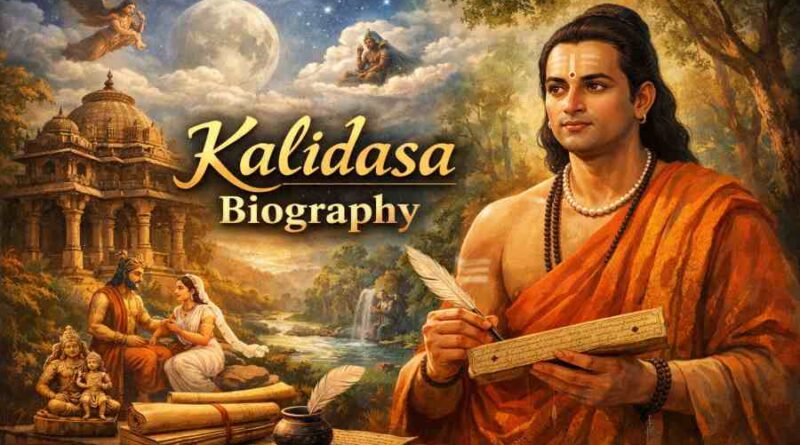
Kalidasa Biography – The Immortal Poet who Shaped Classical Sanskrit Literature
Discover the inspiring Kalidasa Biography, the legendary Sanskrit poet and playwright. Explore his life, works, literary genius, and timeless influence on Indian culture and world literature.
Kalidasa Biography Introduction
Kalidasa is universally celebrated as one of the greatest poets and dramatists in the history of Indian literature. Often referred to as the “Shakespeare of Sanskrit” his works represent the highest achievement of classical Sanskrit poetry and drama. Though details of his personal life remain surrounded by mystery, his literary brilliance continues to illuminate Indian culture even after centuries. Kalidasa’s poetry blends nature, philosophy, love, and human emotions with unmatched elegance, making his creations timeless and universal.
Table of Contents
Early Life and Background
The exact details of Kalidasa’s birth, birthplace, and family remain uncertain, as no reliable historical records exist. Scholars generally place him between the 4th and 5th century CE, during the glorious reign of the Gupta Empire, often regarded as the Golden Age of India. Many legends describe Kalidasa as a man of humble origins who initially lacked formal education.
According to popular folklore, Kalidasa was once a simple woodcutter with little knowledge. Through divine blessings, often associated with Goddess Kali, he gained extraordinary wisdom and poetic talent. While these stories may be symbolic rather than factual, they emphasize a powerful theme: true knowledge and creativity can arise from transformation and devotion.
Association with the Gupta Period
Kalidasa is widely believed to have been associated with the court of King Chandragupta II (Vikramaditya), one of the most celebrated rulers of ancient India. The Gupta era was marked by political stability, economic prosperity, and cultural advancement. This environment provided the perfect foundation for Kalidasa’s literary genius to flourish.
The refinement, sophistication, and optimism reflected in his works strongly align with the ideals of the Gupta age. His writings showcase a society deeply connected to art, nature, morality, and aesthetics.
Major Literary Works
Kalidasa’s contributions span poetry, epic literature, and drama. His works are admired not only for their linguistic beauty but also for their deep psychological insight and philosophical undertones.
1. Abhijnanashakuntalam
This is Kalidasa’s most famous play and a masterpiece of world drama. It narrates the love story of King Dushyanta and Shakuntala, exploring themes of love, memory, fate, and reunion. The play gained international recognition when it was translated into several European languages, influencing Western literature.
2. Meghaduta
A lyrical poem centered on a lovelorn yaksha who sends a message to his beloved through a cloud. Meghaduta is celebrated for its exquisite imagery, emotional depth, and detailed descriptions of Indian landscapes. It set a benchmark for lyrical poetry in Sanskrit.
3. Raghuvamsha
An epic poem that chronicles the lineage of the Raghu dynasty, including the life of Lord Rama. This work combines royal ideals, moral values, and poetic excellence, reflecting Kalidasa’s mastery over epic narration.
4. Kumarasambhava
This epic poem describes the birth of Lord Kartikeya (Kumara), son of Lord Shiva and Goddess Parvati. It beautifully portrays devotion, love, and cosmic purpose while maintaining artistic balance and spiritual depth.
5. Malavikagnimitram
A romantic play depicting the love story of King Agnimitra and Malavika. Though considered lighter than Shakuntalam, it showcases Kalidasa’s skill in character development and courtly romance.
Literary Style and Themes
Kalidasa’s writing is renowned for its clarity, elegance, and emotional richness. His use of metaphors, similes, and natural imagery is unparalleled. Nature in his works is not merely decorative but deeply symbolic, reflecting human emotions and spiritual truths.
Key themes in his writings include:
- Love and separation
- Duty and righteousness (Dharma)
- The harmony between humans and nature
- Spiritual growth and self-realization
His ability to balance emotion (Rasa) with intellect and philosophy made him a timeless literary icon.
Global Recognition and Influence
Kalidasa’s works crossed Indian borders centuries ago. Abhijnanashakuntalam deeply impressed European scholars and writers, including Johann Wolfgang von Goethe, who praised its beauty and emotional power. Today, Kalidasa is studied in universities worldwide and remains a symbol of India’s rich literary heritage.
His influence is evident in later Sanskrit poets, regional Indian literature, and even modern creative writing.
Legacy of Kalidasa
Despite the mystery surrounding his life, Kalidasa’s legacy is immortal. He elevated Sanskrit literature to artistic perfection and set standards that poets still aspire to achieve. His works continue to be performed on stage, translated into multiple languages, and celebrated in literary festivals.
Kalidasa stands as a reminder that true art transcends time, geography, and culture.
5 Life Inspirations from Kalidasa
- Transformation is Possible – Even humble beginnings can lead to greatness through dedication and learning.
- Nature is a Teacher – Harmony with nature enhances creativity and inner peace.
- Emotions Give Art Its Soul – Expressing human feelings honestly creates timeless works.
- Balance Intellect with Sensitivity – True wisdom blends knowledge with compassion.
- Legacy Outlives Life – Meaningful work ensures immortality beyond physical existence.
Summary
Kalidasa remains a towering figure in Indian and world literature. His poetic brilliance, philosophical depth, and emotional sensitivity have earned him eternal admiration. More than just a poet, Kalidasa was a visionary who understood the human heart and expressed it through words that still resonate today. His biography is not merely the story of a man, but the story of art, inspiration, and timeless genius.
Also Check: Biography