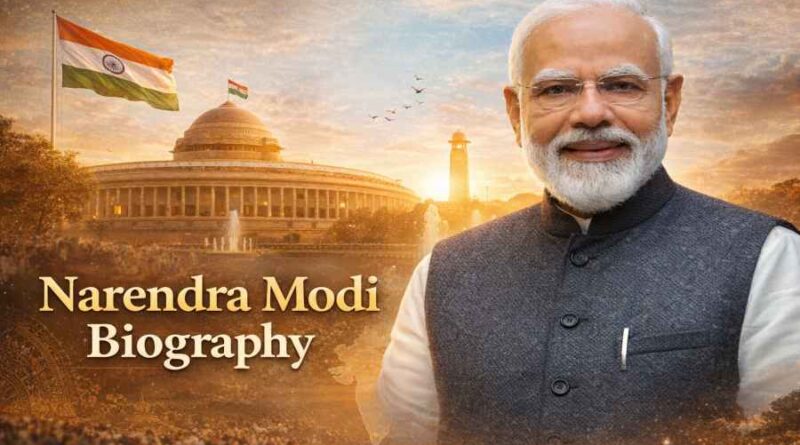
Narendra Modi Biography – From Tea Seller to 14th Prime Minister of India
Narendra Modi Biography: Discover the inspiring journey of Narendra Modi, from humble beginnings to becoming India’s PM and a global political leader.
Narendra Modi Biography
Narendra Modi is one of the most influential political leaders in modern India. Known for his strong leadership, bold decisions, and powerful communication skills, he has played a major role in shaping India’s domestic and international policies. From a modest childhood to leading the world’s largest democracy, Narendra Modi’s journey is a remarkable story of determination, discipline, and vision.
Table of Contents
Early Life and Childhood
Narendra Damodardas Modi was born on September 17, 1950, in the town of Vadnagar, located in the state of Gujarat. He grew up in a humble family with limited financial resources. His father, Damodardas Mulchand Modi, ran a small tea stall near a railway station, where young Narendra often helped him serve customers.
Despite financial struggles, Modi showed strong determination and curiosity from a young age. He was known to be an active student who enjoyed reading, debating, and participating in school plays. These early experiences helped develop his confidence and leadership abilities.
During his teenage years, he became interested in social work and national service. This interest eventually led him to join the Rashtriya Swayamsevak Sangh (RSS), where he learned discipline, organizational skills, and community service.
Education and Early Influences
Narendra Modi completed his schooling in Vadnagar and later pursued higher education. He earned a degree in political science from University of Delhi through distance learning and later completed a master’s degree in political science from Gujarat University.
During this period, Modi traveled across India, exploring different cultures and learning about the country’s diversity. These journeys helped shape his worldview and strengthened his desire to contribute to national development.
Entry into Politics
Narendra Modi’s political career began when he joined the Bharatiya Janata Party (BJP) in the 1980s. His hard work, dedication, and strategic thinking quickly gained the attention of party leaders.
He played a significant role in organizing political campaigns and strengthening the party’s presence in Gujarat. Modi’s ability to plan large political movements and connect with the public made him an important figure within the party.
Chief Minister of Gujarat
In 2001, Narendra Modi became the Chief Minister of Gujarat. During his tenure, he focused heavily on infrastructure development, industrial growth, and economic reforms.
Under his leadership, Gujarat experienced rapid economic progress. The state saw improvements in roads, electricity supply, and investment opportunities. Events such as the Vibrant Gujarat Global Summit helped attract international investors and boosted the state’s economy.
Modi served as Chief Minister for more than a decade, from 2001 to 2014, making him one of the longest-serving leaders in the state.
Becoming the Prime Minister of India
In 2014, Narendra Modi led the Bharatiya Janata Party to a historic victory in the Lok Sabha elections. He became the 14th Prime Minister of India on May 26, 2014.
His election marked a major shift in Indian politics. Modi campaigned on the promise of development, transparency, and strong governance.
In 2019, he was re-elected with an even larger majority, showing strong public support for his leadership.
Major Initiatives and Policies
As Prime Minister, Narendra Modi has launched several important initiatives aimed at improving India’s economy, infrastructure, and social welfare.
Some notable programs include:
- Digital India – Promoting technology and digital services across the country.
- Swachh Bharat Abhiyan – A nationwide cleanliness campaign to improve sanitation.
- Make in India – Encouraging manufacturing and investment in India.
- Pradhan Mantri Jan Dhan Yojana – Expanding banking access to millions of citizens.
- Startup India – Supporting innovation and entrepreneurship.
These programs have helped improve financial inclusion, infrastructure, and technological growth across the nation.
Global Leadership
Narendra Modi has also strengthened India’s global presence. He has built strong diplomatic relations with major countries and actively participated in international forums such as the United Nations and the G20.
His leadership during events like the G20 Summit 2023 highlighted India’s growing role in global decision-making.
Modi is widely recognized for his ability to communicate with both national and international audiences, often using social media and public events to connect with people.
Personal Life and Personality
Narendra Modi is known for his disciplined lifestyle and strong work ethic. He is a vegetarian and practices yoga regularly. Despite his demanding political schedule, he emphasizes fitness, meditation, and self-discipline.
He is also a skilled writer and poet, having published several books about politics, society, and personal experiences.
5 Inspirational Lessons from Narendra Modi
- Humble beginnings do not limit success – Hard work and determination can overcome financial challenges.
- Strong discipline builds leadership – Consistency and dedication are key to achieving goals.
- Think big for national progress – Visionary thinking can transform a nation.
- Communication matters – Connecting with people is essential for leadership.
- Never stop learning – Continuous learning helps individuals grow and adapt.
Legacy and Impact
Narendra Modi’s leadership has significantly influenced India’s political landscape. His focus on development, national pride, and technological progress has reshaped many aspects of governance in the country.
While his policies often spark debates and discussions, there is no doubt that he has become one of the most prominent leaders in India’s history.
His journey from a small-town boy helping at a tea stall to becoming the Prime Minister of India continues to inspire millions around the world.
Also Check: Biography