
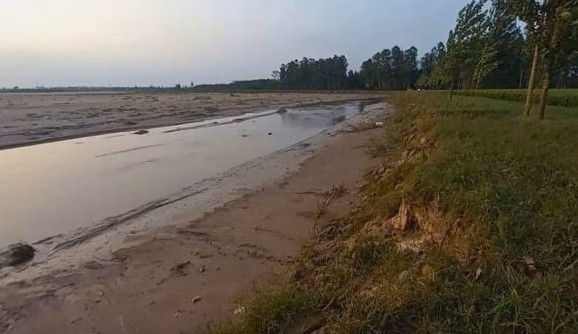
NGT Orders Probe into Markanda River Pollution
NGT Orders Probe into Markanda River Pollution as authorities investigate industrial waste, sewage discharge, and water quality to protect local communities and the environment.
NGT Orders Probe into Markanda River Pollution
The National Green Tribunal (NGT) has instructed the Pollution Control Boards of Himachal Pradesh and Haryana, along with the Deputy Commissioner of Sirmaur, to submit detailed reports on water pollution in the Markanda River. The order comes after growing concerns about industrial waste contaminating the river, which holds both sacred and ecological importance for local communities.
Table of Contents
NGT’s Directives on Markanda River Pollution
The National Green Tribunal (NGT) has directed the Himachal Pradesh State Pollution Control Board (HPSPCB) to provide a detailed report on the number and condition of drains flowing into the Markanda River.
The board must also examine industrial links to the Common Effluent Treatment Plant (CETP) and ensure industries follow Zero Liquid Discharge (ZLD) norms. Additionally, both the Himachal Pradesh and Haryana Pollution Control Boards have been asked to test river water samples to identify and measure pollution levels.
Industrial Waste and Sewage Issues
Justice Arun Kumar Tyagi’s order directs that water samples be collected from every sewage discharge point. If any industrial waste or pollutants are found, the Pollution Control Boards must clarify the reasons and suggest proper solutions.
Additionally, the Kala Amb Infrastructure Development Company has been instructed to provide a detailed report on how effluents are being handled and the quality of water at each discharge location.
Background of the Petition
The National Green Tribunal (NGT) took action based on a 2022 petition filed by Dharamvir, which raised concerns about industrial pollution in the Markanda River caused by factories in Kala Amb. This river, a tributary of the Ghaggar, passes through both Himachal Pradesh and Haryana, providing water for local communities and supporting the region’s ecosystems.
Understanding the National Green Tribunal
The National Green Tribunal (NGT) is a specialized legal body in India, set up in 2010 to handle environmental matters. Its main role is to protect the environment, forests, and natural resources while ensuring that environmental laws are properly enforced.
The NGT focuses on the quick resolution of cases related to pollution, deforestation, and other ecological issues, and it has the authority to provide relief, compensation, and legal remedies to those affected by environmental damage.
Introduction to the Markanda River
The Markanda River is a tributary of the Ghaggar River, beginning its journey in the Shivalik Hills along the Haryana–Himachal Pradesh border. It flows through Himachal Pradesh before entering Haryana, eventually joining the Ghaggar. The river is not only important for local agriculture and the livelihoods of nearby communities but also holds religious and cultural significance for the people living along its banks.
Also Read: Dzükou Valley Nominated for Global Tourist Destination by Nagaland
Common Effluent Treatment Plant: Role and Importance
A Common Effluent Treatment Plant (CETP) is a specialized facility that treats wastewater from several industries at once. Its main goal is to clean industrial effluents before they are released into rivers or other water bodies, helping to prevent pollution.
CETPs are especially important in areas with many small and medium-sized industries that do not have their own wastewater treatment systems, providing an efficient and shared solution for industrial waste management.
How ZLD Helps Control Water Pollution
Zero Liquid Discharge (ZLD) is an approach to wastewater management where industries ensure that no liquid waste is released into the environment. This method involves treating, recycling, and reusing wastewater, as well as recovering useful by-products, which helps reduce environmental harm.
Many industries are adopting ZLD not only to follow environmental regulations but also to promote sustainable and efficient water use.
Importance of Monitoring Industrial Discharges
Regular monitoring of industrial effluents and sewage is crucial to protect the Markanda River’s ecosystem. Continuous assessment helps identify pollution sources, ensures compliance with environmental norms, and prevents long-term damage to water quality. Effective monitoring also safeguards public health, agriculture, and aquatic life, making sustainable industrial practices essential for communities along the river.
Also Check: Current Affairs