
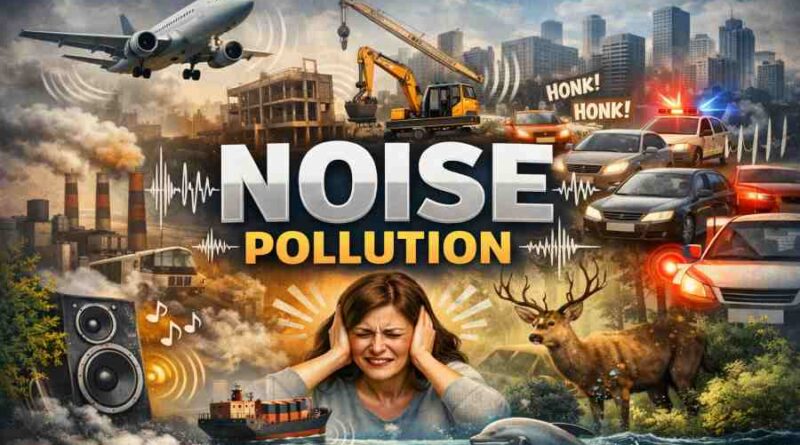
Noise Pollution – Causes, Effects and Why Silence is Becoming a luxury
Noise Pollution is a growing environmental threat. Learn its causes, harmful effects on health and nature and why controlling noise matters.
Noise Pollution – Causes and Effects
In today’s fast-paced world, noise has quietly become one of the most underestimated forms of pollution. Unlike air or water pollution, noise pollution is invisible, yet its impact on human health, wildlife, and the environment is deeply damaging. Continuous exposure to unwanted or excessive sound disturbs natural balance and reduces the overall quality of life. As cities expand and technology advances, noise pollution is steadily turning silence into a rare luxury.
Table of Contents
What is Noise Pollution?
Noise pollution refers to the presence of loud, disturbing, or harmful sounds in the environment that exceed acceptable limits. These sounds interfere with daily activities such as sleeping, working, studying, and even simple conversation. When noise levels cross the threshold that the human ear or ecosystem can tolerate, it becomes a serious environmental concern.
Noise is measured in decibels (dB). Sounds above safe levels, especially when experienced for long durations, can lead to physical and psychological stress. While occasional loud sounds may be unavoidable, constant exposure is what makes noise pollution dangerous.
Major Causes of Noise Pollution
It originates from both human activities and modern infrastructure. Some of the most common causes include:
1. Traffic and Transportation
Road traffic is one of the leading sources of noise pollution. Honking vehicles, engines, sirens, and tire friction create continuous noise, especially in urban areas. Airports and railway stations also contribute significantly through aircraft engines and train movement.
2. Industrial Activities
Factories, power plants, and construction sites generate heavy noise from machinery, drilling, generators, and tools. Industrial noise often affects not only workers but also nearby residential areas.
3. Urbanization and Construction
Rapid urban development has increased construction work in cities. Activities such as hammering, piling, demolition, and heavy equipment operation produce high noise levels over extended periods.
4. Household and Commercial Sources
Televisions, music systems, mixers, air conditioners, and generators are common indoor sources of noise. Commercial areas with loud advertisements, public announcements, and crowded markets further add to the problem.
5. Social and Cultural Events
Weddings, festivals, political rallies, and public celebrations often involve loudspeakers and firecrackers. While these events are occasional, their noise levels can be extremely high and harmful.
Effects of Noise Pollution on Human Health
This pollution has direct and long-term effects on human well-being. Some of the major health impacts include:
Hearing Problems
Prolonged exposure to loud noise can damage the inner ear, leading to hearing loss or tinnitus (ringing in the ears). This damage is often permanent and irreversible.
Sleep Disturbance
Noise disrupts sleep patterns, reducing sleep quality and causing insomnia. Lack of proper sleep affects concentration, memory, and overall mental health.
Stress and Mental Health Issues
Constant noise increases stress levels, anxiety, and irritability. It can trigger headaches, fatigue, and even depression over time.
Cardiovascular Problems
Studies show that long-term exposure to high noise levels can increase blood pressure and raise the risk of heart diseases.
Effects of Noise Pollution on the Environment and Wildlife
It does not affect humans alone. It also disturbs ecosystems and wildlife in several ways:
Impact on Animals
Animals rely on sound for communication, navigation, and detecting danger. Excessive noise interferes with these abilities, leading to stress, disorientation, and reduced survival chances.
Disruption of Natural Habitats
Noise from human activities can force wildlife to abandon their natural habitats. This leads to migration, imbalance in ecosystems, and loss of biodiversity.
Marine Life Disturbance
Underwater noise from ships and industrial activities affects marine animals, especially those that use echolocation. It can cause injuries, behavioral changes, and even death.
Why Noise Pollution is a Serious Environmental Issue
It often receives less attention compared to other forms of pollution, but its consequences are equally severe. It reduces productivity, affects learning abilities in children, and lowers overall quality of life. Since noise cannot be seen, people tend to ignore it until serious damage occurs.
With increasing population, urban expansion and technological growth, noise pollution is expected to rise unless effective measures are taken.
Summary
It is a silent environmental threat that demands immediate awareness and action. From traffic and industries to household appliances and social events, the sources are everywhere. Its effects on human health, wildlife, and ecosystems are long-lasting and sometimes irreversible. Reducing noise pollution is not just a responsibility of governments and authorities but also of individuals. By promoting awareness and adopting quieter practices, we can protect our environment and restore the value of peace and silence in our lives.
Also Check: Environment