
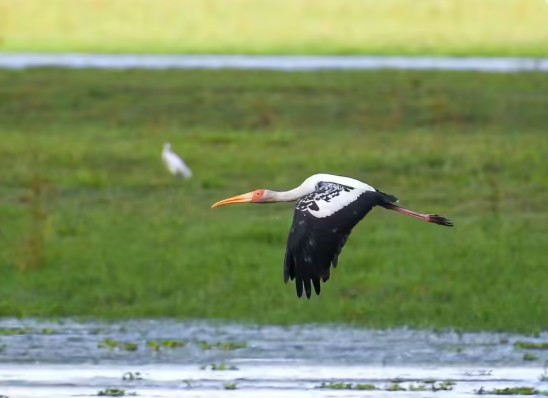
Painted Storks are Back in Kaziranga After Four Years in 2025
Painted Storks are Back in Kaziranga, marking a hopeful sign for conservation. Discover how these near-threatened birds return after four years, the importance of wetlands, and Kaziranga’s role in protecting migratory birds.
Painted Storks are Back in Kaziranga
After four long years, painted storks have returned to Kaziranga National Park and Tiger Reserve (KNPTR). Their reappearance in the park’s wetlands brings hope for conservationists.
It shows the success of continuous protection efforts and highlights how important Kaziranga is for migratory birds.
Table of Contents
Importance of the Recent Sighting
Painted storks (Mycteria leucocephala) are large wading birds easily recognized by their pink and white feathers and long yellow-orange bills. Their comeback to Kaziranga is significant because their numbers have been declining due to habitat loss and the destruction of wetlands.
This sighting highlights how effective conservation efforts can restore natural habitats and protect vulnerable species. It also adds to Kaziranga’s bird diversity, especially during the migratory season.
Understanding Painted Storks
Painted storks are large birds from the stork family, Ciconiidae. They are mainly found across the Indian subcontinent and parts of Southeast Asia. These birds like shallow wetlands where they can feed and breed. Their main food sources are fish and amphibians.
However, habitat loss and disturbance during breeding have reduced their numbers, placing them in the Near Threatened category on the IUCN Red List.
Kaziranga’s Importance as a Bird Habitat
Kaziranga National Park is an important home for a wide variety of birds. Every October, flocks of migratory waterfowl and wading birds arrive, transforming the park into a lively bird-watching destination.
Its wetlands offer food, nesting sites, and shelter to both resident and visiting species. The return of painted storks adds to this richness, showing how Kaziranga continues to serve as a safe haven for birds.
Protecting Wildlife: Efforts and Impact
The return of painted storks shows that conservation efforts in Kaziranga are working. Protecting wetlands, stopping poaching, and restoring habitats have helped the ecosystem recover.
This sighting inspires more efforts to protect biodiversity and highlights the importance of conserving wetlands across India, which many threatened birds depend on.
Historical Records and Population Trends
Painted storks were seen in Kaziranga in 2004 and 2005, and then again in 2022. These occasional sightings show that the park serves as a seasonal stop for the species during migration.
Their four-year absence had caused concerns about habitat health. The recent return indicates that Kaziranga’s environment is improving and remains a safe place for these birds.
Ecological Importance of Painted Storks
Painted storks play a vital role in wetland ecosystems. By feeding on fish and amphibians, they help maintain a balanced aquatic environment. Their presence also indicates healthy wetlands, as these birds thrive only where food and clean water are abundant.
Wetlands: Lifelines of Biodiversity
Kaziranga’s wetlands are essential for a wide range of bird species. They provide food, breeding grounds, and resting areas for migratory and resident birds. Conserving these wetlands ensures the survival of endangered species and maintains the ecological balance of the region.
Also Read: Snow Leopard count Rises Sharply in Himachal Pradesh
Threats Beyond Protected Areas
Despite Kaziranga’s success, painted storks face challenges elsewhere. Habitat loss due to urbanization, pollution, and wetland drainage continues to threaten their populations. Climate change also affects water levels and food availability, making conservation in protected areas even more crucial.
Community Involvement in Conservation
Local communities play an important role in protecting migratory birds. Eco-tourism, awareness programs, and citizen science initiatives can help monitor populations and safeguard habitats. Educating people about the importance of wetlands encourages responsible behavior and long-term preservation.
A Symbol of Hope for Conservation
The return of painted storks after years of absence is a positive sign that conservation efforts are working. It shows that with habitat protection, wetland restoration, and public engagement, vulnerable species can recover and thrive in their natural habitats.
Also Check: Current Affairs