Renewable Energy Sources – Solar, Wind and Hydropower
Explore renewable energy sources like solar, wind and hydro. Learn their benefits, working and role in creating a clean and sustainable future.
Renewable Energy Sources
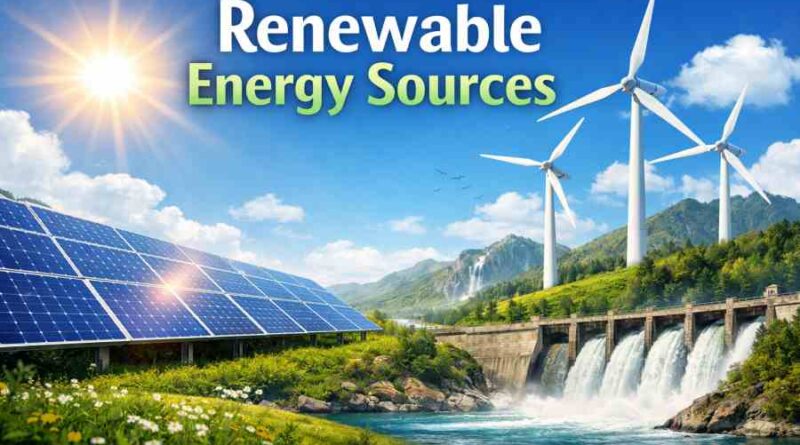
In today’s rapidly developing world, the demand for energy is increasing at an unprecedented rate. Traditional sources of energy such as coal, oil, and natural gas are not only limited but also harmful to the environment. This has led to a global shift towards renewable energy sources that are sustainable, eco-friendly, and abundant in nature. Among these, solar, wind, and hydro energy are the most widely used and promising forms of renewable energy.
Table of Contents
What is Renewable Energy?
Renewable energy refers to energy derived from natural sources that are replenished continuously. Unlike fossil fuels, these sources do not run out and produce minimal environmental pollution. Renewable energy plays a vital role in reducing greenhouse gas emissions, combating climate change, and ensuring energy security for future generations.
Solar Energy
Solar energy is one of the most abundant and accessible renewable energy sources available on Earth. It is derived from the sun’s radiation and can be converted into electricity or heat using solar panels.
How It Works
Solar panels, also known as photovoltaic (PV) cells, capture sunlight and convert it into electricity. This electricity can be used to power homes, industries, and even entire cities.
Advantages of Solar Energy
- Unlimited Source: The sun provides an inexhaustible supply of energy.
- Environment-Friendly: Produces no air pollution or greenhouse gases.
- Low Maintenance: Solar panels require minimal upkeep.
- Energy Independence: Reduces reliance on fossil fuels.
Disadvantages of Solar Energy
- Weather Dependent: Efficiency decreases on cloudy days.
- High Initial Cost: Installation can be expensive.
- Space Requirement: Requires large areas for installation in large-scale projects.
Despite its limitations, solar energy is rapidly growing due to technological advancements and government support.
Wind Energy
Wind energy is another important renewable energy source that harnesses the power of moving air to generate electricity. It is widely used in many countries and is considered one of the cleanest forms of energy.
How It Works
Wind turbines convert the kinetic energy of wind into mechanical energy, which is then transformed into electricity using a generator.
Advantages of Wind Energy
- Clean and Green: Produces no pollution or harmful emissions.
- Cost-Effective: After installation, operational costs are low.
- Renewable and Sustainable: Wind is naturally replenished.
Disadvantages of Wind Energy
- Inconsistent Supply: Wind does not blow continuously.
- Noise Pollution: Turbines can be noisy.
- Impact on Wildlife: Can affect birds and bats.
Wind energy is especially effective in coastal and open plain regions where wind speeds are high.
Hydropower (Hydro Energy)
Hydropower is one of the oldest and most reliable forms of renewable energy. It uses flowing or falling water to generate electricity.
How It Works
Water stored in dams flows through turbines, causing them to spin. This motion generates electricity through generators.
Advantages of Hydropower
- Reliable Energy Source: Provides consistent power supply.
- Flexible Usage: Can be adjusted based on demand.
- Long Lifespan: Hydropower plants can operate for decades.
Disadvantages of Hydropower
- Environmental Impact: Dams can disrupt ecosystems.
- High Construction Cost: Building dams requires large investments.
- Displacement Issues: People may need to relocate for dam construction.
Hydropower contributes significantly to electricity generation in many countries, especially those with abundant water resources.
Importance of Renewable Energy
The importance of renewable energy cannot be overstated. It plays a crucial role in addressing some of the biggest challenges facing humanity today.
1. Reduces Climate Change
Renewable energy sources emit little to no greenhouse gases, helping to reduce global warming.
2. Sustainable Development
These energy sources ensure long-term availability without depleting natural resources.
3. Economic Growth
The renewable energy sector creates jobs and promotes technological innovation.
4. Energy Security
Countries can reduce dependence on imported fuels by using local renewable resources.
Future of Renewable Energy
The future of renewable energy looks promising. With advancements in technology, the efficiency and affordability of solar panels, wind turbines, and hydropower systems are improving rapidly. Governments and organizations worldwide are investing heavily in renewable energy projects to achieve sustainability goals.
Countries are also adopting policies to reduce carbon emissions and encourage the use of clean energy. Innovations such as energy storage systems and smart grids are making renewable energy more reliable and accessible.
Summary
Renewable energy sources like solar, wind, and hydro are essential for building a sustainable and environmentally friendly future. They offer a clean alternative to fossil fuels and help in reducing pollution and conserving natural resources. While there are some challenges associated with their use, continuous advancements in technology and increased awareness are paving the way for widespread adoption.
By embracing renewable energy, we can ensure a healthier planet for future generations while meeting our growing energy needs in a responsible and sustainable manner.
Also Check: Environment