Role of Forests in Climate Regulation – Green Guardians
Explore the Role of Forests in Climate Regulation, how they absorb carbon, regulate temperature and support a balanced, sustainable environment.
Role of Forests in Climate Regulation
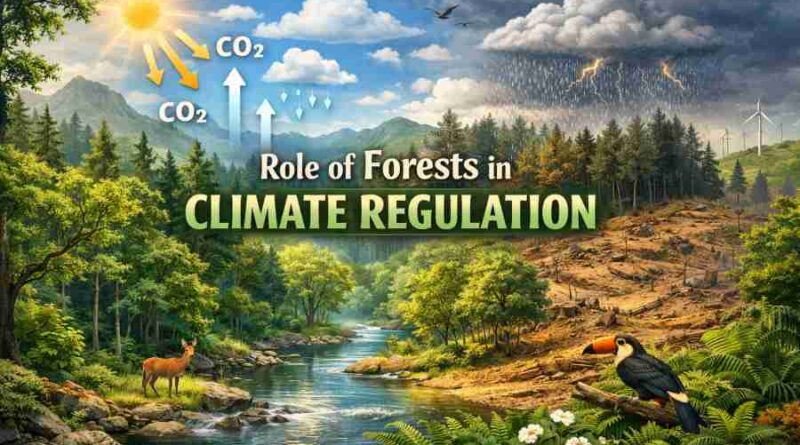
Forests are among the most vital natural resources on Earth, often referred to as the “lungs of the planet.” They play a crucial role in maintaining ecological balance and regulating the global climate. In an era marked by rising temperatures, extreme weather events, and environmental degradation, forests have become more important than ever. Their ability to absorb carbon dioxide, regulate temperature, and support biodiversity makes them a cornerstone in the fight against climate change.
Table of Contents
1. Forests as Carbon Sinks
One of the most important roles forests play in climate regulation is their ability to act as carbon sinks. Through the process of photosynthesis, trees absorb carbon dioxide (CO₂) from the atmosphere and store it in their trunks, branches, leaves, and roots. This process helps reduce the concentration of greenhouse gases, which are responsible for global warming.
Tropical forests, temperate forests, and boreal forests all contribute significantly to carbon storage. When forests are destroyed or degraded, the stored carbon is released back into the atmosphere, intensifying climate change. Therefore, preserving and expanding forest areas is essential for reducing global carbon emissions.
2. Regulation of Temperature
Forests help regulate local and global temperatures by providing shade and releasing water vapor into the atmosphere through a process called transpiration. This process cools the air and contributes to cloud formation, which can reflect sunlight and reduce heat.
Urban areas with fewer trees often experience higher temperatures, known as the “urban heat island effect.” In contrast, forested areas tend to be cooler and more stable in terms of temperature. This cooling effect is especially important in mitigating heatwaves and maintaining a balanced climate.
3. Influence on Rainfall Patterns
Forests play a critical role in maintaining the water cycle. Trees absorb water from the soil and release it into the atmosphere, contributing to cloud formation and precipitation. Large forest ecosystems, such as rainforests, can even influence rainfall patterns across entire regions.
For example, forests help maintain consistent rainfall in agricultural areas, supporting food production and water availability. Deforestation can disrupt these patterns, leading to droughts in some areas and excessive rainfall in others, thereby destabilizing the climate.
4. Prevention of Soil Erosion
Healthy forests protect the soil from erosion by stabilizing it with their root systems. When forests are removed, the soil becomes vulnerable to wind and water erosion, which can lead to land degradation and reduced agricultural productivity.
Soil erosion also affects the climate indirectly by reducing the land’s ability to store carbon. Forest soils are rich in organic matter, which acts as a carbon reservoir. Protecting forests ensures that this carbon remains stored rather than being released into the atmosphere.
5. Support for Biodiversity
Forests are home to a vast array of plant and animal species. This biodiversity contributes to ecosystem stability and resilience. Diverse ecosystems are better equipped to adapt to changes in climate and recover from disturbances such as storms, fires, or droughts.
A loss of biodiversity can weaken ecosystems, making them more vulnerable to climate-related impacts. By protecting forests, we also protect the countless species that depend on them, ensuring a balanced and healthy environment.
6. Reduction of Extreme Weather Impacts
Forests act as natural barriers against extreme weather events. They can reduce the impact of storms, floods, and landslides by absorbing excess rainfall and slowing down wind speeds. Coastal forests, such as mangroves, are especially effective in protecting shorelines from cyclones and rising sea levels.
In mountainous regions, forests prevent landslides by holding the soil together. Their presence reduces the risk of natural disasters and protects human settlements, making them essential for climate resilience.
7. Role in Air Purification
In addition to absorbing carbon dioxide, forests also filter pollutants from the air, such as sulfur dioxide, nitrogen oxides, and particulate matter. This improves air quality and contributes to a healthier environment.
Clean air is not only beneficial for human health but also plays a role in regulating climate patterns. Pollutants can affect cloud formation and precipitation, so forests indirectly help maintain atmospheric balance.
8. Forest Conservation and Climate Action
Despite their importance, forests are under constant threat from deforestation, illegal logging, and urban expansion. Every year, millions of hectares of forest are lost, contributing significantly to global greenhouse gas emissions.
Efforts such as afforestation (planting new trees) and reforestation (restoring degraded forests) are essential to combat climate change. Governments, organizations, and individuals must work together to protect existing forests and promote sustainable land use practices.
Simple actions like reducing paper waste, supporting eco-friendly products, and participating in tree-planting initiatives can make a significant difference. Forest conservation is not just an environmental issue, it is a global responsibility.
Summary
Forests are indispensable in regulating the Earth’s climate. From absorbing carbon dioxide and controlling temperature to influencing rainfall and protecting biodiversity, their contributions are vast and irreplaceable. As climate change continues to pose a serious threat to our planet, the role of forests becomes even more critical.
Protecting and restoring forests is one of the most effective and natural solutions to climate change. By valuing and preserving these green ecosystems, we can ensure a healthier, more stable, and sustainable future for generations to come.
Also Check: Environment