Soil Pollution – Hidden Threat Beneath Our Feet and Its Lasting Environmental Impact
Learn about Soil Pollution – Meaning and Impact, its causes, harmful effects on health and environment and effective prevention methods explained in simple words.
Soil Pollution – Meaning and Impact
Soil is among the most precious natural resources on our planet. It supports plant growth, provides nutrients for crops, and plays a key role in maintaining ecological balance. Beyond farming, soil also helps filter water, store carbon, and sustain countless living organisms that are essential for a healthy environment. It supports plant growth, provides food, filters water, and sustains life. However, increasing human activities have led to serious damage to soil quality. One of the biggest environmental challenges today is soil pollution. Though it may not always be visible like air or water pollution, its effects are deep and long-lasting.
Understanding soil pollution is essential because healthy soil is directly linked to food security, human health, and ecological balance.
Table of Contents
Meaning of Soil Pollution
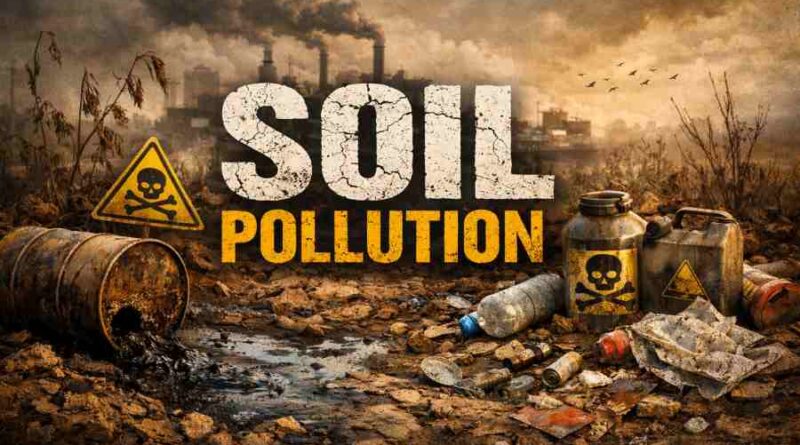
Soil pollution refers to the contamination of soil by harmful chemicals, waste materials, or toxic substances that reduce its quality and fertility. When dangerous substances mix with soil in excessive amounts, they disturb its natural composition and make it unhealthy for plants, animals, and humans.
Polluted soil loses its ability to support plant growth properly. It may contain toxic metals, plastic waste, pesticides, industrial chemicals, or other harmful substances. Over time, these pollutants accumulate and affect the entire ecosystem.
Major Causes of Soil Pollution
Soil pollution is mainly caused by human activities. Some of the key causes include:
1. Industrial Waste
Factories and industries release chemical waste, heavy metals, and harmful substances. Improper disposal of industrial waste allows these toxins to seep into the soil.
2. Excessive Use of Pesticides and Fertilizers
Modern agriculture often depends on chemical fertilizers, insecticides, and herbicides. While they increase crop production, excessive use damages soil structure and kills beneficial microorganisms.
3. Improper Waste Disposal
Dumping garbage, plastic waste, and electronic waste directly onto land leads to soil contamination. Landfills that are not managed properly can leak toxic substances.
4. Mining Activities
Mining removes minerals from the earth but leaves behind waste materials that contain heavy metals. These toxic residues mix with soil and degrade its quality.
5. Oil Spills and Leakage
Leakage from pipelines and oil spills during transportation contaminate large areas of land and make soil infertile.
6. Urbanization and Construction
Rapid construction activities disturb the topsoil and introduce harmful substances like cement dust, paints, and chemicals.
Effects of Soil Pollution
The impact of soil pollution goes beyond just land degradation. It affects plants, animals, humans, and the entire environment.
1. Reduced Soil Fertility
Polluted soil loses essential nutrients required for plant growth. As a result, crop production decreases, affecting food supply.
2. Health Risks
Harmful chemicals present in the soil can gradually make their way into the food chain. When crops absorb these toxic substances, they can pass to animals and humans who consume them. Over time, this contamination may lead to serious health problems and disturb the natural balance of ecosystems. When crops absorb harmful chemicals, they reach humans through consumption, leading to serious health problems such as respiratory issues, skin diseases, and even cancer.
3. Water Contamination
Rainwater carries soil pollutants into rivers and groundwater. When polluted soil seeps toxins into rivers, lakes, and groundwater, it causes water pollution that harms aquatic life. Fish, plants, and other water organisms struggle to survive in contaminated water, disrupting entire ecosystems and threatening the health of humans who rely on these water sources.
4. Loss of Biodiversity
Soil contains many microorganisms, insects, and small organisms that maintain ecological balance. Pollution kills these beneficial organisms, disturbing the ecosystem.
5. Climate Impact
Healthy soil stores carbon. Polluted and degraded soil loses this ability, contributing indirectly to climate change.
How Soil Pollution Affects Agriculture
Agriculture depends heavily on healthy soil. When soil becomes polluted:
- Crop quality decreases
- Production costs increase
- Farmers face economic losses
- Food safety becomes a concern
Over time, contaminated soil may become completely unproductive, leading to land degradation and desertification.
Preventive Measures and Solutions
Preventing soil pollution requires combined efforts from individuals, industries, farmers, and governments. Some effective solutions include:
1. Proper Waste Management
Segregating waste, recycling materials, and reducing landfill use can prevent harmful substances from entering soil.
2. Use of Organic Farming Methods
Encouraging organic fertilizers and natural pest control methods helps maintain soil health.
3. Strict Industrial Regulations
Governments should enforce strict laws to control industrial waste disposal and reduce chemical discharge.
4. Afforestation
Planting trees improves soil structure, prevents erosion, and enhances nutrient content.
5. Public Awareness
Educating people about responsible waste disposal and sustainable practices can significantly reduce soil contamination.
6. Soil Remediation Techniques
Modern techniques like bioremediation use microorganisms to remove pollutants from soil naturally.
Importance of Soil Conservation
Soil is not an unlimited resource. It takes hundreds of years to form fertile soil, but it can be damaged within a short time. Protecting soil ensures:
- Sustainable agriculture
- Clean water supply
- Balanced ecosystems
- Food security for future generations
Healthy soil is the foundation of life on our planet. Without it, plants cannot grow properly, crops cannot produce enough food, and ecosystems begin to weaken. If soil becomes damaged or polluted, it affects not only agriculture but also animals and humans who depend on it for survival.
Summary
Soil pollution is a serious environmental problem that often goes unnoticed but has long-term consequences. It reduces soil fertility, threatens food security, harms human health, and disrupts ecological balance. The growing use of chemicals, improper waste disposal, and rapid industrialization are major contributors to this issue.
However, the problem is not impossible to solve. By adopting sustainable agricultural practices, managing waste responsibly, enforcing environmental laws, and spreading awareness, we can protect this vital natural resource. Every individual has a role to play in conserving soil. Protecting soil today means ensuring a healthier and safer future for generations to come.
Also Check: Environment