Types of Ecosystems – Forest, Grassland, Desert and Aquatic Ecosystems
Learn about the major types of ecosystems forest, grassland, desert and aquatic. Discover their characteristics, importance and the organisms that live in them.
Types of Ecosystems
An ecosystem is a natural system where living organisms interact with each other and with their physical environment. It includes plants, animals, microorganisms, soil, water, air, and sunlight. These components work together to maintain balance in nature.
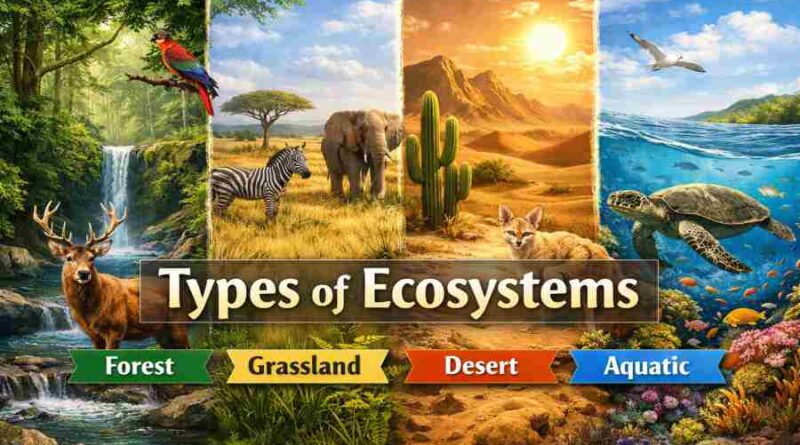
Ecosystems exist in many forms across the Earth. Different regions have different climates, soil types, and water availability, which lead to the development of various ecosystems. Among the most important and widely recognized ecosystems are forests, grasslands, deserts, and aquatic ecosystems. Each type supports unique plants, animals, and ecological processes.
Understanding these ecosystems helps us appreciate nature and realize why their protection is important for life on Earth.
Table of Contents
Forest Ecosystem
The forest ecosystem is one of the richest ecosystems on Earth in terms of biodiversity. Forests are areas dominated by trees and dense vegetation. They provide habitat for countless species of animals, birds, insects, and microorganisms.
Forests are found in many parts of the world, from tropical regions to cold climates. Based on climate and location, forests are often classified into tropical forests, temperate forests, and boreal forests.
In a forest ecosystem, trees form the upper layer known as the canopy. Beneath this layer are shrubs, small plants, and grasses. The forest floor contains decomposing leaves and organic matter, which enrich the soil with nutrients.
Forests play several important roles. They absorb carbon dioxide and release oxygen, helping to maintain the balance of gases in the atmosphere. Forests also regulate climate, prevent soil erosion, and support wildlife. Many animals such as deer, monkeys, birds, insects, and reptiles depend on forests for food and shelter.
Unfortunately, forests are under threat due to deforestation, logging, and urban development. Protecting forests is essential for preserving biodiversity and maintaining ecological balance.
Grassland Ecosystem
Grasslands are ecosystems dominated mainly by grasses rather than trees. They occur in regions where rainfall is moderate but not enough to support large forests. Grasslands are found on almost every continent.
There are two main types of grasslands: tropical grasslands and temperate grasslands. Tropical grasslands are often called savannas and are common in regions with warm climates. Temperate grasslands are found in areas with colder winters and warm summers.
In grasslands, grasses grow widely and provide food for many herbivorous animals. Animals such as antelopes, zebras, bison, and deer commonly live in grasslands. Predators like lions, wolves, and cheetahs depend on these herbivores for survival.
Grasslands are also important for agriculture. Many crops are grown in grassland regions because the soil is often fertile. However, overgrazing by livestock and excessive farming can damage these ecosystems.
Grasslands play a crucial role in maintaining soil health and supporting wildlife. They also store carbon and help regulate the Earth’s climate.
Desert Ecosystem
Deserts are ecosystems characterized by very low rainfall and extreme temperatures. They are often considered harsh environments, but many plants and animals have adapted to survive in these conditions.
Deserts can be hot or cold. Hot deserts, such as those found in parts of Africa and Asia, experience high temperatures during the day and cooler temperatures at night. Cold deserts occur in regions with freezing winters.
Plants in desert ecosystems have special adaptations to conserve water. For example, cacti store water in their thick stems, while some plants have small or waxy leaves that reduce water loss.
Animals in deserts are also adapted to survive with limited water. Many desert animals, such as lizards, snakes, foxes, and rodents, are active during the night to avoid extreme heat during the day.
Despite their dry conditions, deserts are important ecosystems. They support unique species and contribute to the diversity of life on Earth. However, human activities and climate change are increasing desertification in many regions, which threatens nearby ecosystems.
Aquatic Ecosystem
Aquatic ecosystems include all water-based environments on Earth. These ecosystems are essential for life because water is a fundamental requirement for all living organisms.
Aquatic ecosystems are generally divided into two main types: freshwater ecosystems and marine ecosystems.
Freshwater ecosystems include rivers, lakes, ponds, and wetlands. The water in these systems contains very little salt. Many fish, amphibians, aquatic plants, insects, and microorganisms live in freshwater habitats.
Marine ecosystems include oceans and seas, which contain salty water. Oceans cover more than 70 percent of the Earth’s surface and are home to a vast variety of life, including fish, whales, corals, algae, and plankton.
Aquatic ecosystems help regulate the global climate and support the water cycle. They also provide food, transportation, and livelihoods for millions of people around the world.
However, pollution, overfishing, and climate change are serious threats to aquatic ecosystems. Protecting water bodies is essential to maintain healthy ecosystems and ensure sustainable resources for future generations.
Summary
Ecosystems are vital for the survival of life on Earth. Forests, grasslands, deserts, and aquatic ecosystems each have unique characteristics and support different forms of life. Together, they maintain the balance of nature and contribute to the planet’s biodiversity.
Human activities such as deforestation, pollution, and climate change are putting these ecosystems at risk. It is important for individuals, communities, and governments to take steps to protect and conserve natural ecosystems.
By understanding different types of ecosystems, we can develop a deeper respect for nature and work toward preserving the environment for future generations.
Also Check: Environment