Types of Environment – Natural, Human and Man Made Environment
Learn the types of environment explained simply. Understand natural, human, and man-made environments with examples and importance in daily life.
Types of Environment
The environment includes all the living and non-living things around us that make life on Earth possible. It includes living organisms like plants, animals, and humans, as well as non-living elements such as air, water, land, and climate. The environment plays a vital role in shaping human life, natural ecosystems, and overall development. To understand it better, the environment is commonly classified into different types based on its origin and components. Learning about these types helps us realize how closely our lives are connected to nature and why protecting the environment is essential.
Table of Contents
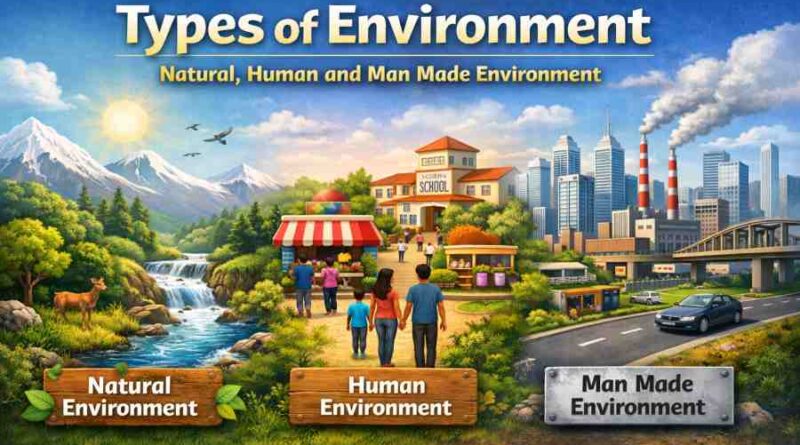
Broadly, the environment can be divided into three main types: Natural Environment, Human Environment, and Man-Made Environment. Each type has its own characteristics, examples, and importance.
1. Natural Environment
The natural environment includes all plants, animals, land, water, air, and other elements that exist naturally on Earth without human creation. It is the foundation of life and provides essential resources needed for survival.
The natural environment includes air, water, land, plants, animals, sunlight, climate, rivers, mountains, forests, oceans, and soil. All these elements depend on each other and work together to keep nature balanced and stable. For example, plants release oxygen needed by humans and animals, while animals help in pollination and maintaining food chains.
The natural environment is further divided into:
- Lithosphere – land, rocks, mountains, and soil
- Hydrosphere – rivers, lakes, oceans, and groundwater
- Atmosphere – air and gases surrounding the Earth
- Biosphere – all living organisms
The importance of the natural environment cannot be overstated. It provides food, water, shelter, medicine, and raw materials. It also regulates climate, supports biodiversity, and maintains life cycles. However, deforestation, pollution, and climate change are causing serious harm to the natural environment, making its conservation extremely important.
2. Human Environment
The human environment includes people and their social, cultural, economic, and political activities. Unlike the natural environment, this type focuses on how humans live, interact, and organize their lives within society.
The human environment consists of families, communities, villages, towns, cities, traditions, customs, languages, religions, education systems, and institutions. It reflects human values, beliefs, and ways of living developed over time.
For example, schools and colleges represent the educational environment, while markets and industries represent the economic environment. Social relationships, festivals, and cultural practices are also part of the human environment.
The human environment plays a major role in shaping behavior, lifestyle, and development. A healthy human environment promotes cooperation, learning, innovation, and social harmony. However, problems such as overcrowding, unemployment, poverty, and lack of basic facilities can negatively affect the quality of the human environment.
3. Man Made Environment
The man-made environment, also known as the built environment, refers to surroundings created by humans to meet their needs and improve their standard of living. This environment is a result of human creativity, technology, and development.
Examples of the man-made environment include buildings, roads, bridges, factories, dams, vehicles, parks, cities, industries, and monuments. These structures help humans in transportation, communication, housing, and economic growth.
The man-made environment has made life more comfortable and efficient. Modern infrastructure supports education, healthcare, trade, and connectivity. However, uncontrolled development can lead to environmental problems such as pollution, deforestation, waste generation, and climate change.
Therefore, it is important to create a sustainable man-made environment that balances development with environmental protection. Eco-friendly buildings, renewable energy, and proper urban planning are steps in the right direction.
Relationship Between Different Types of Environment
All three types of environment are closely interconnected. The natural environment provides resources, humans use these resources, and the man-made environment is created as a result. If one type is disturbed, it affects the others.
For instance, excessive use of natural resources for industrial development can damage forests and water bodies, which in turn affects human health and livelihoods. This shows why sustainable development is essential for maintaining environmental balance.
Why Understanding Types of Environment is Important
Understanding the types of environment helps us:
- Recognize our dependence on nature
- Use natural resources responsibly
- Reduce environmental pollution
- Promote sustainable development
- Protect biodiversity for future generations
Environmental awareness encourages individuals and communities to take action toward conservation and responsible living.
Summary
The environment is a complex system made up of natural, human, and man-made components. Each type plays a unique and important role in supporting life and development. While the natural environment provides essential resources, the human and man-made environments shape how we live and grow. To ensure a healthy future, it is crucial to maintain balance among all types of environment through awareness, conservation, and sustainable practices. Protecting the environment today means securing life for tomorrow
Also Check: Environment