Urbanization and Its Impact on Environment – Hidden Costs of Rapid City Growth
Urbanization and Its Impact on Environment: Learn how rapid city growth causes pollution, biodiversity loss and climate change and explore sustainable solutions
Urbanization and Its Impact on Environment
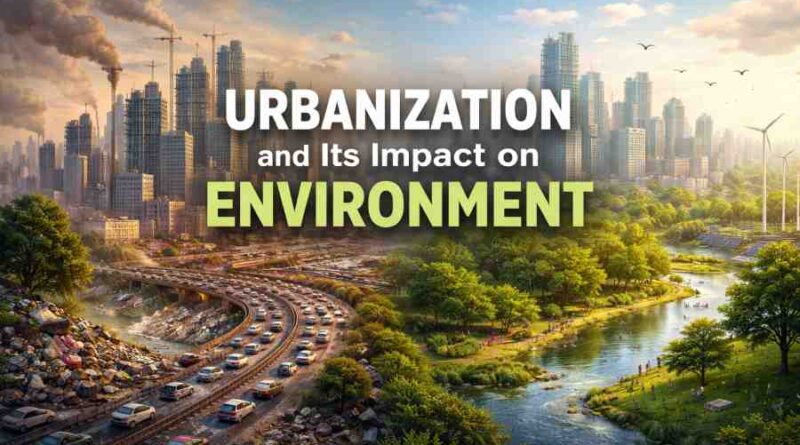
Urbanization refers to the increasing movement of people from rural areas to cities, leading to the expansion of urban spaces. It is a natural part of economic development and modernization. As industries grow and job opportunities increase, cities attract large populations seeking better living standards. However, rapid and unplanned urbanization has created serious environmental challenges that threaten the balance of nature.
Table of Contents
What is Urbanization?
Urbanization is the process by which towns and cities grow as more people begin living and working in central areas. It often results in the transformation of natural landscapes into built environments such as roads, buildings, and infrastructure. While urbanization brings economic growth and improved access to education, healthcare, and employment, it also puts immense pressure on the environment.
Major Causes of Urbanization
Several factors contribute to the rapid growth of cities:
- Industrialization: The development of industries creates jobs, attracting people from rural regions.
- Better Opportunities: Cities offer improved education, healthcare, and lifestyle facilities.
- Population Growth: Increasing population leads to higher demand for housing and services.
- Migration: People move to urban areas in search of better income and living conditions.
While these factors drive development, they also lead to excessive strain on natural resources.
Environmental Impacts of Urbanization
Urbanization significantly affects the environment in multiple ways:
1. Air Pollution
One of the most visible impacts of urbanization is air pollution. The rise in vehicles, industries, and construction activities releases harmful gases such as carbon dioxide, nitrogen oxides, and particulate matter. These pollutants degrade air quality and contribute to respiratory diseases.
2. Water Pollution
Urban areas generate large amounts of sewage and industrial waste. When untreated waste is discharged into rivers and lakes, it contaminates water bodies. This affects aquatic life and makes water unsafe for human consumption.
3. Loss of Biodiversity
Urban expansion often leads to deforestation and destruction of natural habitats. As forests are cleared for buildings and roads, many species lose their homes, resulting in a decline in biodiversity.
4. Urban Heat Island Effect
Cities tend to be warmer than surrounding rural areas due to concrete structures, asphalt roads, and reduced vegetation. This phenomenon is known as the urban heat island effect. It increases energy consumption and worsens climate conditions.
5. Waste Generation
With growing population density, cities produce enormous amounts of solid waste. Improper waste management leads to land pollution and health hazards.
6. Depletion of Natural Resources
Urbanization increases the demand for water, energy, and raw materials. Overuse of these resources can lead to shortages and environmental degradation.
Impact on Climate Change
Urbanization plays a major role in accelerating climate change. Increased greenhouse gas emissions from transportation, industries, and energy consumption contribute to global warming. The reduction of green spaces further limits the Earth’s ability to absorb carbon dioxide, worsening the situation.
Positive Aspects of Urbanization
Although urbanization has negative environmental impacts, it also offers some benefits:
- Efficient use of resources through better infrastructure
- Improved public transportation systems
- Opportunities for sustainable development
- Better awareness and implementation of environmental policies
If managed properly, urbanization can support eco-friendly living and reduce environmental damage.
Solutions for Sustainable Urbanization
To minimize environmental harm, cities must adopt sustainable practices:
1. Green Infrastructure
Planting trees, creating parks, and preserving green spaces can improve air quality and reduce heat.
2. Sustainable Transportation
Promoting public transport, cycling, and electric vehicles can lower pollution levels.
3. Waste Management
Proper recycling and waste disposal systems can reduce land and water pollution.
4. Water Conservation
Rainwater harvesting and efficient water use can help manage water scarcity.
5. Smart City Planning
Urban planning should focus on eco-friendly designs, energy efficiency, and reduced environmental impact.
6. Renewable Energy
Using solar and wind energy can reduce dependence on fossil fuels.
Summary
Urbanization is an inevitable part of modern development, but its impact on the environment cannot be ignored. While it brings economic growth and improved living standards, it also leads to pollution, resource depletion, and loss of biodiversity. The key lies in balancing development with environmental protection. By adopting sustainable practices and responsible urban planning, we can create cities that are not only economically strong but also environmentally friendly.
In the future, the success of urbanization will depend on how well we manage its effects on the environment. Sustainable urban development is not just an option, it is a necessity for the survival of our planet.
Also Check: Environment