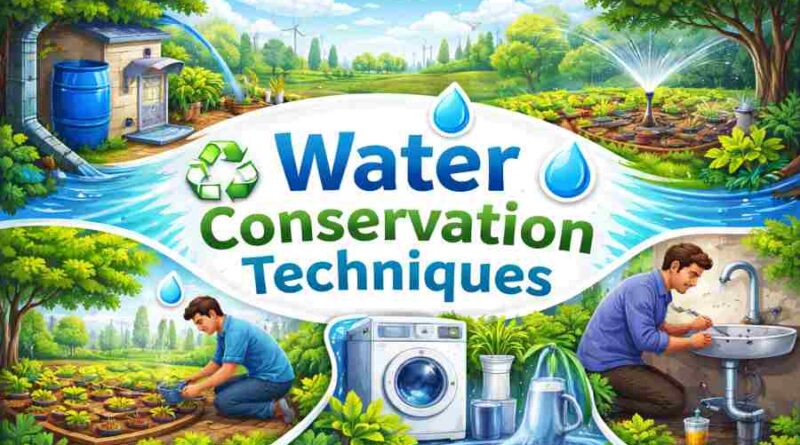
Water Conservation Techniques – Practical Ways to Save Water for a Sustainable Future
Discover effective Water Conservation Techniques to save water, reduce waste and ensure a sustainable future with simple and practical methods.
Water Conservation Techniques
Water is one of the most essential natural resources for life on Earth. Despite covering nearly 71% of the planet, only a small fraction of water is suitable for human consumption. With increasing population, urbanization, and climate change, water scarcity has become a global concern. This makes it crucial for individuals, communities, and governments to adopt effective water conservation techniques to ensure a sustainable future.
Table of Contents
Why Water Conservation is Important
Water conservation is not just about saving water; it is about preserving ecosystems, reducing energy consumption, and ensuring availability for future generations. Freshwater resources are limited, and overuse can lead to droughts, depletion of groundwater, and environmental degradation. Conserving water also helps reduce the energy required for water treatment and distribution, thereby lowering carbon emissions.
1. Rainwater Harvesting
Rainwater harvesting is one of the most effective methods of water conservation. It involves collecting and storing rainwater for future use. This water can be used for irrigation, household chores, and even drinking after proper treatment.
Simple systems like rooftop collection and storage tanks can significantly reduce dependence on groundwater. In rural and urban areas alike, rainwater harvesting helps recharge aquifers and prevent water scarcity during dry seasons.
2. Efficient Irrigation Techniques
Agriculture consumes a large portion of freshwater resources. Adopting efficient irrigation methods can help conserve a significant amount of water.
- Drip Irrigation: Delivers water directly to the roots of plants, minimizing evaporation and runoff.
- Sprinkler Systems: Distribute water evenly across fields, reducing wastage.
- Smart Irrigation: Uses sensors and weather data to optimize watering schedules.
These methods not only save water but also improve crop yield and soil health.
3. Fixing Leaks and Reducing Wastage
Leaky taps, pipes, and toilets can waste a surprising amount of water over time. Regular maintenance and timely repairs can prevent unnecessary loss.
Simple actions like turning off the tap while brushing teeth, using a bucket instead of a hose for washing vehicles, and installing water-efficient fixtures can make a big difference in daily water usage.
4. Use of Water-Efficient Appliances
Modern technology offers appliances designed to use less water without compromising performance.
- Low-flow showerheads and faucets
- Water-efficient washing machines
- Dual-flush toilets
These appliances reduce water consumption significantly and are cost-effective in the long run.
5. Recycling and Reusing Water
Greywater recycling is an effective way to conserve water. Greywater refers to wastewater from sinks, showers, and washing machines that can be reused for irrigation or flushing toilets.
By treating and reusing water, households can reduce their overall water demand and minimize wastage.
6. Landscaping with Native Plants
Traditional lawns and exotic plants often require large amounts of water. Replacing them with native or drought-resistant plants can reduce water usage.
This practice, often called xeriscaping, not only conserves water but also supports local biodiversity and reduces maintenance costs.
7. Industrial Water Conservation
Industries are major consumers of water. Implementing water-efficient technologies and recycling processes can significantly reduce industrial water usage.
- Reusing cooling water
- Treating wastewater for reuse
- Adopting closed-loop systems
These practices help industries minimize their environmental impact while improving efficiency.
8. Community Awareness and Education
Public awareness plays a crucial role in water conservation. Educating people about the importance of saving water and encouraging responsible usage can lead to collective action.
Schools, organizations, and governments can promote water-saving habits through campaigns, workshops, and policies.
9. Groundwater Recharge
Over-extraction of groundwater has led to declining water tables in many regions. Techniques such as recharge wells, percolation pits, and check dams help replenish groundwater levels.
These methods allow rainwater to seep into the ground, restoring natural water reserves and preventing land subsidence.
10. Policy and Government Initiatives
Governments play a vital role in promoting water conservation through regulations and programs. Policies encouraging rainwater harvesting, efficient irrigation, and wastewater treatment can drive large-scale change.
Subsidies, incentives, and strict regulations on water usage can motivate individuals and industries to adopt sustainable practices.
Challenges in Water Conservation
Despite the availability of various techniques, several challenges hinder effective water conservation:
- Lack of awareness and education
- High initial costs of advanced systems
- Poor infrastructure and maintenance
- Resistance to behavioral change
Addressing these challenges requires coordinated efforts from individuals, communities, and authorities.
The Way Forward
Water conservation is not a one-time effort but a continuous process. Small changes in daily habits can collectively have a significant impact. From fixing leaks to adopting modern technologies, every step counts.
Innovation and technology will also play a key role in the future of water conservation. Smart water management systems, AI-based monitoring, and sustainable urban planning can help optimize water usage and reduce wastage.
Summary
Water is a precious resource that must be used wisely. With growing concerns about water scarcity, adopting effective water conservation techniques is more important than ever. By implementing simple yet impactful methods such as rainwater harvesting, efficient irrigation, and water reuse, we can ensure a sustainable and secure future.
Every individual has a role to play in conserving water. By making conscious choices and promoting awareness, we can protect this vital resource for generations to come.
Also Check: Environment