Water Pollution – Sources, Effects and Smart Prevention Methods for a Cleaner Future
Learn about water pollution, its major sources, harmful effects, and effective prevention methods to protect rivers, oceans and drinking water for future generations.
Water Pollution – Sources and Prevention
Water is one of the most important natural resources on our planet, as every living being depends on it for survival. It supports life, maintains ecosystems, and is necessary for agriculture, industry, and daily human activities. Despite its importance, water bodies across the world are becoming increasingly polluted. Water pollution occurs when harmful substances such as chemicals, waste, or microorganisms contaminate rivers, lakes, oceans, and groundwater, making the water unsafe for living organisms.
In recent decades, rapid industrialization, urbanization, and population growth have significantly increased the level of pollution in water bodies. Clean water is not only important for drinking but also for farming, fishing, and maintaining biodiversity. Understanding the sources and prevention of water pollution is crucial for building a sustainable future.
Table of Contents
What is Water Pollution?
Water pollution refers to the contamination of water bodies by harmful substances that change the physical, chemical, or biological properties of water. When pollutants enter water sources, they reduce water quality and make it harmful for humans, animals, and plants.
Polluted water may appear dirty, have a bad smell, or contain toxic chemicals that are not visible to the naked eye. Sometimes, even clear-looking water can be unsafe if it contains dissolved harmful substances.
Major Sources of Water Pollution
Water pollution can come from many different sources. These sources are generally classified into point sources and non-point sources.
1. Industrial Waste
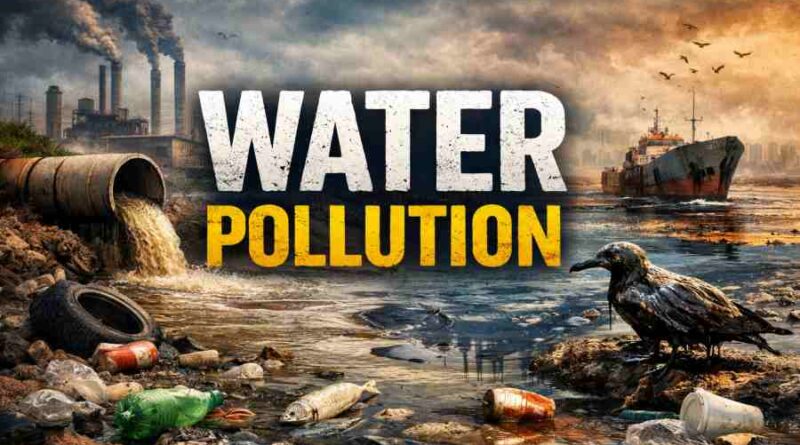
Factories and industries discharge chemical waste, heavy metals, and toxic substances into nearby rivers and lakes. Many industries release untreated wastewater directly into water bodies. Chemicals such as mercury, lead, and arsenic can seriously harm aquatic life and human health.
2. Domestic Sewage
Household waste water from kitchens, bathrooms, and toilets often flows into rivers without proper treatment. Sewage contains bacteria, viruses, and organic waste that can cause serious diseases like cholera and typhoid.
3. Agricultural Runoff
Farmers use fertilizers, pesticides, and insecticides to increase crop production. During rainfall, these chemicals wash into nearby streams and rivers. Excess nutrients such as nitrogen and phosphorus can cause algal blooms, which reduce oxygen levels in water and kill fish.
4. Plastic and Solid Waste
Plastic bags, bottles, and other solid waste often end up in water bodies. Marine animals may swallow plastic, mistaking it for food. Plastic pollution not only harms aquatic life but also breaks down into microplastics that enter the food chain.
5. Oil Spills
Oil spills from ships, offshore drilling, or accidents release large amounts of oil into oceans. Oil forms a layer on the water surface, blocking sunlight and reducing oxygen supply, which affects marine ecosystems.
6. Urban Runoff
Rainwater flowing over roads and buildings carries oil, dirt, chemicals, and garbage into water bodies. This is a major source of pollution in cities.
Effects of Water Pollution
Water pollution has serious environmental, economic, and health consequences.
1. Harm to Aquatic Life
Fish, plants, and other aquatic organisms suffer due to polluted water. Toxic chemicals can kill fish directly or damage their reproductive systems. Low oxygen levels caused by pollution can lead to the death of aquatic species.
2. Health Problems in Humans
People who consume polluted water may suffer from waterborne diseases such as diarrhea, hepatitis, and dysentery. Long-term exposure to contaminated water can cause serious illnesses, including cancer and kidney damage.
3. Disruption of Ecosystems
Water pollution disturbs the natural balance of aquatic ecosystems. When one species is affected, it impacts the entire food chain.
4. Economic Loss
Polluted water affects fishing, tourism, and agriculture. Clean-up efforts and healthcare costs also create financial burdens for governments and communities.
Prevention of Water Pollution
Stopping water pollution needs joint efforts from people, businesses, and governments. Everyone has a role to play and several practical steps can help reduce and control water contamination.
1. Proper Waste Treatment
Industries must treat wastewater before releasing it into water bodies. Installing modern treatment plants can significantly reduce harmful discharges.
2. Sewage Treatment Systems
Cities and towns should have efficient sewage treatment facilities to prevent untreated domestic waste from entering rivers and lakes.
3. Reducing Plastic Use
Individuals can reduce plastic pollution by avoiding single-use plastics, recycling waste, and properly disposing of garbage.
4. Sustainable Farming Practices
Farmers can use organic fertilizers and natural pest control methods. Proper irrigation and soil management can reduce chemical runoff into water bodies.
5. Public Awareness
Educating people about the importance of clean water encourages responsible behavior. Community clean-up drives and awareness campaigns can make a positive impact.
6. Strong Environmental Laws
Governments should enforce strict regulations on industrial discharge and waste management. Penalties for polluters can discourage harmful practices.
7. Water Conservation
Using water wisely reduces wastewater generation. Fixing leaks, using water-efficient appliances, and reusing water when possible can help protect water resources.
Summary
Water pollution is a major environmental problem that puts all forms of life on Earth at risk. Its sources range from industrial waste and sewage to agricultural runoff and plastic pollution. The effects are far-reaching, impacting aquatic ecosystems, human health, and economic stability.
However, water pollution can be controlled through responsible actions, proper waste management, sustainable practices, and strict enforcement of environmental laws.Each person has an important responsibility in conserving and protecting our water resources for future generations. By making conscious choices and supporting eco-friendly initiatives, we can ensure clean and safe water for present and future generations.
Also Check: Environment