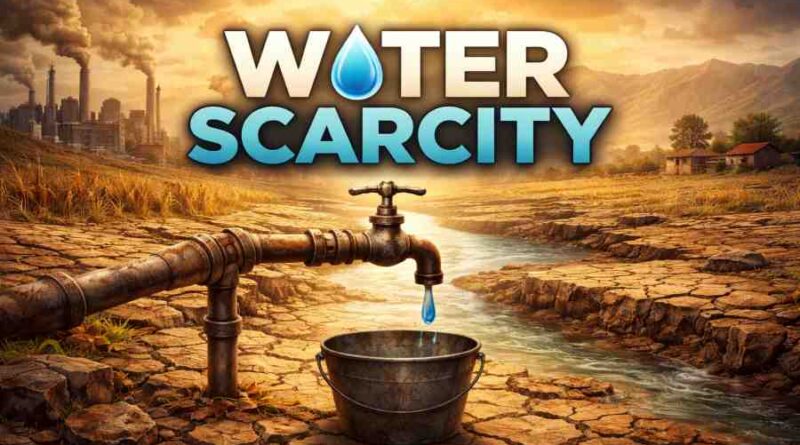
Water Scarcity – Causes, Impacts and Sustainable Solutions for the World
Water scarcity is a growing global issue. Explore its causes, impacts and effective solutions to conserve water and ensure a sustainable future.
Water Scarcity
Water is one of the most essential natural resources for life on Earth. Despite covering about 71% of the planet, only a small fraction of this water is fresh and accessible for human use. Today, water scarcity has become a serious global concern, affecting millions of people across the world. It not only threatens human survival but also impacts agriculture, industries, and ecosystems.
Table of Contents
What is Water Scarcity?
Water scarcity occurs when the demand for freshwater exceeds the available supply in a region. It can be physical, where there is a lack of water due to natural conditions, or economic, where water is available but not accessible due to lack of infrastructure or poor management.
Causes of Water Scarcity
1. Population Growth
Rapid population growth is one of the primary reasons for increasing water demand. As the global population rises, the need for drinking water, sanitation, food production, and industrial use also increases, putting pressure on limited freshwater resources.
2. Climate Change
Climate change significantly affects water availability. Changes in rainfall patterns, prolonged droughts, melting glaciers, and rising temperatures reduce freshwater sources. Many regions now experience unpredictable water cycles, making water management more challenging.
3. Overuse of Water
Excessive use of water for agriculture, industry, and domestic purposes leads to depletion of water sources. Agriculture alone consumes about 70% of the world’s freshwater. Inefficient irrigation methods further worsen the problem.
4. Pollution of Water Sources
Water pollution from industrial waste, agricultural chemicals, and domestic sewage contaminates freshwater sources. Polluted water becomes unsafe for consumption and reduces the amount of usable water.
5. Poor Water Management
Inefficient water distribution systems, leakage in pipelines, and lack of proper planning contribute to water scarcity. In many regions, water is wasted due to outdated infrastructure and mismanagement.
6. Deforestation
Forests play a vital role in maintaining the water cycle. Deforestation reduces rainfall and disrupts natural water systems, leading to reduced water availability.
Impacts of Water Scarcity
Scarcity of Water has far-reaching consequences that affect both humans and the environment.
- Health Issues: Lack of clean water leads to diseases such as cholera, dysentery, and typhoid.
- Food Shortage: Water scarcity affects agriculture, leading to reduced crop production and food insecurity.
- Economic Impact: Industries that depend on water suffer losses, affecting overall economic growth.
- Environmental Degradation: Rivers, lakes, and wetlands dry up, harming aquatic life and biodiversity.
- Social Conflicts: Competition for limited water resources can lead to conflicts between communities and even nations.
Solutions to Water Scarcity
Addressing water scarcity requires a combination of individual efforts, government policies, and technological advancements.
1. Water Conservation
Conserving water is one of the simplest and most effective solutions. Individuals can reduce water wastage by fixing leaks, using water-efficient appliances, and adopting mindful habits like turning off taps when not in use.
2. Rainwater Harvesting
Collecting and storing rainwater is an effective way to supplement water supply. Rainwater harvesting systems can be implemented in homes, schools, and industries to reduce dependence on groundwater.
3. Efficient Irrigation Techniques
Modern irrigation methods like drip irrigation and sprinkler systems help reduce water wastage in agriculture. These techniques ensure that water is delivered directly to plant roots, improving efficiency.
4. Wastewater Treatment and Reuse
Treating wastewater and reusing it for irrigation, industrial processes, and even drinking (after proper purification) can significantly reduce water scarcity.
5. Protection of Water Sources
Preventing pollution and protecting rivers, lakes, and groundwater sources is essential. Strict regulations and proper waste management systems can help maintain water quality.
6. Afforestation
Planting more trees helps restore the natural water cycle. Forests improve rainfall patterns, increase groundwater recharge, and reduce soil erosion.
7. Government Policies and Awareness
Governments must implement effective water management policies, invest in infrastructure, and promote awareness about water conservation. Public participation is crucial in addressing this issue.
Summary
Water scarcity is a pressing issue that demands immediate attention. With increasing population, climate change, and mismanagement of resources, the situation is likely to worsen if not addressed properly. However, through collective efforts, sustainable practices, and responsible use of water, it is possible to overcome this challenge.
Every drop of water is precious, and conserving it today will ensure a better and more sustainable future for generations to come.
Also Check: Environment