What is Climate? Difference Between Weather and Climate
What is Climate? Learn the clear difference between weather and climate with simple explanations, examples and key factors that shape Earth’s climate.
Climate Introduction
Understanding climate and weather is essential for anyone interested in the environment. Many people use these two terms interchangeably, but they have very different meanings. Weather tells us what the atmosphere is like right now or over a short period, such as today or this week. Climate, on the other hand, describes the usual weather conditions of a place over many years. In simple terms, weather changes quickly, but climate shows the long-term pattern of those changes. In this article, we will clearly explain what climate is, how it differs from weather, and why understanding this difference is important for our planet.
Table of Contents
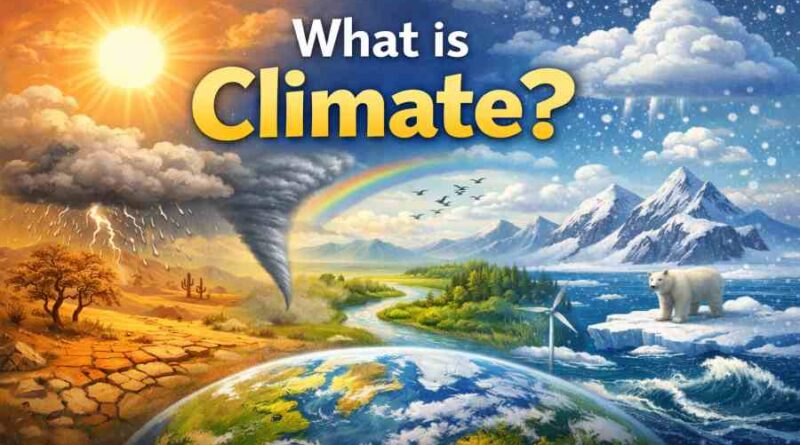
What is Climate?
Climate refers to the average weather conditions of a place over a long period usually 25 years or more. It includes patterns of temperature, rainfall, humidity, wind, and seasonal changes in a particular region.
For example, if a region usually experiences hot summers and mild winters year after year, that pattern describes its climate. Climate gives us a broader picture of what kind of weather we can generally expect in a location over time.
In simple words:
- Weather is what you see today.
- Climate is what you expect over many years.
Climate helps scientists understand long-term environmental trends. It also helps farmers plan crops, governments prepare infrastructure, and communities adapt to natural conditions.
What is Weather?
Weather describes the condition of the atmosphere at a particular place and at a specific time, such as today or right now. Weather can change very quickly – sometimes within a few minutes, a few hours, or over a couple of days.
Weather includes:
- Temperature (hot or cold)
- Rain or snowfall
- Wind speed
- Humidity
- Cloud cover
- Storms
For example, today might be rainy and cool, but tomorrow could be sunny and warm. These daily changes are examples of weather.
Weather is temporary and constantly changing, while climate remains relatively stable over long periods.
Key Difference Between Weather and Climate
Understanding the difference between weather and climate is simple when we compare them directly:
| Weather | Climate |
|---|---|
| Short-term atmospheric conditions | Long-term average weather patterns |
| Changes daily or hourly | Changes over decades or centuries |
| Forecast for a few days | Studied over 30 years or more |
| Example: It is raining today | Example: This region receives heavy rainfall every monsoon season |
Simple Example
If someone asks, “Is it cold outside today?” they are asking about weather.
If someone says, “Winters here are usually very cold,” they are talking about climate.
Factors That Influence Climate
Climate is affected by several natural and geographical factors. These include:
1. Latitude
Regions near the equator are generally warmer because they receive more direct sunlight. Areas near the poles are colder due to less direct sunlight.
2. Altitude
Higher altitudes usually have cooler temperatures. That is why mountain regions are colder than nearby lowlands.
3. Distance from the Sea
Coastal areas often have moderate climates because the ocean absorbs and releases heat slowly. Inland areas may experience more extreme temperatures.
4. Ocean Currents
Warm and cold ocean currents influence nearby land temperatures.
5. Wind Patterns
Prevailing winds can carry moisture or dry air, affecting rainfall and temperature.
These factors work together to shape the climate of different regions around the world.
Types of Climate
The Earth has several major climate types. Some common ones include:
- Tropical Climate: It remains hot and humid all year round, and the area receives a large amount of rainfall.
- Dry Climate: Very little rainfall, often found in deserts.
- Temperate Climate: Moderate temperatures with clear seasons.
- Continental Climate: There is a big difference in temperature between summer and winter, with very hot summers and very cold winters.
- Polar Climate: Extremely cold with ice and snow for most of the year.
Each region’s climate influences its plants, animals, and human activities.
Why is Understanding Climate Important?
Understanding climate is important for many reasons:
1. Agriculture
Farmers depend on climate patterns to decide which crops to grow and when to plant them.
2. Infrastructure Planning
Governments design buildings, roads, and drainage systems according to climate conditions.
3. Natural Disaster Preparedness
Climate data helps predict long-term risks like droughts, floods, or heatwaves.
4. Environmental Protection
Knowing climate patterns helps scientists study changes in ecosystems and biodiversity. Climate knowledge allows societies to prepare for future challenges and make sustainable decisions.
Climate Change and Its Impact
In recent years, climate has become a major global concern due to climate change. Climate change means long-term changes in average temperatures and weather patterns over many years. These changes can happen naturally, but human activities such as burning fossil fuels and deforestation have accelerated the process.
Some impacts of climate change include:
- Rising global temperatures
- Melting glaciers and polar ice
- Increased frequency of extreme weather events
- Changes in rainfall patterns
- Rising sea levels
Understanding the difference between weather and climate helps people avoid confusion when discussing climate change. For example, a single cold day does not mean climate change is not happening. Climate change is measured over decades, not days.
Common Misconceptions
Many people confuse unusual weather with climate change. For instance, if one year has heavy rainfall, it does not automatically mean the climate has changed. Scientists analyze long-term trends before drawing conclusions.
Another misconception is that climate is the same everywhere. In reality, climate varies greatly from one region to another due to geographical differences.
Summary
Climate and weather are closely related but very different concepts. Weather describes short-term atmospheric conditions that can change daily, while climate refers to long-term patterns observed over many years.
Understanding this difference is essential for environmental awareness, agriculture, planning, and addressing global challenges like climate change. By learning how climate works and what influences it, we can make informed decisions to protect our planet and build a sustainable future.
In simple terms, weather tells us what is happening now, but climate tells us what usually happens over time. Both are important, but climate gives us the bigger picture of Earth’s environmental system.
Also Check: Environment