What is Ecology? Introduction to the Science of Life and Environment
What is ecology. Learn the meaning, types, importance, and scope of ecology in this easy and detailed introduction for students and beginners.
What is Ecology? Introduction
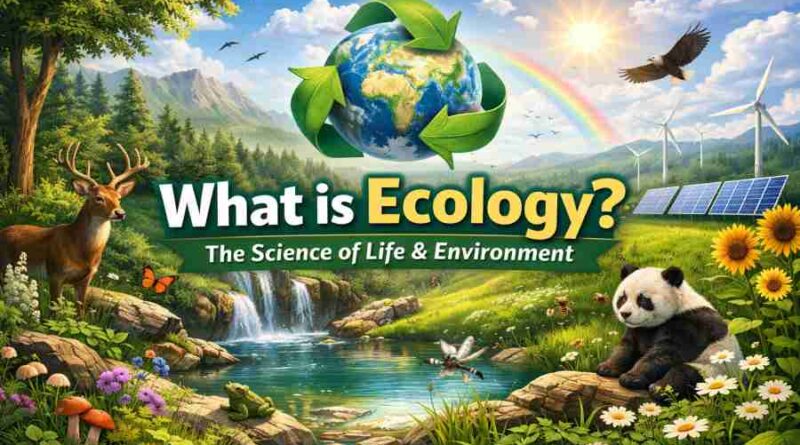
Ecology is a branch of biology that studies the relationship between living organisms and their surrounding environment. It helps us understand how plants, animals, humans, and microorganisms interact with each other and with natural elements such as air, water, soil, and sunlight. The term ecology comes from the Greek words “oikos” meaning home and “logos” meaning study. Simply put, ecology is the study of how living beings share their natural home.
In today’s world, where environmental issues like climate change, pollution, deforestation, and loss of biodiversity are increasing rapidly, ecology plays a vital role in helping us understand nature and protect life on Earth.
Table of Contents
Meaning of Ecology
Ecology focuses on understanding how organisms survive, grow, and reproduce in their environment. It examines both biotic components (living things like plants, animals, bacteria) and abiotic components (non-living things like temperature, water, soil, and light). These components work together to form ecosystems, maintaining balance and stability in nature.
For example, plants depend on sunlight, water, and soil nutrients to grow. Animals rely on plants or other animals to get the food they need to survive. Microorganisms help decompose dead matter and recycle nutrients back into the soil. Ecology studies all these connections in a scientific and systematic way.
Scope of Ecology
The scope of ecology is very wide and covers different levels of organization in nature:
- Individual organism – how a single organism adapts to its environment.
- Population – a group of the same species living in one area.
- Community – different species living together.
- Ecosystem – interaction between living organisms and non-living factors.
- Biome – large ecological areas like forests, deserts, and grasslands.
- Biosphere – It refers to the global ecosystem that supports and connects all life on Earth.
By studying these levels, ecology helps scientists understand both small-scale and large-scale environmental processes.
Types of Ecology
Ecology is divided into several branches based on the type of study:
- Autecology
Autecology focuses on the study of a single species and its relationship with the environment. It examines how environmental factors affect the behavior, growth, and survival of that species. - Synecology
Synecology deals with the study of groups of organisms living together in communities. It focuses on interactions like competition, predation, and symbiosis. - Population Ecology
This branch studies population size, density, distribution, and changes over time. It helps explain population growth and decline. - Ecosystem Ecology
Ecosystem ecology examines energy flow, nutrient cycling, and interactions between biotic and abiotic components within an ecosystem. - Human Ecology
Human ecology studies the relationship between humans and their environment, including social, cultural, and economic factors.
Importance of Ecology
Ecology is important for both nature and human survival. Some key reasons include:
- Environmental Conservation – Helps protect forests, wildlife, and natural resources
- Balance of Nature – Explains how ecosystems maintain stability
- Sustainable Development – It helps people use natural resources wisely without harming the environment.
- Climate Change Understanding – Helps study global warming and its effects
- Agriculture Improvement – Assists in soil management, pest control, and crop productivity
Without ecological knowledge, human activities can disturb natural systems, leading to environmental disasters.
Ecology and Ecosystem Balance
Every ecosystem depends on balance. Producers (plants) make food, consumers (animals) depend on producers, and decomposers (bacteria and fungi) recycle nutrients. If one component is disturbed, the entire ecosystem can suffer. Ecology helps identify these imbalances and suggests solutions to restore harmony in nature.
For example, excessive use of pesticides can kill beneficial insects and soil organisms, affecting food chains. Ecological studies help reduce such harmful practices.
Role of Ecology in Daily Life
Ecology is not just a theoretical subject; it directly affects our daily lives. Clean air, safe drinking water, fertile soil, and stable climate all depend on healthy ecosystems. Understanding ecology encourages people to adopt eco-friendly habits like saving water, reducing waste, planting trees, and protecting wildlife.
Summary
Ecology is the scientific study of life and its connection with the environment. It helps us understand how natural systems work and why protecting the environment is essential for survival. From tiny microorganisms to large forests and oceans, ecology connects all forms of life on Earth. In a time of growing environmental challenges, learning ecology is not only important for students and scientists but for every responsible citizen. By understanding ecology, we can make informed decisions to protect our planet and ensure a sustainable future for generations to come
Also Check: Envioronment