What is the Capital of Bangladesh – History, Area, Population, Culture, Sports, and Neighboring Countries
Discover What is the Capital of Bangladesh – learn about Dhaka’s history, area, population, culture, and more in this informative GK post.
What is the Capital of Bangladesh Introduction
Bangladesh, officially known as the People’s Republic of Bangladesh, is a South Asian country rich in culture, history, and natural beauty. The capital of Bangladesh is Dhaka, a vibrant city that stands as the political, economic, and cultural hub of the nation. Known for its bustling streets, historical landmarks, and colorful traditions, Dhaka truly represents the soul of Bangladesh.
Table of Contents
Capital of Bangladesh: Dhaka
Dhaka (formerly spelled Dacca) is the capital and largest city of Bangladesh. It serves as the country’s administrative, commercial, and cultural center. Dhaka is located on the banks of the Buriganga River and is one of the most densely populated cities in the world.
- Official Name: Dhaka
- Country: Bangladesh
- Region: South Asia
- Coordinates: 23.8103° N, 90.4125° E
- Established as Capital: Since Bangladesh’s independence in 1971
- Nicknames: “City of Mosques”, “Venice of the East”
Area of Dhaka
Dhaka covers an area of approximately 306 square kilometers, while the Greater Dhaka Metropolitan Area extends over 1,528 square kilometers. Despite its relatively small size, Dhaka is home to millions of people, making it one of the most crowded urban centers in the world.
Population
As of 2025 estimates, the population of Dhaka is around 23 million (including the metropolitan region). This makes it the 7th most populous city in the world.
Dhaka’s rapid population growth is driven by migration from rural areas due to better employment, education, and healthcare opportunities. The city’s population density exceeds 47,000 people per square kilometer – a testament to its urban dynamism and overpopulation challenges.
History of Dhaka
Dhaka’s history dates back over a thousand years. It became an important city during the Mughal Empire in the 17th century when Islam Khan Chishti made it the capital of Bengal Subah in 1608. The city flourished as a center of trade, particularly famous for its Muslin fabric, which was highly prized around the world.
Later, under British colonial rule, Dhaka became part of British India and saw modernization in infrastructure. Following the partition of British India in 1947, Dhaka was designated as the administrative capital of East Pakistan. In 1971, following the Bangladesh Liberation War, Dhaka was declared the capital of the independent nation of Bangladesh.
Culture of Dhaka
Dhaka’s culture is a vibrant blend of ancient traditions and modern lifestyles. The people are known for their hospitality, colorful festivals, and delicious cuisine.
Key cultural highlights:
- Language: Bengali (Bangla)
- Religion: Islam is the major religion, followed by Hinduism and other minorities.
- Festivals: Pohela Boishakh (Bengali New Year), Eid-ul-Fitr, Durga Puja, and Independence Day.
- Cuisine: Popular dishes include biryani, hilsa fish, bhuna khichuri, and pitha sweets.
- Architecture: Notable landmarks include the Lalbagh Fort, Ahsan Manzil, National Parliament House, and Star Mosque.
Dhaka is also known for its vibrant rickshaw art, which has become a symbol of the city’s cultural identity.
Sports in Dhaka
Sports play an important role in Dhaka’s culture. Cricket is the most popular sport, followed by football and kabaddi. The city hosts international matches at the Sher-e-Bangla National Cricket Stadium in Mirpur.
Dhaka is home to several professional sports clubs and has produced world-class athletes who represent Bangladesh globally.
Neighboring Countries of Bangladesh
Bangladesh shares its borders with two countries:
- India – Surrounds Bangladesh on the west, north, and east sides.
- Myanmar (Burma) – Lies to the southeast of Bangladesh.
To the south, Bangladesh has a coastline along the Bay of Bengal, giving it access to maritime trade and fishing resources.
Economy and Modern Development
Dhaka is the economic engine of Bangladesh. It contributes the largest share to the nation’s GDP, driven by industries like textiles, garments, information technology, and finance.
The ready-made garment industry, in particular, has made Bangladesh one of the largest apparel exporters in the world. In recent years, Dhaka has witnessed rapid urban development with new roads, metro lines, and skyscrapers.
Challenges
Despite its growth, Dhaka faces challenges such as traffic congestion, pollution, flooding, and overpopulation. The government and urban planners are working to improve infrastructure through projects like the Dhaka Metro Rail, clean water initiatives, and green city campaigns.
Interesting Facts About Dhaka
- Dhaka has over 5,000 mosques, earning it the title “City of Mosques.”
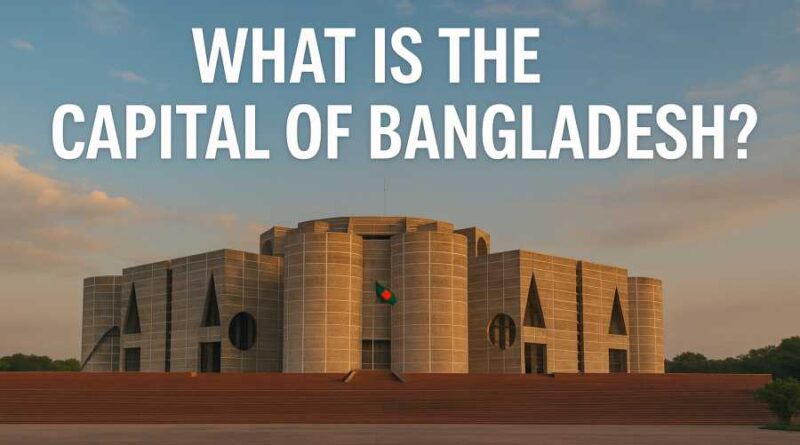
- The National Parliament House, designed by American architect Louis I. Kahn, is one of the world’s most remarkable modern architectural masterpieces.
- Dhaka University, established in 1921, is known as the “Oxford of the East.”
- The city is famous for Dhakai Muslin, a fine handmade fabric admired globally in ancient times.
Summary
Dhaka, the capital of Bangladesh, stands as a city of contrasts – where tradition meets modernity, and chaos meets creativity. From its glorious Mughal past to its booming modern economy, Dhaka continues to be the beating heart of Bangladesh. Its resilience, vibrant culture, and energetic people make it one of the most fascinating capitals in South Asia.
Also Check: General Knowledge