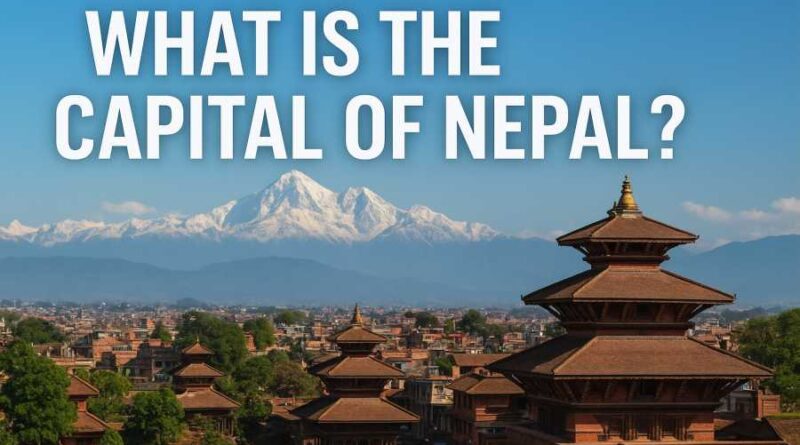
What is the Capital of Nepal – History, Area, Population & Culture
What is the Capital of Nepal? Discover everything about Kathmandu – its history, area, population, culture, sports, and neighbouring countries.
Introduction
Nepal, a beautiful landlocked country in South Asia, is world-famous for its natural beauty, cultural diversity, and the mighty Himalayas, including Mount Everest. The country holds deep spiritual and historical importance. The capital of Nepal is Kathmandu, a city that reflects the nation’s heritage, tradition, and modern development. This post explores Kathmandu’s area, population, history, culture, sports, and neighbouring countries in detail.
Table of Contents
What is the Capital of Nepal?
The capital of Nepal is Kathmandu. It is the largest and most populous city in the country and serves as the political, cultural, and economic center of Nepal. Located in the Kathmandu Valley at an altitude of approximately 1,400 meters (4,600 feet) above sea level, the city offers a beautiful blend of ancient temples, traditional architecture, and a rapidly growing urban landscape.
Area and Population of Kathmandu
Kathmandu covers an area of around 50.67 square kilometers. Though relatively small in size, it is densely populated due to its significance as the capital and hub of all major activities in Nepal.
According to recent estimates (2025), the population of Kathmandu is over 1.5 million within city limits, while the entire Kathmandu Valley, including Lalitpur and Bhaktapur, has a population exceeding 3 million. The city is a melting pot of different communities and ethnicities such as Newars, Brahmins, Chhetris, Gurungs, and Magars.
History of Kathmandu
The history of Kathmandu is ancient and fascinating. It is believed that the Kathmandu Valley was once a large lake, which was drained by Manjushree, a Buddhist saint, to make the land habitable. The valley then became the cradle of Nepali civilization.
The city’s name “Kathmandu” originates from a wooden pavilion called Kasthamandap, built in the 16th century. According to legend, it was constructed from the wood of a single tree.
Kathmandu was historically a major trade route between India and Tibet, fostering economic and cultural exchange. It was once ruled by the Malla Kings, who built many of the city’s magnificent temples and palaces.
In 1768, King Prithvi Narayan Shah, the founder of modern Nepal, unified the small kingdoms into one nation and declared Kathmandu the capital of Nepal. Since then, it has remained the heart of political and cultural activities in the country.
Culture and Religion
Kathmandu is a cultural treasure house where Hinduism and Buddhism coexist harmoniously. The city is filled with temples, stupas, shrines, and monasteries, representing centuries of faith and art.
Some of the most famous cultural landmarks include:
- Pashupatinath Temple – Recognized as a UNESCO World Heritage Site, this sacred temple stands among the most revered shrines devoted to Lord Shiva.
- Swayambhunath Stupa (Monkey Temple) – A sacred Buddhist site offering panoramic views of the valley.
- Boudhanath Stupa – One of the largest stupas in Asia, symbolizing peace and enlightenment.
- Durbar Square – The historic royal palace complex showcasing Newari architecture and craftsmanship.
Festivals like Dashain, Tihar, Holi, and Buddha Jayanti are celebrated with immense enthusiasm. The city’s streets come alive with music, dance, and traditional rituals throughout the year.
Sports in Kathmandu
Sports play a vital role in Kathmandu’s lifestyle. The most popular sport is football (soccer), followed by cricket, volleyball, and badminton. The city has multiple stadiums and sports complexes, including the Dasarath Rangasala Stadium, Nepal’s largest and oldest sports arena.
Kathmandu has also hosted various international sporting events, including South Asian Games. The youth of Nepal are actively participating in athletics, martial arts, and adventure sports like mountaineering, trekking, and paragliding, which attract global attention.
Economy and Modern Development
Kathmandu is the economic hub of Nepal, contributing a major share to the country’s GDP. The economy relies heavily on tourism, trade, education, real estate, and handicrafts. Tourists from across the world visit the city for its unique blend of culture, spirituality, and natural beauty.
Despite challenges like traffic congestion and pollution, Kathmandu continues to modernize. The rise of information technology, hospitality, and education sectors has given the city a new identity in the 21st century.
Neighbouring Countries of Nepal
Nepal shares its borders with two major countries:
- India to the south, east, and west
- China (Tibet Autonomous Region) to the north
This strategic location has influenced Nepal’s trade, culture, and foreign relations throughout history. Kathmandu, being centrally located, serves as a connecting point between these two Asian giants.
Interesting Facts about Kathmandu
- Kathmandu is home to seven UNESCO World Heritage Sites, making it one of the world’s most culturally rich cities.
- The city’s traditional architecture features intricately carved wooden windows and pagoda-style temples.
- After the 2015 earthquake, Kathmandu underwent massive reconstruction while preserving its ancient charm.
- The city’s air is filled with the aroma of incense, the ringing of temple bells, and the warmth of Nepali hospitality.
Summary
Kathmandu, the capital of Nepal, is more than just a city – it’s a living museum of history, religion, and culture. From its ancient temples to its bustling markets, from serene stupas to adventurous mountains, every corner tells a story of resilience and beauty. Whether you’re a traveler, historian, or culture lover, Kathmandu offers an experience that touches both heart and soul
Also Check: General Knowledge