What is the Capital of Sri Lanka – History, Area, Population & Culture
Discover what is the capital of Sri Lanka – Sri Jayawardenepura Kotte, its history, culture, population, and neighbouring countries in this detailed guide.
What is the Capital of Sri Lanka Introduction
The capital of Sri Lanka is Sri Jayawardenepura Kotte, often simply called Kotte. It serves as the administrative capital of the country, while Colombo remains the commercial capital and largest city. Together, Kotte and Colombo form the Colombo Metropolitan Region, the most developed and urbanized area of the island nation.
Table of Contents
Location and Area
Sri Jayawardenepura Kotte is located in the Western Province of Sri Lanka, just a few kilometers southeast of Colombo.
- Area: Approximately 17 square kilometers
- Elevation: Around 15 meters (49 feet) above sea level
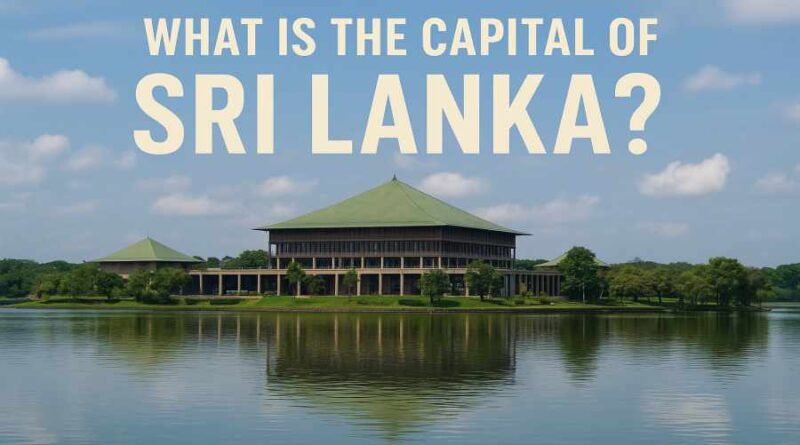
Kotte lies near the Diyawanna Oya (a tributary of the Kelani River), making it a city surrounded by scenic waterways and lush greenery. The Sri Lankan Parliament is built on an artificial island in the Diyawanna Lake, symbolizing the city’s political significance.
Population
As of the latest estimates (2024–2025), the population of Sri Jayawardenepura Kotte is around 115,000 people. However, when combined with Colombo’s metropolitan area, the total urban population exceeds 5.6 million, making it the most populated region in Sri Lanka.
The city’s population density is relatively high, and it includes a mix of Sinhala, Tamil, and Muslim communities, reflecting Sri Lanka’s diverse demographic composition.
History of Sri Jayawardenepura Kotte
The history of Kotte dates back to the 14th century, during the reign of King Parakramabahu VI. It became the capital of the Kingdom of Kotte, which succeeded the Kingdom of Gampola. The city was strategically fortified and developed with moats and ramparts to protect it from invasions.
In the 16th century, with the arrival of the Portuguese, the kingdom gradually lost its power, and Colombo later rose as the dominant city due to European colonial interests.
After Sri Lanka gained independence from Britain in 1948, Colombo served as the capital until 1982, when Sri Jayawardenepura Kotte was officially designated as the administrative capital, and the Parliament was moved there.
Culture and Religion
Sri Jayawardenepura Kotte represents the cultural harmony of Sri Lanka. The majority of the population follows Buddhism, which influences much of the city’s festivals, architecture, and daily life. Important Buddhist temples like the Kotte Raja Maha Vihara stand as testaments to the city’s spiritual heritage.
Besides Buddhism, Hinduism, Islam, and Christianity are also practiced, and festivals such as Vesak, Thai Pongal, Eid, and Christmas are celebrated with enthusiasm.
Cultural activities often reflect traditional Sri Lankan art forms such as:
- Kandyan dance and drumming
- Mask making
- Handicrafts and batik art
- Ayurvedic traditions and herbal medicine
The blend of ancient traditions with modern urban living makes Kotte a city where history and progress coexist beautifully.
Sports in Sri Lanka
Sports hold a special place in Sri Lankan society, and the same is true for Kotte and Colombo. The most popular sport is cricket, with the national team being a source of pride worldwide. Other popular sports include:
- Volleyball (national sport)
- Rugby
- Football (soccer)
- Athletics
- Kabaddi
Sri Lanka has produced world-famous cricketers like Kumar Sangakkara, Mahela Jayawardene, Sanath Jayasuriya, and Muttiah Muralitharan, who have brought international recognition to the nation.
Neighbouring Countries
Located in the Indian Ocean, Sri Lanka lies just south of India and is known for its scenic beauty and rich heritage.
It does not share land borders but has maritime neighbours:
- India to the northwest (separated by the Palk Strait and Gulf of Mannar)
- The Maldives to the southwest
The Palk Strait is the narrow stretch of sea that separates Sri Lanka from the Indian state of Tamil Nadu. The two countries share deep cultural, historical, and economic ties, influenced by ancient trade and migration.
Also Read: What is the Capital of Nepal – History, Area, Population & Culture
Economy and Modern Development
Sri Jayawardenepura Kotte and Colombo together form the economic and political core of Sri Lanka.
Key economic activities include:
- Administration and government services
- Trade and finance
- Education and technology
- Tourism and hospitality
The city hosts the Sri Lankan Parliament, Supreme Court, and numerous ministries, symbolizing its central role in governance. The surrounding region has modern infrastructure, highways, shopping centers, and international schools, showing rapid urbanization.
Tourism and Heritage
Though smaller in area, Kotte holds several historical and scenic attractions:
- Sri Lankan Parliament Building – a modern architectural marvel surrounded by the Diyawanna Lake.
- Kotte Raja Maha Vihara – an ancient Buddhist temple dating back to the Kotte Kingdom.
- Diyasaru Park – an urban wetland park home to diverse flora and fauna.
Nearby Colombo offers a blend of colonial heritage and modern charm – from Galle Face Green to Gangaramaya Temple and the National Museum.
Summary
To summarize, Sri Jayawardenepura Kotte is the administrative capital of Sri Lanka, while Colombo serves as the commercial hub. Together, they represent the country’s historical depth, cultural diversity, and modern dynamism.
The city’s evolution from an ancient fortified kingdom to a modern capital showcases Sri Lanka’s journey through centuries of change – from royal rule and colonialism to independence and progress.
Also Check: General Knowledge