Wildlife Conservation – Protecting Earth’s Precious Biodiversity
Learn the importance of Wildlife Conservation, its challenges and effective solutions to protect biodiversity and ensure a sustainable future for our planet.
Wildlife Conservation
Wildlife conservation means protecting wild animals, plants, and the natural places where they live. It focuses on keeping forests, rivers, oceans, and grasslands safe so that different species can survive and grow without danger. It aims to ensure that nature remains healthy and balanced for present and future generations. Our planet is home to millions of species, each playing a unique role in maintaining ecological balance. However, due to increasing human activities, wildlife is facing serious threats. Understanding wildlife conservation is the first step toward protecting the natural world.
Table of Contents
What is Wildlife?
Wildlife includes all living organisms that grow or live in the wild without human domestication. This includes animals such as mammals, birds, reptiles, amphibians, and insects, as well as plants, fungi, and microorganisms. Forests, grasslands, oceans, deserts, and wetlands serve as natural habitats for these species.
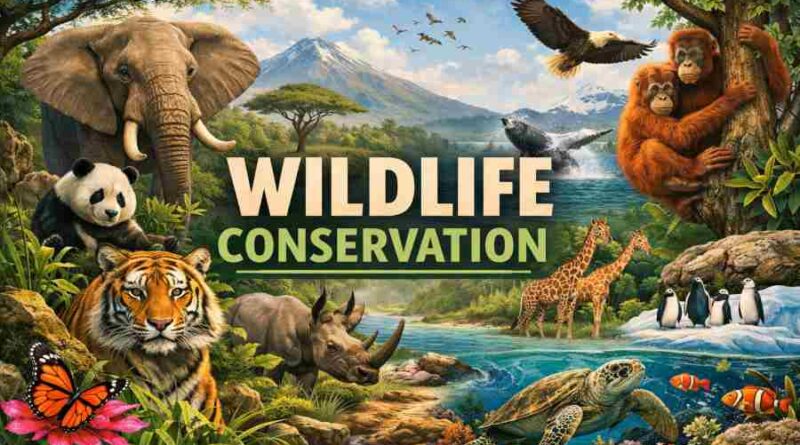
For example, the majestic Bengal tiger roams the forests of India, while the African elephant lives in the grasslands and savannas of Africa. Each species contributes to the health of its ecosystem in different ways.
Importance of Wildlife Conservation
Wildlife conservation is important for several reasons:
1. Maintaining Ecological Balance
Every species plays a role in the food chain. Predators control the population of herbivores, and herbivores regulate plant growth. If one species disappears, it can disturb the entire ecosystem. For example, removing predators can lead to overpopulation of certain animals, which may cause overgrazing and environmental damage.
2. Supporting Biodiversity
Biodiversity means the wide variety of living things on Earth, including plants, animals, and microorganisms. When biodiversity is rich, ecosystems become stronger, more balanced, and better able to handle natural changes or disasters. Diverse ecosystems are better able to withstand natural disasters, climate changes and diseases.
3. Economic and Livelihood Benefits
Many communities depend on wildlife for tourism, food, medicine, and income. Wildlife tourism, also known as eco-tourism, generates revenue and provides employment opportunities while promoting conservation awareness.
4. Scientific and Educational Value
Wild animals and plants help scientists study genetics, medicine, and environmental processes. Many modern medicines are derived from natural sources found in forests and oceans.
5. Cultural and Aesthetic Value
Wildlife has deep cultural and spiritual importance in many societies. It also adds beauty to our planet and enriches human life.
Major Threats to Wildlife
Despite its importance, wildlife faces numerous threats:
1. Habitat Destruction
Deforestation, urbanization, mining, and agriculture destroy natural habitats. When forests are cut down, animals lose their homes and food sources.
2. Climate Change
Rising temperatures, melting glaciers, and changing weather patterns affect ecosystems worldwide. Species that cannot adapt quickly may face extinction.
3. Poaching and Illegal Trade
Illegal hunting for fur, skin, horns, ivory, and other body parts has severely reduced populations of many species. For instance, elephants are often killed for their tusks, and tigers are hunted for their skins and bones.
4. Pollution
Air, water, and soil pollution harm wildlife. Plastic waste in oceans affects marine animals, while chemical pollution can poison birds and fish.
5. Overexploitation
Overfishing, overhunting, and excessive resource use can lead to the rapid decline of species.
Conservation Efforts Around the World
Governments and organizations worldwide are working to protect wildlife. Protected areas such as national parks, wildlife sanctuaries, and biosphere reserves play a major role in conservation. For example, World Wide Fund for Nature works globally to conserve nature and reduce threats to biodiversity.
International agreements also support conservation. The Convention on International Trade in Endangered Species of Wild Fauna and Flora regulates the global trade of endangered animals and plants to prevent overexploitation.
In India, several initiatives aim to protect endangered species. Project Tiger was launched to conserve tiger populations and restore their habitats. Similarly, wildlife protection laws restrict hunting and promote habitat conservation.
Role of Individuals in Wildlife Conservation
Wildlife conservation is not just the duty of governments and big organizations. Every individual also plays an important role in protecting animals, plants, and their natural habitats. Individuals can also make a significant impact:
- Avoid buying products made from animal skins, ivory, or other wildlife parts.
- Reduce plastic use to prevent environmental pollution.
- Support eco-friendly products and sustainable practices.
- Spread awareness about the importance of wildlife conservation.
- Participate in tree plantation drives and community conservation programs.
Even small actions, when taken collectively, can bring meaningful change.
The Future of Wildlife Conservation
The future of wildlife conservation depends on global cooperation, strong policies, and public awareness. Sustainable development must balance economic growth with environmental protection. Protecting wildlife ensures food security, climate stability, and a healthier planet.
Education plays a crucial role in conservation. When people understand the importance of wildlife, they are more likely to protect it. Schools, media, and social platforms can help spread awareness about environmental protection.
Technology is also helping conservation efforts. Satellite tracking, camera traps, and scientific research allow experts to monitor wildlife populations and prevent illegal activities.
Summary
Wildlife conservation is essential for maintaining ecological balance, protecting biodiversity, and ensuring a sustainable future. Human activities have placed immense pressure on nature, but through collective efforts, we can reverse the damage. By supporting conservation programs, adopting sustainable habits, and spreading awareness, we can protect the rich diversity of life on Earth.
Our planet does not belong only to humans. It is a shared home for countless species. Protecting wildlife today means preserving the beauty, balance, and health of Earth for generations to come.
Also Check: Environment