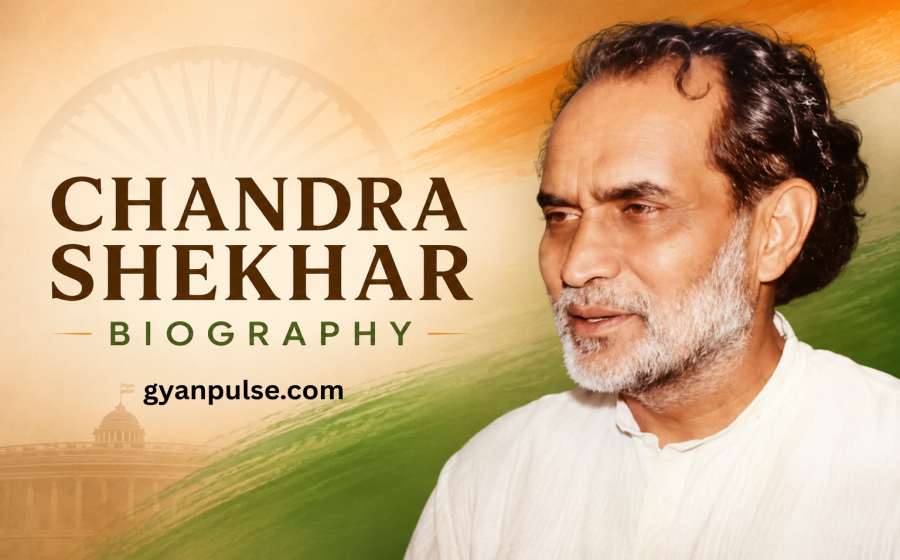
Chandra Shekhar Biography – The Fearless Young Turk Who Became India’s 8th Prime Minister
Explore Chandra Shekhar Biography, life, political journey, Bharat Yatra, Prime Ministerial tenure and lasting legacy of India’s fearless “Young Turk” leader.
Chandra Shekhar Biography
Chandra Shekhar was a prominent Indian politician, social thinker, and freedom-inspired leader who served as the 8th Prime Minister of India. Known for his bold personality and independent political thinking, he earned the nickname “Young Turk” for challenging established leadership and standing firmly for his principles. Though his tenure as Prime Minister was short, his contribution to Indian politics and democratic values remains significant.
Table of Contents
Early Life and Education
Chandra Shekhar was born on 17 April, 1927, in Ibrahimpatti village in the Ballia district of Uttar Pradesh, India. He belonged to a farming family and grew up witnessing rural life and the challenges faced by ordinary people.
He completed his early education in his village and later attended Allahabad University, one of the most prestigious institutions in India at the time. At the university, he pursued a Master’s degree in Political Science. During his student years, he developed a strong interest in social issues, politics, and national development.
His involvement in student politics and debates helped shape his political ideas and leadership skills.
Entry into Politics
Chandra Shekhar began his political journey with the Praja Socialist Party, a party known for its socialist ideology and commitment to social justice. His leadership qualities quickly gained attention, and he soon became an active political figure.
Later, he joined the Indian National Congress during the 1960s. Within the Congress party, he became part of a group of young leaders who were called the “Young Turks.” These leaders were known for advocating bold reforms and criticizing conservative policies within the party.
Chandra Shekhar was first elected to the Rajya Sabha in 1962, marking the beginning of his parliamentary career.
Opposition to Emergency
One of the most defining moments of his political career came during the The Emergency in India (1975–1977), declared by Prime Minister Indira Gandhi. During this period, many political leaders were arrested for opposing the government.
Chandra Shekhar strongly opposed the Emergency and was also imprisoned. His courage during this difficult time strengthened his reputation as a leader who valued democracy and freedom.
After the Emergency ended, he joined the Janata Party, which came to power in 1977. He later became the President of the Janata Party, playing a major role in shaping opposition politics in India.
Bharat Yatra
In 1983, Chandra Shekhar undertook a historic “Bharat Yatra” (Journey across India). During this journey, he walked thousands of kilometers across the country to understand the problems faced by common people.
This padyatra covered several states and allowed him to directly interact with farmers, workers, students, and rural communities. The Bharat Yatra highlighted issues such as poverty, unemployment, and social inequality. His journey showed his deep commitment to grassroots democracy and public welfare.
Prime Minister of India
Chandra Shekhar became the Prime Minister of India on November 10, 1990, after forming a government with the support of the Indian National Congress.
During his tenure, he had to deal with serious economic challenges and political instability. Despite the difficulties, he tried to maintain stability and manage the country’s economic situation.
However, due to political disagreements and withdrawal of support from Congress, his government collapsed. He resigned on June 21, 1991, making his tenure one of the shortest in Indian history.
Even though his time as Prime Minister was brief, his leadership during a difficult political period is still remembered.
Personality and Ideology
Chandra Shekhar was known for his fearless nature, honesty, and strong commitment to democratic values. Unlike many politicians, he openly expressed his views and did not hesitate to criticize policies he believed were wrong.
He believed strongly in social justice, equality, and rural development. His political thinking was deeply influenced by socialist ideas and the goal of improving the lives of ordinary citizens. He was also a thoughtful writer and contributed articles and essays on politics and social issues.
5 Inspiring Lessons from Chandra Shekhar’s Life
1. Stand Firm on Your Principles
Chandra Shekhar always stood by his beliefs, even when it was politically risky.
2. Listen to the People
His Bharat Yatra showed the importance of understanding the real problems of citizens.
3. Courage in Difficult Times
Opposing the Emergency required great bravery and commitment to democracy.
4. Leadership with Integrity
He believed in honest and transparent leadership in public life.
5. Serve the Nation Selflessly
His life reminds us that politics should focus on service rather than personal gain.
Death and Legacy
Chandra Shekhar passed away on July 8, 2007, in New Delhi after a prolonged illness. His death marked the end of an era of principled and bold political leadership. Today, he is remembered as a leader who stood by his beliefs and fought for democracy even in challenging times. His dedication to public service and grassroots politics continues to inspire many.
Chandra Shekhar’s Lasting Legacy
Chandra Shekhar’s political journey remains a powerful example of courage, independence, and dedication to public service. From his early involvement in politics to his Bharat Yatra and brief tenure as Prime Minister, he consistently focused on the concerns of ordinary citizens. His commitment to democracy, social justice, and strong principles continues to make his life an inspiring chapter in India’s political history.
Summary
Chandra Shekhar Biography highlights the remarkable journey of a fearless Indian leader who believed in democracy, social justice, and public service. From his early political career and opposition to the Emergency to his Bharat Yatra and tenure as Prime Minister, his life reflects courage, independent thinking, and a strong connection with ordinary people. His principles and dedication continue to inspire future generations.
Also Check: Biography