Environmental Degradation – Causes, Effects and Solutions for a Sustainable Future
Learn Environmental Degradation, its causes, consequences and effective solutions to reduce environmental damage and protect our planet for future generations.
Environmental Degradation
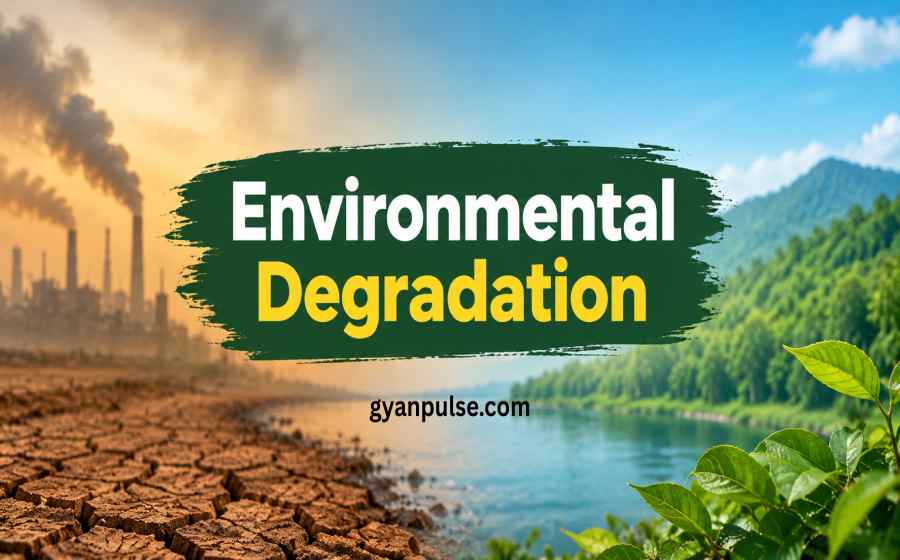
Environmental degradation is one of the most serious challenges facing our planet today. It refers to the deterioration of the natural environment due to human activities and natural processes. This includes the depletion of natural resources, destruction of ecosystems, loss of biodiversity, and pollution of air, water, and soil. As the global population continues to grow, the pressure on the environment increases, leading to long-term consequences that threaten life on Earth.
Table of Contents
What is Environmental Degradation?
Environmental degradation occurs when natural resources such as forests, water, soil, and air are damaged or exhausted. It disrupts the balance of ecosystems and reduces the environment’s ability to support life. While some environmental changes are natural, most degradation today is caused by human actions.
Major Causes of Environmental Degradation
1. Deforestation
Deforestation is the large-scale removal of forests for agriculture, urban development, and industrial use. Trees play a crucial role in maintaining ecological balance by absorbing carbon dioxide and releasing oxygen. Their removal leads to climate imbalance, soil erosion, and loss of wildlife habitats.
2. Pollution
Pollution is one of the leading causes of environmental degradation. It can be categorized into:
- Air Pollution: Emissions from vehicles, factories, and burning fossil fuels release harmful gases.
- Water Pollution: Industrial waste, sewage, and plastic dumping contaminate water bodies.
- Soil Pollution: Excessive use of pesticides and chemicals reduces soil fertility.
3. Overpopulation
The rapid increase in human population leads to excessive demand for resources such as food, water, and energy. This puts immense pressure on natural systems and accelerates environmental degradation.
4. Industrialization
Industries contribute significantly to economic growth but also produce large amounts of waste and emissions. Industrial activities release toxic chemicals into the environment, leading to pollution and health hazards.
5. Climate Change
Human activities such as burning fossil fuels and deforestation increase greenhouse gas emissions. This leads to global warming, which causes melting glaciers, rising sea levels, and extreme weather conditions.
6. Overexploitation of Natural Resources
Excessive use of natural resources like minerals, water, and fossil fuels without proper management leads to depletion. Once these resources are exhausted, they cannot be easily replaced.
Consequences of Environmental Degradation
1. Loss of Biodiversity
Environmental degradation leads to the extinction of plant and animal species. When habitats are destroyed, many species cannot survive, resulting in reduced biodiversity.
2. Climate Imbalance
Changes in the environment disturb natural climate patterns. This results in irregular rainfall, heatwaves, droughts, and floods, affecting agriculture and human life.
3. Health Problems
Polluted air and water cause serious health issues such as respiratory diseases, skin infections, and waterborne illnesses. Long-term exposure can even lead to life-threatening conditions.
4. Soil Degradation
Soil erosion and loss of fertility reduce agricultural productivity. This can lead to food shortages and increased hunger in many regions.
5. Water Scarcity
Pollution and overuse of water resources reduce the availability of clean water. This creates serious challenges for drinking, agriculture, and sanitation.
6. Economic Impact
Environmental degradation affects industries such as agriculture, fisheries, and tourism. Natural disasters caused by environmental damage also result in significant economic losses.
Ways to Reduce Environmental Degradation
1. Afforestation and Reforestation
Planting trees and restoring forests can help maintain ecological balance and reduce carbon dioxide levels.
2. Pollution Control
Strict regulations on industrial emissions and waste disposal can help reduce pollution. Using eco-friendly products and reducing plastic use also contribute positively.
3. Sustainable Resource Use
Resources should be used wisely to ensure they are available for future generations. Practices like recycling, reusing, and conserving energy are essential.
4. Promoting Renewable Energy
Switching to renewable energy sources such as solar, wind, and hydro power can reduce dependence on fossil fuels and decrease pollution.
5. Public Awareness
Educating people about environmental protection encourages responsible behavior. Small actions like saving water and reducing waste can make a big difference.
6. Government Policies
Governments must implement strict environmental laws and support sustainable development initiatives to protect natural resources.
Importance of Protecting the Environment
Protecting the environment is essential for maintaining healthy ecosystems and ensuring a better quality of life. Reducing pollution, conserving natural resources, restoring forests, and adopting sustainable practices can help limit environmental damage. Individual choices, community participation, and effective government policies all have an important role in creating a cleaner, healthier, and more sustainable planet for future generations.
Summary
Environmental degradation is a global issue that requires immediate attention. Its causes are largely linked to human activities, and its consequences affect all forms of life on Earth. However, by adopting sustainable practices, spreading awareness, and taking collective action, it is possible to reduce environmental damage and restore the balance of nature. Protecting the environment is not just a responsibility but a necessity for ensuring a healthy and sustainable future for generations to come.
Also Check: Environment