Loss of Biodiversity – Reasons and Effects
Loss of Biodiversity threatens ecosystems, wildlife and human well-being. Learn its causes and practical ways to protect nature for a sustainable future.
Loss of Biodiversity
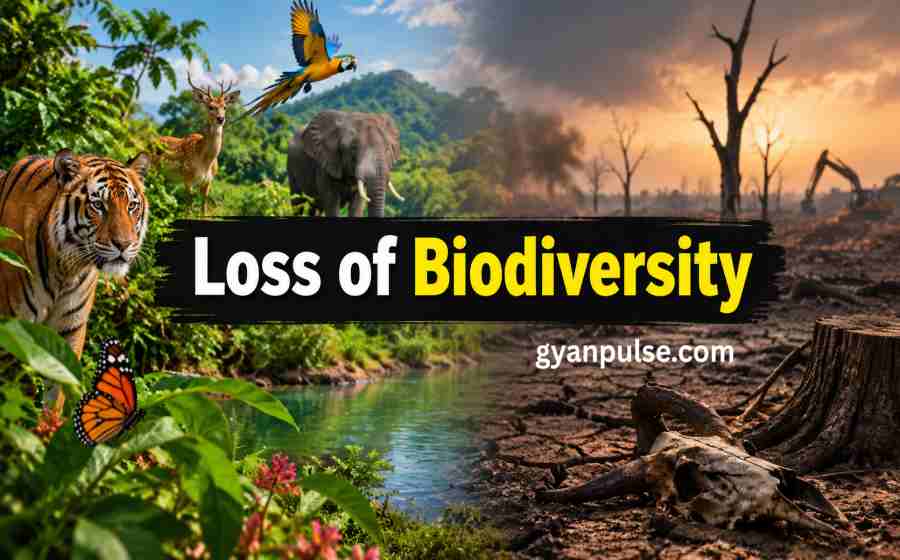
Biodiversity refers to the variety of life on Earth, including plants, animals, microorganisms, and the ecosystems they form. It is the foundation of life, supporting everything from food production to climate regulation. However, biodiversity is declining at an alarming rate due to human activities and environmental changes. The loss of biodiversity is one of the most serious global challenges today, affecting ecosystems, economies, and human survival.
Table of Contents
What is Biodiversity Loss?
Biodiversity loss means the reduction or disappearance of different species of plants and animals in a particular habitat or across the entire planet. It can occur due to natural processes, but in recent times, human activities have accelerated this loss significantly. When species become extinct or populations decline drastically, it disrupts ecological balance and weakens ecosystems.
Major Reasons for Biodiversity Loss
1. Habitat Destruction
One of the primary causes of biodiversity loss is habitat destruction. Forests, wetlands, grasslands, and other natural habitats are being cleared for agriculture, urban development, and industrial use. Deforestation, in particular, leads to the loss of homes for countless species, forcing them to migrate or face extinction.
2. Climate Change
Changes in global temperature, rainfall patterns, and weather conditions are affecting ecosystems worldwide. Many species are unable to adapt quickly to these changes, leading to population decline. Melting glaciers, rising sea levels, and extreme weather events further threaten biodiversity.
3. Pollution
Air, water, and soil pollution have harmful effects on living organisms. Chemicals, plastics, and toxic waste contaminate ecosystems, affecting both wildlife and plants. For example, water pollution can kill aquatic life, while air pollution can harm birds and terrestrial animals.
4. Overexploitation of Resources
Overhunting, overfishing, and excessive harvesting of plants have led to the depletion of many species. When humans exploit natural resources beyond their limits, it disrupts ecological balance and reduces biodiversity.
5. Invasive Species
Non-native or invasive species introduced into new environments can harm native species. They often compete for food, space, and other resources, sometimes leading to the extinction of local species.
6. Population Growth and Urbanization
Rapid human population growth increases the demand for land, food, and resources. This leads to deforestation, habitat fragmentation, and increased pollution, all of which contribute to biodiversity loss.
Effects of Biodiversity Loss
1. Ecosystem Imbalance
Each species plays a specific role in maintaining ecological balance. The loss of even a single species can disrupt food chains and ecological processes. This imbalance can lead to the collapse of entire ecosystems.
2. Decline in Food Security
Biodiversity is essential for agriculture and food production. A variety of crops and animal species ensures stable food supply. Loss of biodiversity reduces genetic diversity, making crops more vulnerable to pests, diseases, and climate changes.
3. Impact on Human Health
Many medicines are derived from plants and other natural sources. Loss of biodiversity limits the discovery of new medicines and treatments. Additionally, ecosystem disruption can increase the spread of diseases.
4. Economic Loss
Many industries, such as agriculture, fisheries, and tourism, depend on biodiversity. Loss of species can lead to reduced productivity and financial losses, especially for communities that rely on natural resources.
5. Climate Instability
Forests, oceans, and other ecosystems play a crucial role in regulating the climate by absorbing carbon dioxide. Biodiversity loss weakens these natural systems, contributing to global warming and climate change.
6. Loss of Natural Beauty and Cultural Value
Nature has aesthetic, cultural, and spiritual significance. The extinction of species and destruction of ecosystems result in the loss of natural heritage, affecting human well-being and cultural identity.
How to Protect Biodiversity
Protecting biodiversity requires collective efforts at individual, national, and global levels. Some important steps include:
- Conserving natural habitats through protected areas like national parks and wildlife sanctuaries
- Promoting sustainable practices in agriculture, forestry, and fishing
- Reducing pollution by adopting eco-friendly habits
- Controlling invasive species and protecting native ecosystems
- Raising awareness about the importance of biodiversity
Governments, organizations, and individuals must work together to conserve and restore ecosystems.
Why Biodiversity Conservation Matters
Biodiversity conservation is essential for maintaining healthy ecosystems and supporting human life. Protecting forests, wildlife, oceans, and other natural habitats helps preserve ecological balance, food resources, natural medicines, and climate stability. By reducing pollution, using resources responsibly, and supporting conservation efforts, communities can help protect endangered species and ensure that nature continues to benefit present and future generations.
Summary
The loss of biodiversity is a critical issue that threatens the balance of life on Earth. Human activities have accelerated this process, leading to serious environmental, economic, and social consequences. Protecting biodiversity is not just about saving plants and animals, it is about ensuring a healthy and sustainable future for all living beings. By taking responsible actions today, we can preserve the richness of life on Earth for future generations.
Also Check: Environment