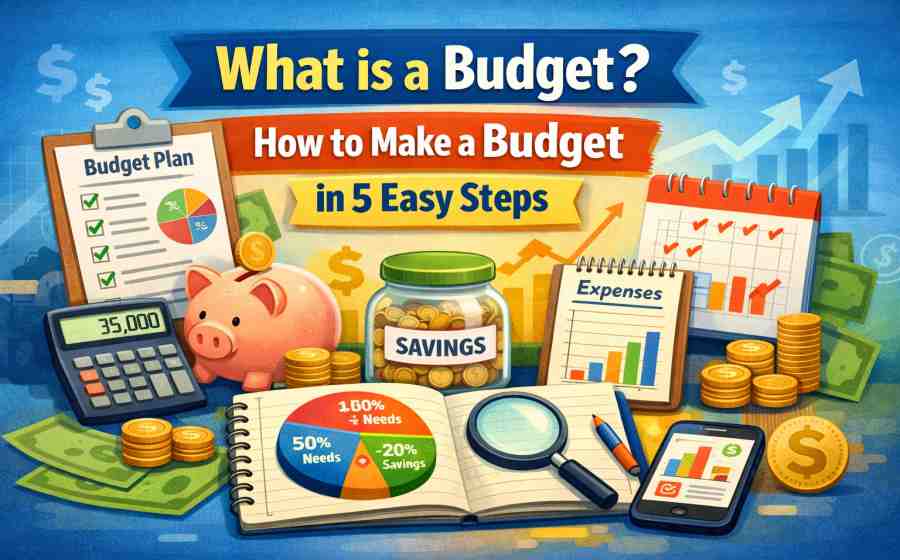
What is a Budget? How to Make a budget in 5 Easy steps
Learn what a budget is and how to make a budget or monthly budget in 5 easy steps. Manage your income, track expenses, and save more with this beginner-friendly guide.
What is a Budget?
A budget is a plan that helps you manage your money by showing how much you earn and how much you spend. It allows you to track your income, control your spending, save money, and avoid unnecessary debt.
Whether you’re a student, a salaried person, or a homemaker, budgeting is one of the most important financial skills for living a stress-free life.
Table of Contents
Why Budgeting is Important?
Here are some reasons why budgeting matters:
- Helps you control your money
- Avoids overspending and debt
- Keeps you focused on financial goals
- Encourages saving and investing
- Prevents financial emergencies
How to Make a Budget in 5 Easy Steps
Let’s break it down into a simple 5-step budgeting method anyone can follow:
Step 1: Calculate Your Total Monthly Income
Start by adding all sources of income:
- Salary (after taxes)
- Freelance income
- Rent received
- Any side hustle income
Example:
If your monthly salary is ₹30,000 and you earn ₹5,000 from freelancing, your total monthly income is ₹35,000.
Step 2: List All Monthly Expenses
Write down everything you spend money on:
- Fixed expenses: rent, EMI, electricity, Wi-Fi
- Variable expenses: food, travel, shopping
- Occasional expenses: birthday gifts, doctor visits
- Savings and investments
Tip: Look at your past 1–2 months’ bank statements to identify hidden spending.
Step 3: Categorize Your Expenses
Group your expenses like this:
- Essentials (needs) – Rent, groceries, bills
- Non-essentials (wants) – Eating out, movies, shopping
- Savings/Investments – SIPs, FD, RD, etc.
This step helps you find areas where you can reduce spending.
Step 4: Set Spending Limits
Now set a limit for each category. Use the 50/30/20 rule as a starting point:
- 50% Needs – ₹17,500
- 30% Wants – ₹10,500
- 20% Savings – ₹7,000
(based on ₹35,000 income)
Adjust these percentages as per your lifestyle and priorities.
Step 5: Track, Review, and Adjust
Use a notebook, Excel sheet, or free budgeting apps like:
- MyMoney Track
- Money Manager
- Goodbudget
- Axio: Expense & Budget
Check weekly to see if you’re sticking to the plan. If not, adjust your limits and try again next month.
Also Read: What is Inflation? How it affects your Money and Daily Life, Full details in easy way
Useful Tips for Better Budgeting
- Keep 3 months’ emergency fund
- Use UPI or cards to easily track expenses
- Cut down on impulse purchases
- Review and revise your budget monthly
- Don’t forget to budget for fun and entertainment
Common Budgeting Mistakes to Avoid
Many people create budgets but fail to stick to them because of common mistakes. Ignoring small daily expenses like snacks or online subscriptions can derail your plan. Another mistake is setting unrealistic limits that are too strict to maintain.
Always leave room for flexibility and unexpected costs. Regularly reviewing your budget helps you stay on track and adapt to changing financial situations without feeling stressed or discouraged.
Benefits of Following a Consistent Budget
Following a budget consistently builds financial discipline and peace of mind. It helps you make informed spending decisions, reduce financial anxiety, and work steadily toward long-term goals like buying a home or starting a business.
Over time, budgeting cultivates better saving habits and reduces dependency on credit or loans. When managed well, your budget becomes a personal financial roadmap leading to stability, independence, and future prosperity.
How Budgeting builds Financial Confidence
Budgeting is not just about numbers; it is about gaining confidence and control over your financial life. When you regularly plan your income and expenses, you become more aware of your spending habits and financial priorities. This awareness helps you make smarter choices, reduce unnecessary stress, and prepare for future goals. Over time, a well-managed budget turns money management into a habit, empowering you to handle emergencies, save consistently, and enjoy financial stability with greater peace of mind.
Summary
Creating a budget doesn’t mean restricting your life-it means giving your money a direction. When you understand where your money is going, it becomes easier to manage it, save better, and achieve your financial goals sooner.
So start today, grab a pen, open your notes app, or use a spreadsheet, and create your first budget!
Also Check: Finance