Blue Economy – The Future of Sustainable Ocean Development
Learn about the Blue Economy, its concept, scope, benefits, challenges and importance in sustainable development and ocean resource management.
Blue Economy
The Blue Economy is an economic model that promotes the sustainable use of ocean and water resources for economic growth, improved livelihoods, and environmental protection. It focuses on balancing economic development with the conservation of marine ecosystems. As countries around the world face climate change, pollution, and resource depletion, the Blue Economy has emerged as a key strategy for sustainable development.
The term “Blue Economy” gained global attention during the United Nations Conference on Sustainable Development (Rio+20) in 2012. Since then, governments, environmental organizations, and industries have increasingly recognized the importance of oceans in supporting economic growth and ecological balance.
Oceans cover more than 70% of the Earth’s surface and provide food, energy, transportation, minerals, and employment to billions of people. The Blue Economy aims to utilize these resources responsibly while protecting marine biodiversity for future generations.
Table of Contents
Meaning of Blue Economy
The Economy of Blue refers to all economic activities related to oceans, seas, rivers, lakes, and coastal areas that are carried out sustainably. It encourages the efficient use of aquatic resources without causing long-term damage to the environment.
Unlike traditional economic models that often exploit natural resources excessively, the Blue Economy emphasizes sustainability, innovation, and ecosystem protection. It supports industries that depend on water bodies while ensuring that marine life and ecosystems remain healthy.
Objectives of the Blue Economy
The main objectives of the Economy of Blue include:
- Sustainable use of marine resources
- Conservation of marine ecosystems and biodiversity
- Economic growth and employment generation
- Reduction of marine pollution
- Promotion of renewable energy sources
- Food security through sustainable fisheries
- Climate change mitigation and adaptation
These objectives help countries achieve long-term development while protecting natural resources.
Scope of the Blue Economy
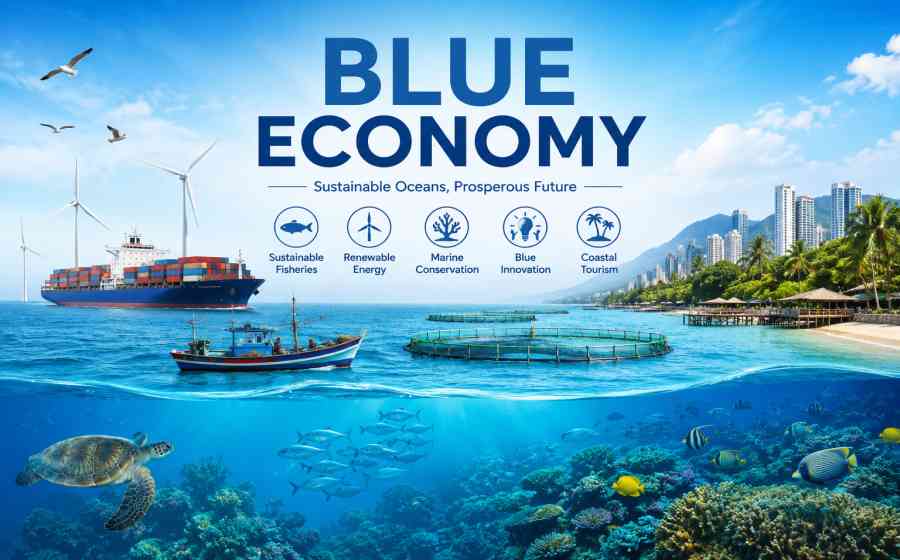
The scope of the Blue Economy is very broad and includes several sectors connected to oceans and water resources.
1. Fisheries and Aquaculture
Fishing is one of the oldest economic activities linked to oceans and rivers. Sustainable fisheries management helps maintain fish populations and supports food security. Aquaculture, or fish farming, is also growing rapidly and provides employment to millions of people worldwide.
Responsible fishing practices are essential to prevent overfishing and protect marine biodiversity.
2. Marine Transportation and Shipping
About 80% of global trade is carried out through sea routes. Ports, shipping industries, and logistics play a major role in international trade and economic growth.
The Blue Economy encourages eco-friendly shipping practices, reduced carbon emissions, and cleaner fuels to minimize environmental damage.
3. Coastal and Marine Tourism
Beaches, islands, coral reefs and marine wildlife attract tourists from around the world. Coastal tourism contributes significantly to the economy of many countries.
Sustainable tourism practices help protect marine ecosystems while generating income and employment for local communities.
4. Renewable Ocean Energy
The oceans provide various renewable energy sources such as tidal energy, wave energy, offshore wind energy, and ocean thermal energy.
These energy sources are environmentally friendly and help reduce dependence on fossil fuels, contributing to cleaner and greener development.
5. Marine Biotechnology
Marine organisms contain valuable biological resources that can be used in medicine, cosmetics, agriculture, and industrial products.
Scientists are exploring marine biodiversity to develop new medicines and technologies that can benefit humanity.
6. Seabed Mining
Oceans contain valuable minerals such as cobalt, nickel, manganese, and rare earth elements. These minerals are important for manufacturing electronics and renewable energy technologies.
However, seabed mining must be carefully regulated to avoid environmental destruction and biodiversity loss.
7. Marine Conservation
Protecting coral reefs, mangroves, wetlands, and marine habitats is an essential part of the Blue Economy.
Healthy ecosystems support fisheries, tourism, and climate regulation while protecting coastal communities from storms and erosion.
Importance of the Blue Economy
The Economy of Blue is important for both economic development and environmental sustainability.
Economic Growth
Marine industries generate trillions of dollars annually and provide employment opportunities for millions of people. Coastal communities especially depend on ocean-based activities for their livelihoods.
Food Security
Fish and seafood are major sources of protein for billions of people worldwide. Sustainable fisheries ensure long-term food availability.
Climate Regulation
Oceans absorb a large amount of carbon dioxide and help regulate the Earth’s climate. Marine ecosystems like mangroves and seagrasses act as natural carbon sinks.
Biodiversity Protection
Marine ecosystems support a wide variety of species. Sustainable practices help preserve biodiversity and ecological balance.
Energy Security
Renewable ocean energy can help meet growing energy demands while reducing pollution and greenhouse gas emissions.
Challenges Facing the Blue Economy
Despite its benefits, the Economy of Blue faces several challenges:
1. Marine Pollution
Plastic waste, oil spills, industrial discharge, and chemical pollution harm marine ecosystems and aquatic life.
2. Climate Change
Rising sea levels, ocean acidification, and increasing temperatures threaten marine biodiversity and coastal communities.
3. Overfishing
Excessive fishing reduces fish populations and disrupts marine ecosystems.
4. Habitat Destruction
Coral reef destruction, mangrove cutting, and coastal development negatively affect marine habitats.
5. Lack of Regulation
In some regions, weak policies and poor enforcement lead to unsustainable exploitation of marine resources.
Blue Economy in India
India has a vast coastline of over 7,500 kilometers and significant marine resources. The country recognizes the Blue Economy as an important part of economic development.
Key areas of focus in India include:
- Sagarmala Project for port-led development
- Sustainable fisheries and aquaculture
- Coastal tourism development
- Offshore renewable energy
- Marine biodiversity conservation
India is also working to reduce marine pollution and improve coastal management practices.
Summary
The Economy of Blue represents a sustainable approach to using ocean and water resources for economic growth and environmental protection. It promotes responsible development while preserving marine ecosystems for future generations.
As global challenges like climate change and pollution continue to grow, the importance of the Blue Economy is increasing rapidly. Sustainable fisheries, renewable energy, marine conservation, and eco-friendly industries can help create a balanced future where economic progress and environmental protection go hand in hand.
By adopting sustainable policies and innovative technologies, countries can unlock the full potential of the Blue Economy while ensuring the health and productivity of oceans for generations to come.
Also Check: Environment