Environmental Justice – Why Equal Access to a Healthy Environment Matters
Learn the meaning of Environmental Justice, its importance, major examples, causes and solutions. A simple and informative guide on environmental equality.
Environmental Justice
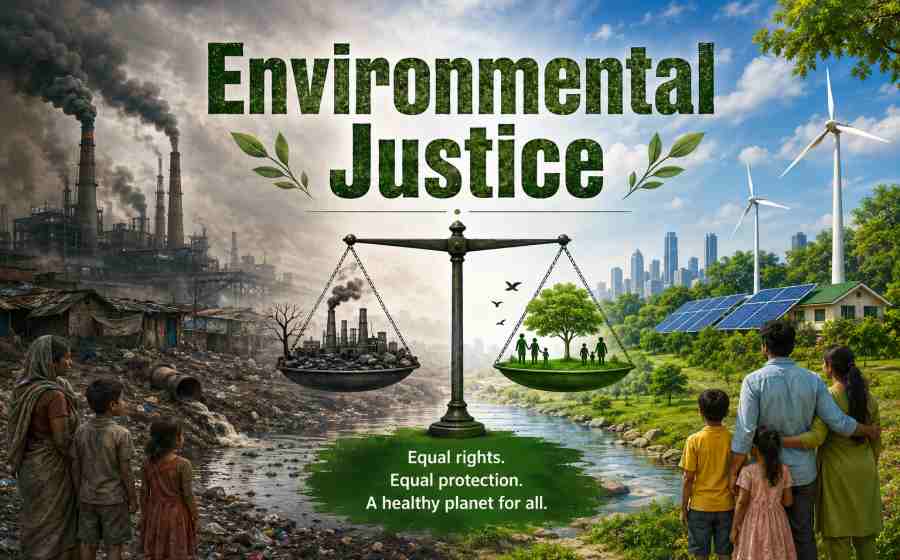
Environmental Justice is the idea that every person, regardless of race, income, caste, religion, or social background, deserves equal protection from environmental hazards and equal access to natural resources. It focuses on fairness in environmental laws, policies, and development projects. The concept became important when researchers and activists noticed that poor and marginalized communities often suffer the most from pollution, climate change, industrial waste, and lack of clean resources.
In many parts of the world, factories, waste dumping grounds, polluted rivers, and harmful industries are commonly located near low-income communities. These people usually have fewer resources and less political power to protect themselves. Environmental Justice aims to correct this imbalance and ensure that everyone can live in a safe and healthy environment.
Table of Contents
Meaning of Environmental Justice
Environmental Justice means fair treatment and meaningful involvement of all people in environmental decision-making. Fair treatment means no group should bear an unfair share of environmental problems. Meaningful involvement means communities should have the right to participate in decisions that affect their environment and health.
The idea combines environmental protection with social justice. It recognizes that environmental problems are not only scientific or economic issues but also human rights issues.
For example, if a government plans to build a factory that may pollute nearby water sources, local residents should have the right to know the risks, express their concerns, and influence the decision-making process.
Origin of the Concept
The Environmental Justice movement began in the United States during the 1980s. Activists protested against the dumping of toxic waste in African-American communities. Over time, the movement spread globally as people realized that environmental inequality exists in many countries.
Today, Environmental Justice is connected to issues such as climate change, air pollution, deforestation, water scarcity, industrial waste, and unequal access to clean energy.
Key Principles of Environmental Justice
1. Equal Environmental Protection
Every community should receive the same level of protection from pollution and environmental hazards.
2. Public Participation
People affected by environmental decisions should have the opportunity to participate in planning and policy-making.
3. Access to Information
Citizens should have access to environmental data, health reports, and pollution records.
4. Sustainable Development
Economic growth should not harm vulnerable communities or destroy natural resources.
5. Accountability
Governments and industries must be responsible for environmental damage and public health impacts.
Causes of Environmental Injustice
Poverty
Poor communities often live in polluted or disaster-prone areas because housing is cheaper there.
Weak Environmental Laws
In some regions, industries operate without strict pollution controls, affecting nearby populations.
Lack of Awareness
People may not know about environmental risks or their legal rights.
Political Inequality
Marginalized groups sometimes have limited representation in decision-making processes.
Rapid Urbanization
Fast industrial growth and urban expansion can increase pollution and reduce green spaces.
Examples of Environmental Justice Issues
1. Industrial Pollution in Poor Communities
Many factories are built near low-income neighborhoods because land is cheaper and resistance is weaker. These industries release harmful gases, chemicals, and waste that affect human health.
People living near such areas often suffer from respiratory diseases, skin problems, and contaminated water supplies. This creates a cycle where already disadvantaged communities face even greater hardships.
2. Flint Water Crisis (United States)
One of the most famous examples of environmental injustice is the Flint water crisis in Michigan, USA. Residents were supplied with contaminated water containing high levels of lead. The crisis mainly affected low-income and African-American communities.
The incident showed how negligence and inequality can lead to serious public health disasters.
3. Air Pollution in Urban Slums
In many developing countries, urban slum areas are located near highways, garbage dumps, or industrial zones. Residents breathe polluted air daily, leading to asthma, lung diseases, and other health issues.
Children and elderly people are especially vulnerable to these conditions.
4. Climate Change and Vulnerable Communities
Climate change affects everyone, but poor communities suffer more because they lack resources to recover from floods, droughts, cyclones, and heatwaves.
For example, coastal villages facing rising sea levels may lose homes and livelihoods. Farmers affected by drought may struggle to grow crops and support their families.
5. Electronic Waste Dumping
Developed countries sometimes export electronic waste to poorer nations. Workers in these areas often handle toxic materials without safety equipment, exposing themselves to harmful chemicals.
This not only damages human health but also contaminates soil and water.
Environmental Justice in India
India faces several environmental justice challenges due to rapid industrialization and population growth.
Air Pollution
Cities like Delhi experience severe air pollution, affecting millions of residents. Poor families living near roads and factories face the highest risks.
Mining and Tribal Communities
Mining projects in forest areas often displace tribal communities and damage ecosystems. Many indigenous groups lose their land, water sources, and traditional livelihoods.
River Pollution
Industrial waste and sewage pollute rivers used for drinking, farming, and religious activities. Rural communities depending on these rivers suffer the consequences.
Waste Management
Landfills and garbage dumping sites are often located near low-income settlements, exposing residents to toxic waste and diseases.
Importance of Environmental Justice
Environmental Justice is important because it protects human health, promotes equality, and supports sustainable development.
Health Protection
Reducing pollution improves public health and lowers disease rates.
Social Equality
It ensures that no community is unfairly burdened by environmental problems.
Economic Benefits
Healthy environments support agriculture, tourism, and long-term economic growth.
Stronger Democracy
Public participation increases transparency and accountability in environmental governance.
Solutions for Environmental Justice
Strengthening Environmental Laws
Governments should enforce strict pollution control measures and punish violators.
Community Awareness
Educating people about environmental rights can help communities demand better protection.
Sustainable Development Practices
Industries should adopt eco-friendly technologies and reduce waste generation.
Renewable Energy
Using solar, wind, and other clean energy sources can reduce pollution and climate risks.
Inclusive Decision-Making
Marginalized communities should be included in environmental planning and policy discussions.
Summary
Environmental Justice is a vital concept that connects environmental protection with human rights and social equality. It highlights the need for fair treatment of all communities, especially those most vulnerable to pollution and climate change. From industrial pollution to climate disasters, environmental injustice affects millions of people worldwide.
Creating a just and sustainable future requires strong laws, public awareness, responsible industries, and active community participation. When every person has access to clean air, safe water and a healthy environment, society becomes healthier, fairer, and more sustainable for future generations.
Also Check: Environment